Scandals and rivalries
Why Frank Sinatra Went to Jail: Seduction, Adultery & a $500 Bond
Frank Sinatra spent less than 16 hours in jail in 1938 on a seduction charge that collapsed when his accuser turned out to be married. A reported adultery charge was dropped too.
Photo: DoctorMacro.com
Why Did Frank Sinatra Go to Jail?
Frank Sinatra went to jail because he was arrested for seduction in Bergen County, New Jersey, on November 26, 1938. The complaint said he had slept with a woman after promising to marry her. The turning point came when she proved to be already married, which voided the charge, and a reported adultery charge that followed was dropped too. He spent less than 16 hours behind bars, according to ReMIND Magazine, and the mugshot became famous.
Quick facts
- Arrest date: November 26, 1938
- Place: Bergen County, New Jersey
- First charge: Seduction
- Second charge: Adultery, as reported by ReMIND Magazine and Showbiz Cheat Sheet
- Alleged dates: November 2 and 9, 1938, in the Borough of Lodi
- Time in jail: Less than 16 hours
- Bond: $500
- Outcome: Charges dropped, fingerprint sheet stamped “dismissed”
Early Life
Sinatra was born on December 12, 1915, at 415 Monroe Street, a tenement in Hoboken, New Jersey. He was the only child of Italian immigrants, Dolly and Marty Sinatra. A. J. Demarest High School expelled him for rowdiness after 47 days, and he never graduated.
Work followed, first delivering for the Jersey Observer newspaper and later riveting at the Tietjen and Lang shipyard. He also sang in local social clubs and, unpaid, on radio stations such as WAAT. Speaking at a University of Nevada, Las Vegas, commencement in May 1976, he credited “the school of hard knocks” for his education.
In the summer of 1934 he met Nancy Barbato in Long Branch, New Jersey, while working as a lifeguard. In 1935 his mother talked a singing group, the 3 Flashes, into taking him on. Baritone Fred Tamburro said he hung around them “like we were gods or something,” and admitted they wanted his car.
The group became the Hoboken Four and won first prize on the Major Bowes Amateur Hour with 40,000 votes. The prize was a six-month contract for stage and radio work across the country. Even so, ReMIND Magazine places the 1938 arrest years before his first movie or his first single.
The Seduction Charge
In the 1930s a man could be arrested for seduction. Lauren Novak of ReMIND Magazine describes it as a charge usually brought against a man who slept with a woman through a lie or a false promise. Alice Stone of Showbiz Cheat Sheet calls it trickery, gives a false pledge of marriage as her example, and notes that it is no longer a crime.
Ben Branch of Silodrome quoted the wording of the case in May 2018, drawing on FBI reports. It alleged that on November 2 and 9, 1938, in the Borough of Lodi, Sinatra had sex with the complainant after promising marriage. It described her as “a single female of good repute” and said he had broken the revised statute of 1937.
Novak writes that the accuser was reportedly an ex-girlfriend who said he had promised marriage and then ended the relationship. Stone also calls her an ex-girlfriend, one unhappy that the romance was over. ReMIND, Cheat Sheet and Silodrome do not name her.
The same three disagree slightly on his age. Novak and Stone say he was 23. Branch says he was a little short of 23, which fits his December 12 birthday.
Jail, Bond and the Adultery Charge
The case changed once the woman’s own marriage came to light. Novak writes that it canceled the seduction charge, and Stone says it left the charge null and void. Branch agrees that she was already married and reports that the charges were dismissed once this was established.
The published versions part ways on what came next. Novak and Stone both say New Jersey then charged Sinatra with adultery, and both say that charge was later dropped. Branch does not mention adultery in his Silodrome piece. He reports only that the fingerprint sheet carries the stamp “dismissed.”
The $500 is also told two ways. Novak says the adultery charge was dropped after Sinatra paid a $500 bond. Stone attaches the same sum to the seduction charge and says he never had to pay anything over the adultery charge. Both put his total time in jail at less than 16 hours.
New articles by email
An occasional email when a new article is out. No spam, unsubscribe any time.
Thanks. You are on the list.
Marriage, Fame and a Fall
Sinatra married Nancy Barbato about a year after the arrest, by ReMIND’s count, and Wikipedia dates the marriage to 1939. Wikipedia’s biography ties his decision to marry her to an incident at “The Rustic Cabin” and an arrest, and gives no further detail. They had three children: Nancy, Frank Jr. and Tina.
Bandleader Harry James signed him in June 1939 for two years at $75 a week, and his first commercial record came out that July. By November he had left James for Tommy Dorsey’s band at $125 a week. Dorsey recalled the crowd’s excitement at the Coronado Theatre in Rockford, Illinois, in January 1940, over “a skinny kid with big ears.”
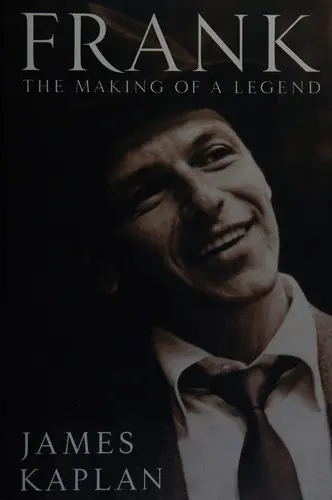
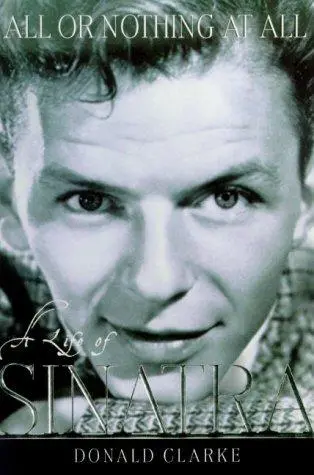
The fan frenzy called Sinatramania took its name after he opened at New York’s Paramount Theatre on December 30, 1942. For the whole climb, James Kaplan’s Frank: The Voice runs, its publisher says, from Hoboken through his fall from grace to his Oscar. Donald Clarke’s All or Nothing at All is described as covering his life from Hoboken through pop stardom and Hollywood.
Reports of his affair with Ava Gardner broke in February 1950, and ReMIND dates his split from Nancy to 1951. The publisher of John Brady’s Frank & Ava says his passion for Gardner destroyed his marriage. He went on to marry Gardner, Mia Farrow and Barbara Marx, and stayed with Marx until his death in 1998.
Columbia and MCA dropped him in 1952. Recording with arranger Nelson Riddle on April 30, 1953, he listened to the playbacks and exclaimed, “I’m back, baby, I’m back!” The release of From Here to Eternity that August began his revival, and the role won him the Academy Award for Best Supporting Actor.
Later Investigations
Sinatra faced a different kind of scrutiny in 1951. At 4 a.m. on March 1, Joseph L. Nellis, associate counsel to the Senate’s Kefauver Committee, questioned him at Rockefeller Center. The committee held eight photographs of him with known mafia figures, including Lucky Luciano. The two-hour meeting gave Nellis nothing that would support a subpoena.
The FBI’s file on him ran to 2,403 pages, and agents watched him for almost five decades, starting in the 1940s. In 1963 the Nevada Gaming Control Board temporarily suspended his gambling license after mobster Sam Giancana was seen at the Cal Neva Lodge. The license came back in February 1981. Sinatra denied involvement, calling reports that he mixed with racketeers “a vicious lie.”
Kitty Kelley’s unofficial biography, His Way, revisited those ties. Kelley says Sinatra and mobster Joseph Fischetti were good friends from 1938 onward. Sinatra filed a $2 million court case against her on September 21, 1983, before the book appeared, and dropped it on September 19, 1984. William Safire of The New York Times described the book as an unusually eye-opening celebrity biography.
The Mugshot and the Fingerprint Sheet
ReMIND’s Novak says the mugshot became famous, and Stone says it is now nearly as recognizable as his voice. Stone sees no distress on the young man’s face. She also suggests that he would have been grateful for the arrest later on, because his legal history helped his image as a bad boy.
The original fingerprint sheet came up for sale in 2018, according to Branch. Julien’s offered it in a Music Icons auction closing on May 19. The sheet measures 7 3/4 by 8 inches and lists his age, weight, height, hair and eye color, birth date and occupation. The mugshots were not part of the sale.
Modern verdicts on the case run the same way. Novak finds it shocking, by today’s standards, that he spent any time in jail. Stone, in Showbiz Cheat Sheet, calls it “hardly a crime at all” and says he would be guilty of nothing now. The official record closes on one word, the “dismissed” stamped across his fingerprints.
The arrest cost Sinatra less than a day in a cell. The collapse of 1952 was a harder problem, and What happened to Frank Sinatra after his career collapsed in 1952 follows how he came back from it.
Read next
Star profile / Frank Sinatra
What happened to Frank Sinatra after his career collapsed in 1952
By 1952 Frank Sinatra had lost his record label, MCA and most of his audience. A film role and a new arranger in 1953 began a second career that ran until his death in 1998.
Continue readingQuick answers
How did Frank Sinatra die?
Frank Sinatra died of a heart attack on May 14, 1998, aged 82, at Cedars-Sinai Medical Center in Los Angeles. He had made no public appearances since an earlier heart attack in February 1997. His wife Barbara, who was with him, reported that his final words were “I’m losing.”
Why did Frank Sinatra divorce mia farrow?
Frank Sinatra’s divorce from Mia Farrow followed a dispute over her acting. He wanted her to quit, and was angered when Rosemary’s Baby ran over schedule and she failed to report for his film The Detective. His lawyer served her with papers in November 1967, the divorce became final in August 1968, and Farrow later blamed their age difference.
What happened to Frank Sinatra?
What happened to Frank Sinatra was a collapse followed by a comeback. Columbia and MCA dropped him in 1952, then From Here to Eternity began his revival in 1953. He retired in 1971, returned in 1973 and died in 1998.
In this article
Frank
James Kaplan · 2010
Get the book
All or nothing at all
Donald Clarke · 1997
Get the book
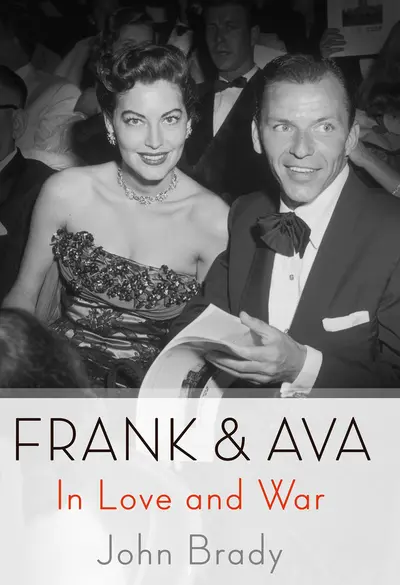
Frank & Ava
John Joseph Brady · 2015
Get the book
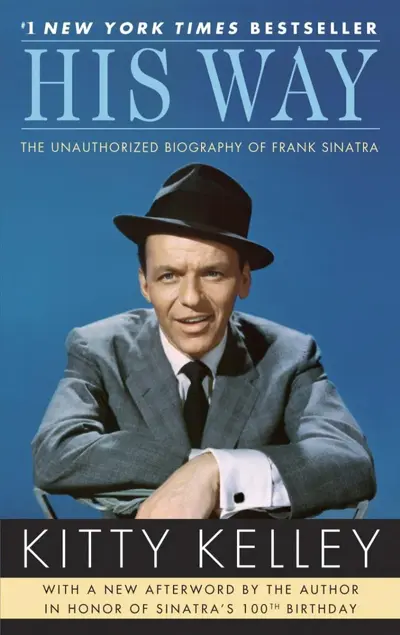
His Way
Kitty Kelley · 1983
Get the book
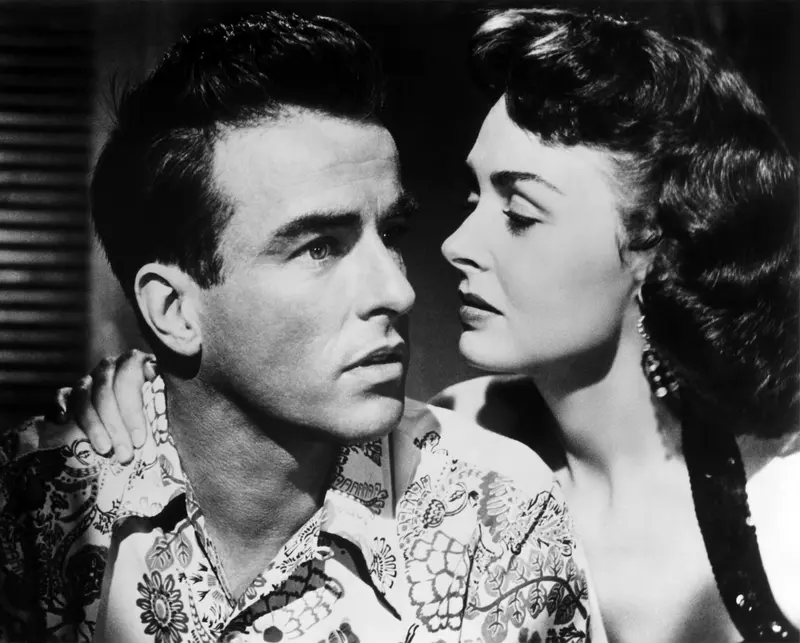
From Here to Eternity
Fred Zinnemann 1953
Watch it
Sources
- The Bizarre Story Behind Frank Sinatra's Mugshot, ReMIND Magazine, accessed 2026-11-04
- Frank Sinatra's 1938 Arrest Fingerprint Records, Silodrome, accessed 2026-11-04
- There's an Unusual Crime Behind Frank Sinatra's Famous Mug Shot, Showbiz Cheat Sheet, accessed 2026-11-04
- Frank Sinatra, Wikipedia, accessed 2026-11-04
- Mia Farrow, Wikipedia, accessed 2026-11-04
- Frank by James Kaplan (2010)
- All or nothing at all by Donald Clarke (1997)
- Frank & Ava by John Joseph Brady (2015)
Photo credits
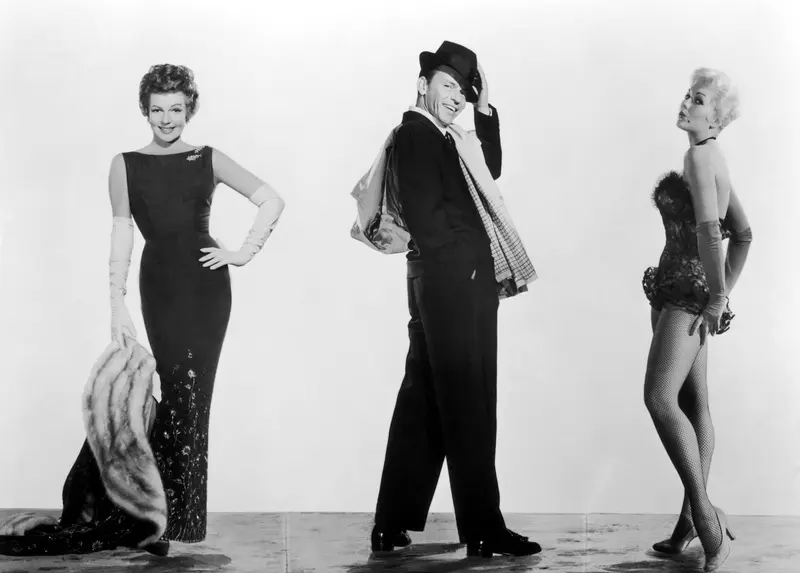
- Frank Sinatra in a still from Pal Joey (1957). Photo: DoctorMacro.com