Scandals and rivalries
Why Frank Sinatra hated Elvis: he damned the music, and Presley's records were outselling his
Sinatra said the problem was rock and roll itself. Biographer James Kaplan says Presley was outselling him and that Sinatra feared the music would last, and in 1960 he paid six figures to sing with him anyway.
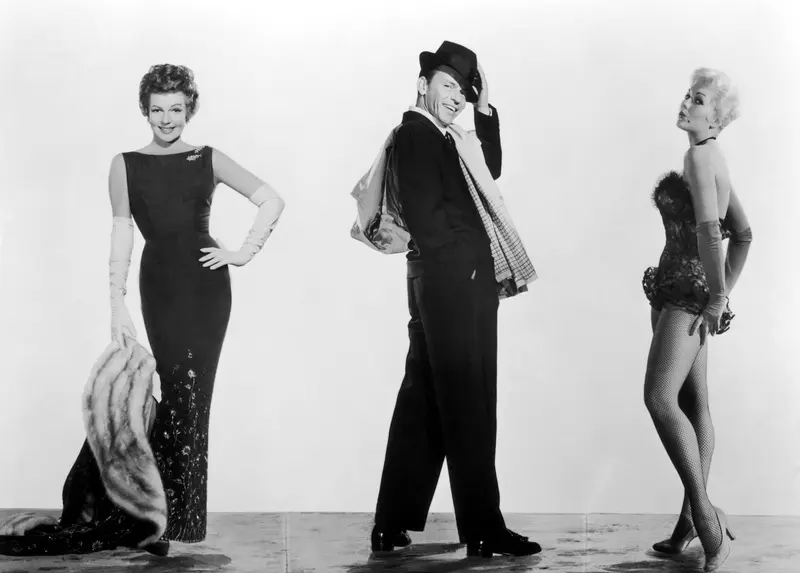
Photo: DoctorMacro.com
Frank Sinatra said his quarrel was with the music itself, a “rancid-smelling aphrodisiac” in his words. His biographer James Kaplan names a sorer reason: Elvis Presley’s records were outselling his own, “to Frank’s great chagrin.” On March 26, 1960, Presley stood next to him in Miami Beach for Sinatra’s final Timex special on ABC. Three-quarters of the way through their duet, with Sinatra singing “Love Me Tender” and Presley singing “Witchcraft,” Presley strayed from the script. The lyric called for “there’s no nicer witch than you,” and he turned it into no nicer witch than witchcraft. Sinatra answered with what Kaplan calls a “foxy, appreciative laugh” and finished his own lines without a stumble.
Kaplan, in Sinatra: The Chairman, reads the moment as Sinatra welcoming the younger man into the fraternity of show business. It had also been bought. The previous October, Sinatra had struck a deal with Presley’s manager, Colonel Tom Parker, for an appearance timed to Presley’s discharge from the army, and Parker’s price was $125,000, more than Sinatra was earning for the whole program. For that money Presley was on screen for seven and a half minutes in all. Parker left nothing to chance in the studio, either. J. Randy Taraborrelli writes that he made sure 300 girls from Presley’s fan club sat in the audience to guarantee a loud response, an unwitting echo of the tricks George Evans had worked for Sinatra at the Paramount in the 1940s. Taraborrelli credits Sinatra with seeing that Presley’s first television appearance out of uniform would pull huge ratings, and Kaplan’s caption for the scene says Sinatra “swallowed his intense dislike of Presley” to get his hit.
He had been a trend himself
Sinatra knew what a screaming young audience was worth, because he had once been its object. Explaining his rise years later, he said Bing Crosby had appealed mostly to older and middle-aged listeners, and that when he came along “the kids were looking for someone to cheer for,” as Taraborrelli quotes him. Evans, his publicist, fed that hunger with interviews and photographs of Sinatra among his fans. The girls wrote his song titles on their clothes and bribed hotel maids for a chance to touch his bed. When Sinatra returned to the Paramount in October 1944, 35,000 fans left outside without a way in caused a near riot.
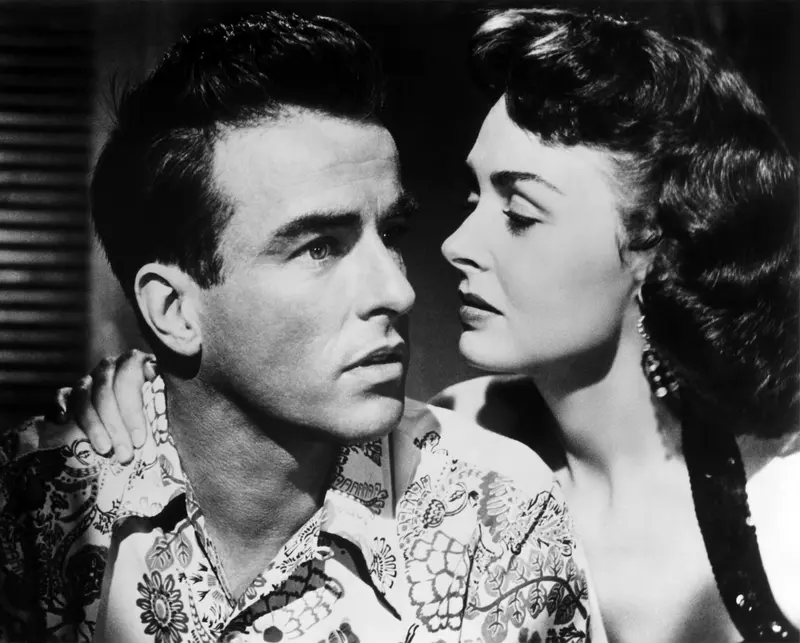
That crowd did not stay. Earl Wilson remembered running into Evans in the lounge of the Copacabana, where the man who had done more than anyone to make Sinatra famous predicted, “Frank is through.” The public knew about the trouble with Nancy and the other women, Evans told him, and it had turned. Evans died in January 1950. By 1951, Kaplan writes in Frank: The Voice, audiences felt they knew exactly who Sinatra was, “and they weren’t buying,” while priests told their congregations to stay away from his records and his films. At Chez Paree in Chicago only 150 people came to a 1,200-seat room. Columbia and MCA dropped him in 1952, and the revival began only with the release of From Here to Eternity in August 1953, which brought him the Oscar for Best Supporting Actor.
By 1956 he was back on top. Songs for Swingin’ Lovers! came out in March, and High Society took in over $13 million at the box office. Meanwhile “Heartbreak Hotel” had reached a 13-year-old George Harrison and a 12-year-old Keith Richards, and Kaplan says it would change Sinatra’s life too. In early August a newspaper squib reported that Sinatra would sing the Democrats’ 1956 campaign song at their convention in Chicago, and joked that the Republicans had no plan to “retaliate with Elvis Presley.” The two names already sat side by side.
New articles by email
An occasional email when a new article is out. No spam, unsubscribe any time.
Thanks. You are on the list.
The household had its view as well. In a column of February 1, 1957, which Kaplan quotes, Louella Parsons reported that 13-year-old Frank Jr. had no use for rock and roll and had never seen Presley. The boy felt that Presley “came up too suddenly” and ought to work as hard for success as his father, Bing Crosby and Perry Como had. Close to You was the new Sinatra record being played in the house.
The words that went around the world
Roughly two years before the special, by Kaplan’s count, Sinatra turned on the whole genre. He called Presley’s kind of music “deplorable,” Taraborrelli quotes, a thing that fostered “almost totally negative and destructive reactions in young people.” Kaplan’s version of the outburst adds “brutal, ugly, degenerate, vicious form of expression,” and ends on the music being “sung, played and written for the most part by cretinous goons.” Taraborrelli says Sinatra hated all rock and roll, and Kaplan calls Presley the genre’s chief exponent.
The story spread around the world so fast that Presley answered it the very next day. “He is a great success and a fine actor, but I don’t think he should have said it,” he told reporters, in Kaplan’s account. “This is a trend, just the same as he faced when he started years ago.” He called rock and roll the greatest in music. Kaplan hears “quiet dignity” in the reply and says Sinatra’s rant “bristles with hostility and defensiveness,” not least because it ignored Black rhythm and blues, the music rock drew from, which Kaplan counts an important American art form.
Kaplan concedes Presley’s point. The catch Sinatra put in his voice and the spit curl over his forehead looked tamer than Presley’s swiveling hips, which Ed Sullivan ordered his cameramen to keep out of the shot, but Kaplan doubts the difference ran deep: “A trend was a trend.” Nor did the songs make a clean contrast. Sinatra had sung “his share of fairly cretinous numbers himself,” Kaplan writes, naming “Mama Will Bark” and “Red Roses for a Blue Lady.” And Sinatra understood his own sources. He knew he owed an important debt to the great musicians of Fifty-second Street, Billie Holiday ahead of them all.
What Kaplan finally settles on is fear. Sinatra’s run as a teen idol had been short, and rock and roll would prove astonishingly durable. Sinatra could not have known that in 1957, Kaplan writes, “but it seems clear that he feared it.” He had already watched one audience walk away.
What seven and a half minutes bought
So the special was a concession, and Kaplan describes Sinatra as, in a way, deferring to the younger man. Dislike was not something Sinatra usually disguised. Quincy Jones, quoted by Kaplan, remembered a man with no gray in him: if Sinatra loved you, there was nothing he would not do for you, and if he did not like you, “shame on your ass.” In Miami Beach he wriggled into a brief Elvis imitation instead, and Kaplan judges the two of them equals onstage. The broadcast went out that March and drew massive viewing figures.
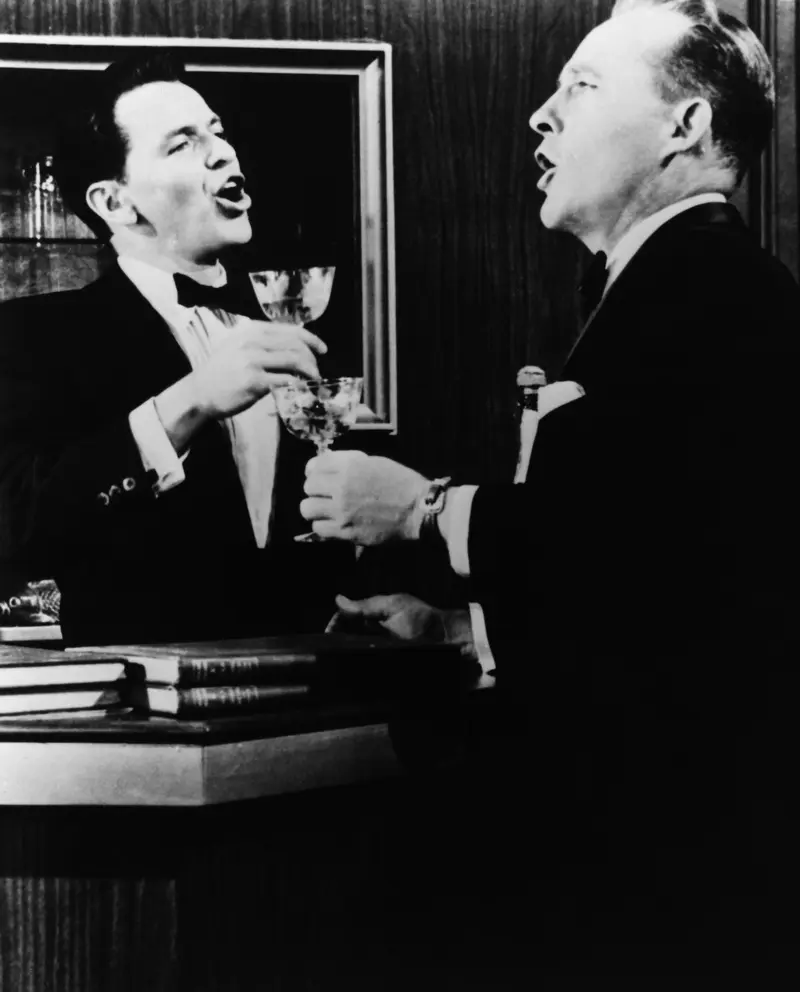
That spring Sinatra was also playing the Fontainebleau, finishing with a weekend of shows alongside the Rat Pack, and Ocean’s 11, the first film to feature that group together, came out the same year. Kaplan calls the special a hinge in Presley’s career, with Hollywood and Vegas straight ahead. Sinatra’s road bent too. By 1969, working to stay commercially viable, he was recording Paul Simon’s “Mrs. Robinson,” the Beatles’ “Yesterday” and Joni Mitchell’s “Both Sides, Now,” and his 1980 triple album, Trilogy, mixed songs from before rock and after it.
His son kept his own score. Frank Jr. recalled, in Taraborrelli’s book, that “Elvis was all the rage at the time,” and that his father, singing “Gone with the Wind” from Only the Lonely, had shown that once the hysteria was stripped away, what counted was “real emotion, real singing.”
None of that was in view in Miami Beach. What the cameras caught was smaller: “Witchcraft,” Sinatra’s own hit of 1957, coming back at him rewritten by a 25-year-old who was being paid more than he was, and Sinatra laughing and singing on.
Sinatra’s fall in the early 1950s is a story of its own. What happened to Frank Sinatra after his career collapsed in 1952 settles how he rebuilt after Columbia and MCA let him go.
Read next
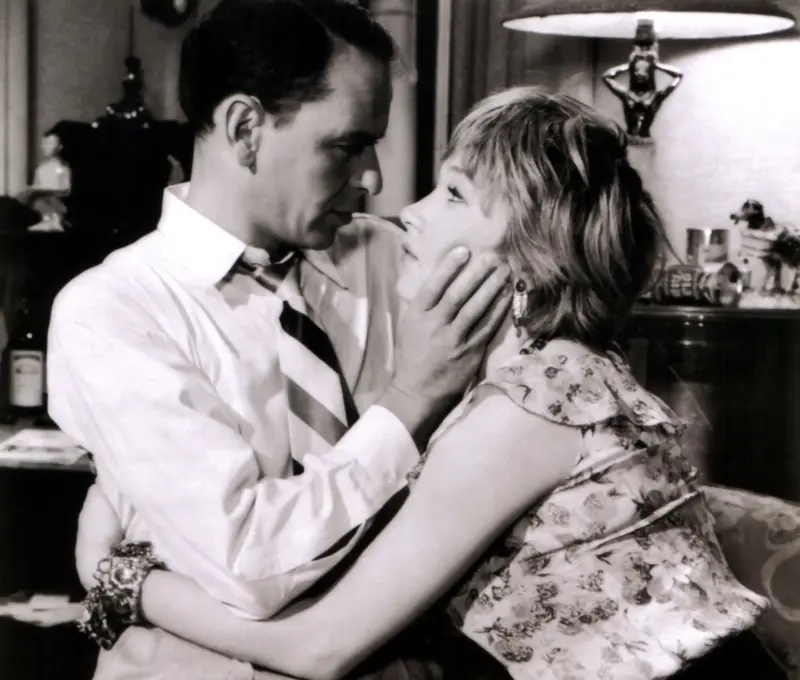
Star profile / Frank Sinatra
What happened to Frank Sinatra after his career collapsed in 1952
By 1952 Frank Sinatra had lost his record label, MCA and most of his audience. A film role and a new arranger in 1953 began a second career that ran until his death in 1998.
Continue readingQuick answers
Why did Frank Sinatra hate elvis?
Frank Sinatra’s stated reason for hating Elvis was the music: he called rock and roll deplorable, a “rancid-smelling aphrodisiac” made by “cretinous goons.” Biographer James Kaplan adds that Presley’s records outsold Sinatra’s and that Sinatra seemed to fear how long rock would last. He still paid Presley to appear on his TV special.
How did Frank Sinatra die?
Frank Sinatra died of a heart attack at Cedars-Sinai Medical Center in Los Angeles on the evening of May 14, 1998, at age 82. He had been in ill health and had made no public appearances since a heart attack in February 1997. His wife, Barbara, was at his side and reported his final words as “I’m losing.”
The full story is more complicated: How Frank Sinatra died: a heart attack at Cedars-Sinai in 1998, at age 82
Why did Frank Sinatra divorce mia farrow?
Frank Sinatra divorced Mia Farrow after her film work collided with his wishes. He wanted her to give up acting, and when Rosemary’s Baby ran over schedule she failed to report for his film The Detective. His lawyer served her with papers in November 1967, and the divorce was final in August 1968.
The full story is more complicated: Why Frank Sinatra divorced Mia Farrow during the filming of Rosemary's Baby
What happened to Frank Sinatra?
What happened to Frank Sinatra was a collapse followed by a long comeback. Columbia and MCA dropped him in 1952, then From Here to Eternity (1953) won him an Oscar and revived his career. He retired in 1971, returned in 1973, gave his final public concerts in Japan in 1994 and died in 1998.
The full story is more complicated: What happened to Frank Sinatra after his career collapsed in 1952
In this article
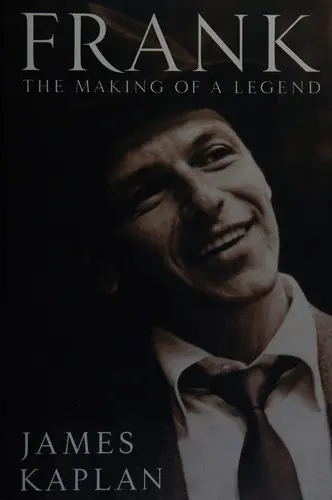
Frank
James Kaplan · 2010
Get the book
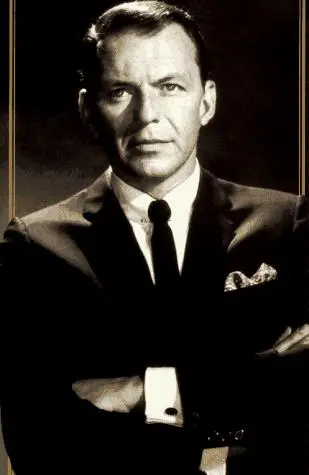
Sinatra
J. Randy Taraborrelli · 1997
Get the book
From Here to Eternity
Fred Zinnemann 1953
Watch it
High Society
Charles Walters 1956
Watch it
Ocean's 11
Lewis Milestone 1960
Watch it
Sources
Photo credits
- Frank Sinatra in a still from Pal Joey (1957). Photo: DoctorMacro.com