Scandals and rivalries
Yes, Frank Sinatra had mob ties, and one midnight in Trenton he swore he had none
Gangsters were his friends for decades and the FBI's file ran to 2,403 pages, yet his biographers find admiration on both sides rather than membership. The friendships cost him a president, a casino license and a lot of sworn explanations.
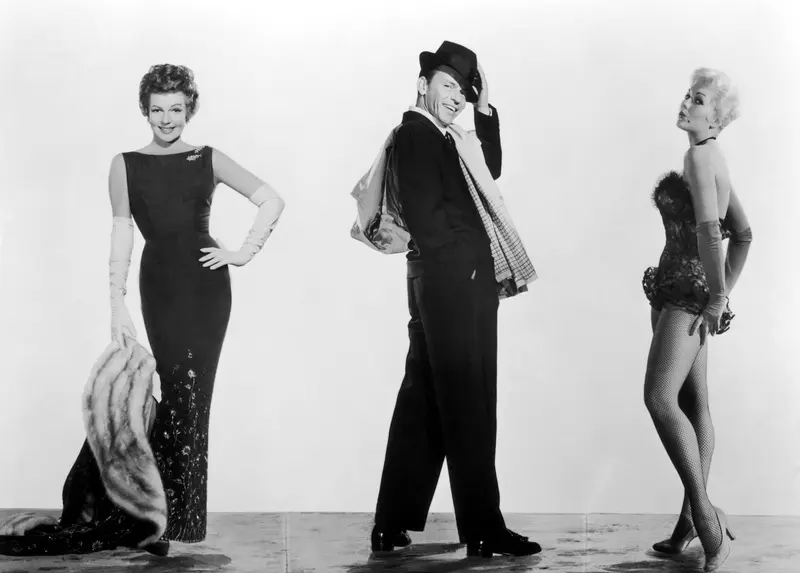
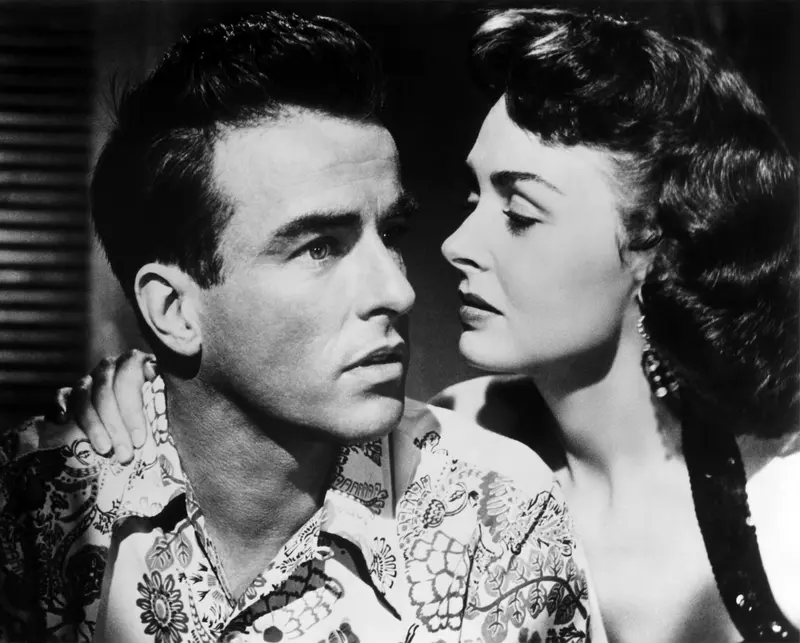
Photo: DoctorMacro.com
Frank Sinatra had mob ties, friendships more than affiliation in the judgment of his biographer James Kaplan, and at midnight on February 17, 1970, in a secret session in Trenton, he swore he had none. He had refused to testify for as long as he could. An appeal had failed by four votes to three, and that month the commission threatened to jail him for contempt, so his lawyers agreed to an hour they hoped would keep the press away. He answered questions for a little more than an hour. Asked whether he knew any member of the mob, he said, “No, sir.” Asked about anyone belonging to organized crime, he gave the same answer.
He went further than that. In Sinatra: Behind the Legend, J. Randy Taraborrelli reports that Sinatra testified no one had ever told him Sam Giancana had underworld connections, and that Lucky Luciano’s reputation was unfamiliar to him. Kitty Kelley, in His Way, shows how far the oath strayed from the facts: he told the commissioners he had never met the New Jersey extortionist Harold “Kayo” Königsberg, yet a 1961 FBI wiretap caught Königsberg telling the mobster Angelo “Gyp” DeCarlo where he would find the money to take over a hotel in Jamaica. “Frank Sinatra,” he said. A Justice Department report Kelley quotes called the singer’s association with racketeers “long and wide” and found no other entertainer named with them so often, and the FBI’s file on him ran to 2,403 pages. Kaplan calls the idea that Sinatra was all but a made man a myth, and Taraborrelli writes that neither side did much for the other that anyone has been able to document.
A godfather from New Jersey
The ties began close to home. Kaplan writes that his mother’s north Jersey connections helped him to a couple of singing jobs early on, and his godfather there was Willie Moretti, whom Kaplan pictures as closer to a gabby, tubby uncle than a criminal mastermind. Moretti was also the underboss of the Genovese family, and he helped Sinatra in return for kickbacks. Moretti may have intervened when Sinatra was arrested for adultery and seduction in 1938, and he sent a disapproving telegram when Sinatra left his first wife, Nancy, for Ava Gardner. The pull ran in Sinatra’s direction too. He said that without music he would likely have ended up in a life of crime, and he told Eddie Fisher he would sooner be “a don for the Mafia” than president. In Kaplan’s telling the gangsters liked his singing and his flash, and he liked their power and their toughness.
The first big rumor attached itself to Tommy Dorsey, whose contract gave him 43% of Sinatra’s lifetime earnings. A legal battle ended in August 1942, and newspapers soon said Moretti had freed the singer by holding a gun on the bandleader. Jerry Lewis told a grander version, in which Frank Costello, Albert Anastasia, Moretti and the hit man Frankie Carbo called on Dorsey together and Carbo wondered whether he could play his trombone “if it had a dent in it.” Lewis said Sinatra told him the story years later, laughing. Taraborrelli says the men who did intervene were a “motley crew from Hoboken” acting for Hank Sanicola, hardly dangerous gangsters, while Kaplan, in Frank: The Voice, records a man named Jaffe asking Dorsey whether he enjoyed being heard on the radio and telling him, “Not anymore, you won’t.” The gun and the dented trombone belong to legend. Kaplan’s verdict is that whether darker forces were used, and whether Sinatra knew, will never be settled.
Luciano claimed a share of the credit as well, putting a figure of $50,000 on his part in Sinatra’s early career. Ted Hechtman, quoted by Taraborrelli, went through what that money could have bought and dismissed each item: the act was one of three tuxedos, and the song arrangements were Dorsey’s. He called the claim the work of a gangster “trying to make himself look important.” Sinatra’s own answer, under oath, to the charge that mobsters financed him was, “It’s ridiculous.”
Sinatra was present at the Mafia’s Havana conference in 1946, and the press learned that he had been there with Luciano. Taraborrelli places the start of the wildest and most persistent mob stories about him in 1947. The tale that he carried $2 million to Havana in an attaché case seems to have begun with Lee Mortimer, and Sinatra later testified that he had gone not to meet Luciano or anyone like him but “to find sunshine.” He offered the $2 million to anyone who could show him a case big enough to hold it.
At 4 a.m. on March 1, 1951, in an office at the top of Rockefeller Center, Joseph L. Nellis, associate counsel to the Senate’s Kefauver Committee, sat down with Sinatra over eight photographs. One showed his arm around Luciano on a balcony of the Hotel Nacional in Cuba. Another showed him leaving a plane with an attaché case, which he said held razors and crayons. Nellis suggested it had held more than $100,000, and Sinatra denied it. He admitted saying hello and goodbye to Luciano, the Fischetti brothers, Meyer Lansky, Costello, Bugsy Siegel and others, denied doing business with any of them, and claimed not to know Luciano’s line of work. After two hours Nellis had nothing that would support a subpoena. That same year Moretti was killed, perhaps, Kaplan writes, for saying too much to the same committee, and probably also for unpaid sports bets.
During Sinatra’s slump the friends helped, but only so far. Kaplan says a few of them steered work his way, not enough to change his fortunes, and that he might have landed a booking at the Riviera in Fort Lee with a hand from DeCarlo and Longy Zwillman, who ran its secret casino. The revival began with the release of From Here to Eternity in August 1953, a part for which Gardner used her influence with Harry Cohn.
New articles by email
An occasional email when a new article is out. No spam, unsubscribe any time.
Thanks. You are on the list.
What the friendships cost
Sinatra met Giancana a couple of years after Moretti’s death, and Giancana’s repeated visits to the house in Palm Springs were the part of the Justice Department report that most disturbed Robert Kennedy. President John F. Kennedy distanced himself. In 1962 he stayed with Bing Crosby instead of Sinatra, who had fitted his home with a heliport for the visit and took a sledgehammer to it. In 1963 Nevada suspended Sinatra’s gambling license after Giancana was spotted at the Cal Neva Lodge, and Sinatra agreed to give up his shares in the Cal Neva and the Sands. Taraborrelli writes that Sinatra also broke a promise to Giancana and lied about it, and that on an FBI wiretap Johnny Formosa proposed to “take out” the singer. Giancana wasn’t interested. Thomas DiBella recalled asking him why Sinatra got away with it, and Giancana answered with his own questions: “Beat him up? Have him killed?” DiBella’s conclusion was, “He was too famous to touch.”
On August 19, 1968, a week before the Democratic convention, The Wall Street Journal ran Nicholas Gage’s front-page story. It opened on Sinatra’s baldness and the select friends allowed to stay while he changed hairpieces, among them Joseph Fischetti, a cousin of Al Capone. For nearly 30 years, Gage wrote, some of his best friends had been gangsters, “not just two-bit hoods.” He cited the Berkshire Downs racetrack in Massachusetts, where Sinatra and Dean Martin were directors in 1963 and which he said was secretly owned by Raymond Patriarca and Gaetano Lucchese. Kaplan calls the piece a transparent attempt to undermine Hubert Humphrey, for whom Sinatra was campaigning, and notes, as Nancy Sinatra often does, that no indictment had ever been brought against her father. Sinatra canceled a convention luncheon for Mrs. Humphrey and a gala for Mayor Richard Daley. Kelley has Nellis warning Humphrey in a memo that Sinatra was “unquestionably connected with the underworld,” and Humphrey replying that the money he raised was too great: you “don’t turn your back on that.” Henry Peterson, who ran the organized crime section at Justice, told Humphrey’s man Martin McNamara that a three-month-old investigation of Sinatra could last another two or three years, with no criminal charge likely soon.
In September 1970, months after Trenton, Sinatra left Caesars Palace after the executive Sanford Waterman pulled a gun on him. The Clark County district attorney, George Franklin, declined to charge Waterman, citing Sinatra’s finger marks on his throat. According to Franklin, Sinatra was supposed to have told Waterman on his way out the door, “The mob will take care of you.” Franklin wanted to question Sinatra about his underworld friends and about who owned the clubs where he got his start. Through his spokesman, Jim Mahoney, Sinatra said he had never touched Waterman. It all, Kaplan writes, had “a terribly tired sound.”
Fiction followed him too. Sinatra came to believe that Johnny Fontane, the mob-linked singer in Mario Puzo’s 1969 novel The Godfather, was based on him, and Puzo wrote in 1972 that when the two met at Chasen’s, Sinatra “started to shout abuse.”
Up close, the man looked more careful than the headlines suggested. Ed Walters, a former pit boss quoted by Kaplan, said Sinatra was paid by check every month, never in cash, because he feared ending up before the FBI, and that he used to say the hoods were “all gonna go to jail.” Walters saw him caught between wanting to be one of them and fearing legal trouble, with lawyers doing the talking. Kaplan reaches a similar place from the other side: the mob tolerated him, found him useful now and then, and “sometimes threw him a bone.” The Justice Department report in Kelley’s book reads differently, listing special favors Sinatra did those men over the years.
The picture backstage
On April 11, 1976, Sinatra posed backstage at the Westchester Premier Theater with Carlo Gambino, the capo Gregory DePalma and others. Kaplan captions the picture as his last dance with those friends and calls the attraction “deep, genuine, and unfortunate.” A two-page spread in Life in January 1979 brought more bad publicity. “Who took that shot, anyway?” Sinatra asked. Ronald Reagan, his friend, said when asked about the ties that he had been hearing those stories for years and could only “hope none of them are true.”
Questioned about the photograph under oath, Sinatra said a member of the theater told him Gambino had arrived with a granddaughter whose name happened to be Sinatra. They wanted a picture of the little girl, he said, and before he realized it eight or nine men were standing around him. “I didn’t even know their names,” he testified. Kelley writes that he produced pictures of himself with a congressman, the prime minister of Israel and Gregory Peck, to show how many people came backstage, and that Nevada’s gaming chairman regretted that the decent people drew less notice than the “who’s who” of organized crime. Sinatra’s gambling license was restored in February 1981, following support from Reagan.
Two years later the fight turned on Kelley herself. On September 21, 1983, before His Way was published, Sinatra filed a $2 million case against her, and he dropped it a year later. William Safire of The New York Times called the book the “most eye-opening celebrity biography of our time.”
In Trenton he had sworn that no one ever told him what Giancana was. The authorized miniseries his daughter Tina produced about his life went on to show the two men as close.
Moretti may have stepped in when Sinatra was arrested in 1938. That arrest, and the adultery and seduction charges behind it, are the subject of Why Frank Sinatra went to jail.
Read next
Scandals and rivalries / Frank Sinatra
Why Frank Sinatra Went to Jail: Seduction, Adultery & a $500 Bond
Frank Sinatra spent less than 16 hours in jail in 1938 on a seduction charge that collapsed when his accuser turned out to be married. A reported adultery charge was dropped too.
Continue readingQuick answers
Did Frank Sinatra have mob ties?
Yes. Gangsters such as Willie Moretti, Joe Fischetti and Sam Giancana were his friends for decades, and a Justice Department report called the association long and wide. He denied it under oath in 1970, and biographer James Kaplan reads the ties as mutual admiration rather than membership.
Why did Frank Sinatra go to jail?
Frank Sinatra was arrested in 1938 for adultery and seduction, offenses still on the books at the time. The arrest followed an incident at the Rustic Cabin, and he agreed to marry Nancy Barbato afterward. His New Jersey godfather, Willie Moretti, may have intervened.
The full story is more complicated: Why Frank Sinatra Went to Jail: Seduction, Adultery & a $500 Bond
How did Frank Sinatra die?
Frank Sinatra died of a heart attack on May 14, 1998, at age 82, at Cedars-Sinai Medical Center in Los Angeles. He had been in poor health for years, with heart and breathing problems, and his wife Barbara reported his final words as “I’m losing.”
The full story is more complicated: How Frank Sinatra died: a heart attack at Cedars-Sinai in 1998, at age 82
Why did Frank Sinatra divorce mia farrow?
Frank Sinatra divorced Mia Farrow after her filming of Rosemary’s Baby ran over schedule and she failed to report for his film The Detective. He had wanted her to give up acting. His lawyer served the papers in November 1967, and Farrow later blamed their age difference.
The full story is more complicated: Why Frank Sinatra divorced Mia Farrow during the filming of Rosemary's Baby
What happened to Frank Sinatra?
Frank Sinatra’s career collapsed by 1952, when Columbia and MCA dropped him, then revived with From Here to Eternity in 1953. He retired in 1971, returned in 1973, gave his final public concerts in Japan in 1994 and died in 1998.
The full story is more complicated: What happened to Frank Sinatra after his career collapsed in 1952
In this article
Sinatra
J. Randy Taraborrelli · 1997
Get the book
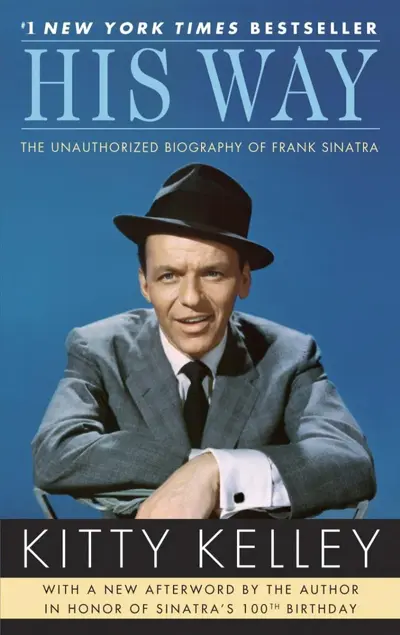
His Way
Kitty Kelley · 1983
Get the book
Frank
James Kaplan · 2010
Get the book
From Here to Eternity
Fred Zinnemann 1953
Watch it
Sources
Photo credits
- Frank Sinatra in a still from Pal Joey (1957). Photo: DoctorMacro.com