Star profile
How Frank Sinatra got famous: a radio contest, two bandleaders, and the Paramount in 1942
Sinatra spent seven years climbing, from a 1935 amateur-hour win through the Harry James and Tommy Dorsey bands, before a solo booking at New York's Paramount set off Sinatramania.
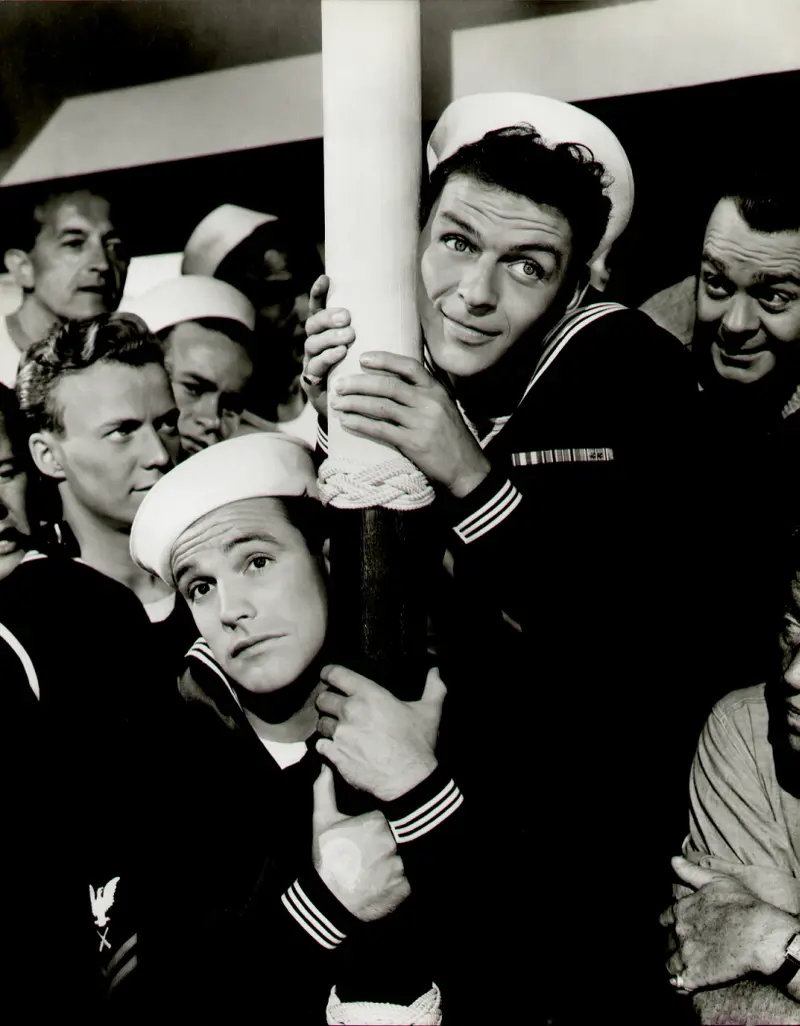
Photo: DoctorMacro.com
The Paramount Theatre in New York booked Frank Sinatra to follow the Benny Goodman orchestra, and he opened there on December 30, 1942. He had left Tommy Dorsey’s band only months before, and to much of America, as James Kaplan puts it, the only singer who counted was still Crosby. The noise that week was something else. Jack Benny later described it in a line Nancy Sinatra passed on: “I thought the goddamned building was going to cave in.” And then: “All this for a fellow I never heard of.” The theater’s Bob Weitman renewed the four-week engagement for four more, and within a few weeks about 1,000 Sinatra fan clubs had been reported around the country. The craze got a name: Sinatramania.
That week at the Paramount is the answer to how Frank Sinatra got famous, but it came at the end of a seven-year climb: a 1935 radio contest with a Hoboken vocal group, a 1939 stint with Harry James, nearly three years and a number-one record with Dorsey, then a gamble on going solo in 1942. The Paramount turned a band singer into the idol of the teenage girls called bobby-soxers, and by the end of 1943 radio, Columbia Records and New York’s smartest rooms had made him a national star. Sinatra’s own explanation, quoted by J. Randy Taraborrelli in Sinatra: Behind the Legend, was that Bing Crosby had played mostly to older listeners and nobody had come along since. “I think the kids were looking for someone to cheer for,” he said.
A car, a contest and a borrowed spot
He was born on December 12, 1915, in a tenement at 415 Monroe Street in Hoboken, New Jersey, the only child of Dolly and Marty Sinatra. He sang for spare change at his parents’ tavern, worshipped Crosby, and never learned to read music; he learned songs by ear. As a young man he sang for no pay on local radio, including WAAT in Jersey City. His first real break came through his mother in 1935, when Dolly talked a local singing group called the 3 Flashes into letting him join them for their audition for the Major Bowes Amateur Hour. The group’s baritone, Fred Tamburro, remembered a hanger-on: “Frank hung around us like we were gods or something.” Tamburro admitted they took him partly because he had a car and could drive them around.
Renamed the Hoboken Four, they won the show with 40,000 votes, and the prize was a six-month contract to perform on stage and radio around the country. Taraborrelli writes that Bowes sent them out at about $65 a week with one of his touring amateur companies, sharing the bill with sixteen other acts, among them tap dancers, jugglers and harmonica players. Sinatra lasted roughly three months, to the end of 1935. He could not make himself blend in. He winked and flirted at the women in the seats, the audiences gave him most of the attention, and the other three resented it.
Two bandleaders
The road back went through the bands. In June 1939 the bandleader Harry James, who had heard him on a radio program called “Dance Parade,” signed him after a show at the Paramount Theatre to a two-year contract at $75 a week. Their first record, “From the Bottom of My Heart,” sold no more than 8,000 copies, and the rest of the 1939 sides, “All or Nothing at All” among them, sold poorly at first. Sinatra grew frustrated, feeling he was not getting the success he was after, and in November 1939 he left to replace Jack Leonard as Tommy Dorsey’s singer, at $125 a week.
He made his first public appearance with Dorsey on January 26, 1940, at the Coronado Theatre in Rockford, Illinois, opening with “Stardust.” Dorsey recalled the crowd’s excitement rising when the kid got up to sing: “Remember, he was no matinée idol. He was just a skinny kid with big ears.” Dorsey admitted he was so taken that he nearly forgot his own trombone solos. That summer “I’ll Never Smile Again” topped the charts for twelve weeks, and by May 1941 Sinatra led the male singer polls in Billboard and DownBeat.
Fame and money were not yet the same thing. James Kaplan, whose Frank: The Voice follows him from Hoboken to his Oscar comeback, notes that in the summer of 1940 Sinatra got a flat $25 for each recording session with the band and no royalties at all, and was still living in a third-floor walk-up and paying off a Buick convertible. Not every critic was sold, either. During a Chicago stand a Billboard reviewer granted that he sang the ballads pleasantly, then added, “He touches the songs with a little too much pash, which is not all convincing.” Kaplan reads that unease as a sign of how new he sounded: a hot singer in a field of smooth, cool baritones led by Crosby. Meanwhile, Kaplan writes, Sinatra was watching Dorsey and studying how a real star carried himself.
New articles by email
An occasional email when a new article is out. No spam, unsubscribe any time.
Thanks. You are on the list.
The turn came in a studio. On January 19, 1942, Dorsey let him record four songs on his own, with Axel Stordahl arranging and conducting, among them “Night and Day” and “The Song Is You.” When Sinatra heard the playbacks, Stordahl said, he could hardly credit how good he sounded, and Stordahl took it for a turning point. Sinatra wanted to go solo and take on Crosby. His contract stood in the way: it gave Dorsey 43 percent of his lifetime earnings. A legal fight was settled in August 1942, and on September 3 Dorsey said goodbye, reportedly wishing him a hard fall. Newspapers spread a rumor that Sinatra’s godfather, the mobster Willie Moretti, had pried him loose by holding Dorsey at gunpoint. Sinatra hired Stordahl away as his own arranger at $650 a month, five times what Stordahl had earned from Dorsey. Kaplan writes that the agent working to book him, Frank Cooper, kept running into people who believed a singer could not draw a crowd without a big band behind him. The Paramount date answered them.
The year it held
The year that followed spread the noise far past Times Square. Sinatra sang on radio’s Your Hit Parade from February 1943, and he signed with Columbia Records as a solo artist that June, in the middle of a musicians’ strike against the record companies. Kaplan describes his first solo session, on Monday, June 7, 1943, at Liederkranz Hall on East 58th Street: there was no band in the room, only the eight-voice Bobby Tucker Singers. He had not made a record in eleven months, and Columbia’s Manie Sacks was so eager to get something out to his female fans that he asked Sinatra to sing a cappella. Columbia also reissued the 1939 James record of “All or Nothing at All,” the one nobody had bought, and this time it reached number 2 and stayed on the best-seller list for 18 weeks.
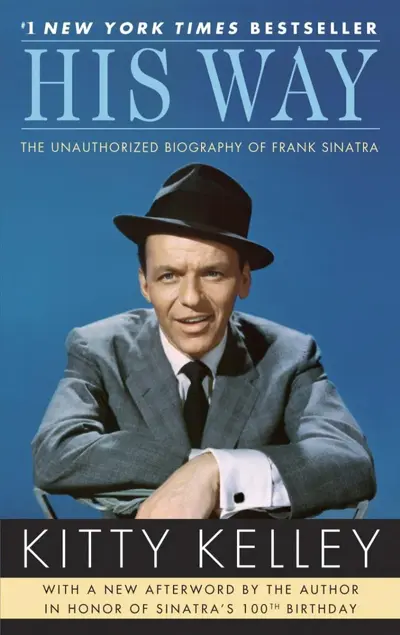
The nightclubs followed. He made his first solo club appearance at the Riobamba in New York, and in October he played the Wedgwood Room at the Waldorf-Astoria, a room so grand, Kaplan writes, that Cole Porter came down from his suite on the 33rd floor to see the show. Kitty Kelley, in His Way, records that in DownBeat’s 1943 year-end poll Sinatra beat Bob Eberly, Dick Haymes, Perry Como and Bing Crosby. She also describes what the fans did: they sent him hundreds of hand-knit sweaters, wrote hate letters to critics who panned him, covered his house in Hasbrouck Heights with lipstick kisses, and wrote poems to his three-year-old daughter, Nancy. His publicist, George Evans, encouraged interviews and photographs with fans and sold him as a shy, vulnerable Italian American who had come up hard and made good.
By the end of 1943, in Kaplan’s account, Sinatra had gone from teen idol to a kind of star only a handful of people had ever been, in the company of Caruso, Chaplin, Valentino and Crosby. He had sung with the Cleveland, Philadelphia and Los Angeles orchestras, and he was soon a guest of President Franklin D. Roosevelt, who asked him to tip him off about that week’s Hit Parade winner. He was also, Kaplan writes, about to break through in the movies.
Other young singers watched and took notes. Eddie Fisher, then singing on Philadelphia radio as the Philadelphia Flash, wrote in his memoir that he went to see Sinatra at the Earl Theater and pictured himself on that stage instead. Afterward he watched bodyguards shove Sinatra through a mob of teenagers who only wanted to touch him or get an autograph, and promised himself he would never treat his own fans that way. When Sinatra went back to the Paramount in October 1944, only 250 people left after the first show, and 35,000 fans locked out on the street nearly rioted. That was the Columbus Day Riot.
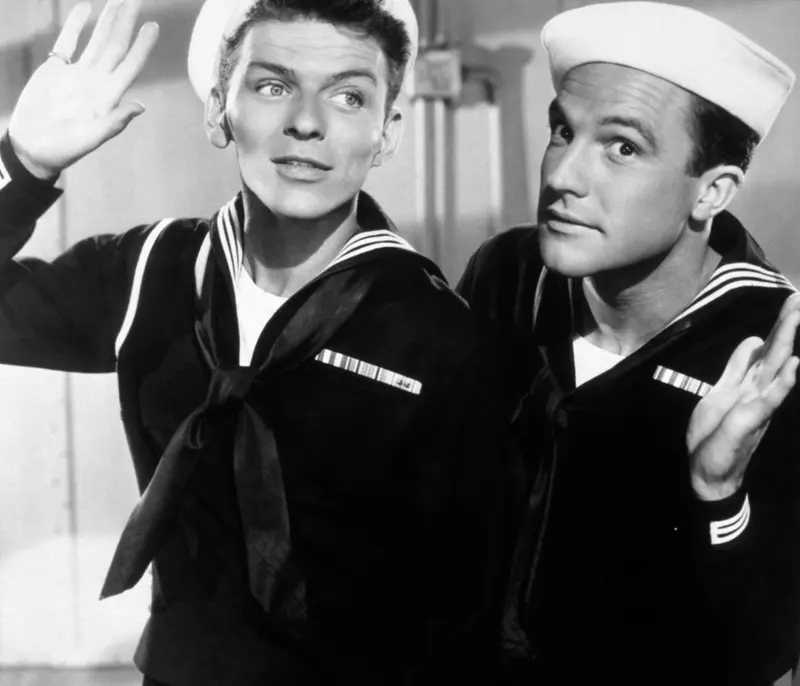
In 1945 MGM cast him opposite Gene Kelly in Anchors Aweigh, playing a sailor on leave in Hollywood. The picture was a major success, and his song “I Fall in Love Too Easily” was nominated for an Academy Award. That same year, Taraborrelli writes, he played the Paramount again and was so mobbed he could not leave the building for dinner. “No one’s ever been this hot,” he bragged. “This is gonna last forever.”
In May 1947 he opened at the Capitol Theatre in New York, the same house where Major Bowes had given him his first success twelve years earlier. The opening-night crowd was lukewarm, and only a handful of fans waited at the stage door. The next day he turned on George Evans in front of his staff and his wife. “Pay some kids,” he said.
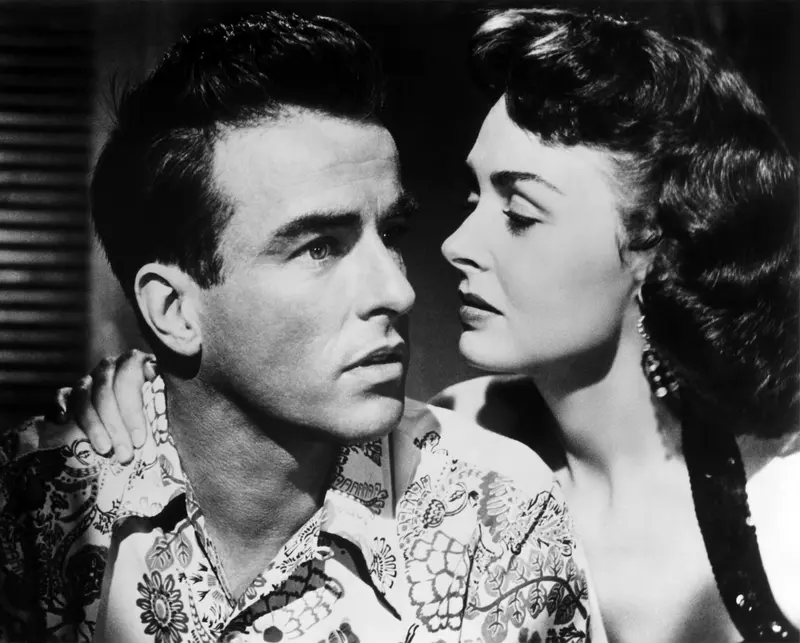
The crowds kept thinning until, in 1952, Columbia and MCA both let him go. How that dropped singer climbed back, by way of a soldier’s part in From Here to Eternity and an Oscar in March 1954, is the story of what happened to Sinatra after his career collapsed.
Read next
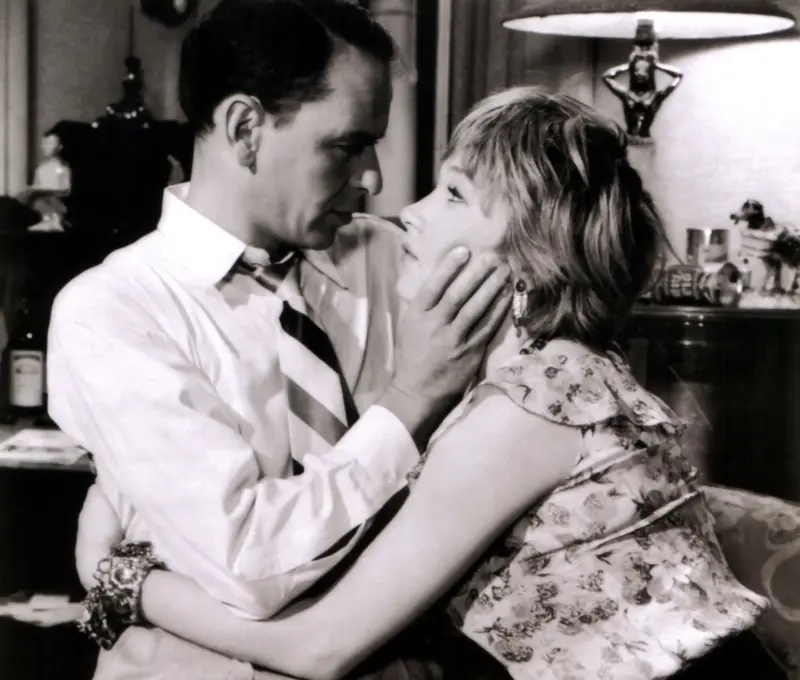
Star profile / Frank Sinatra
What happened to Frank Sinatra after his career collapsed in 1952
By 1952 Frank Sinatra had lost his record label, MCA and most of his audience. A film role and a new arranger in 1953 began a second career that ran until his death in 1998.
Continue readingQuick answers
How did Frank Sinatra get famous?
Frank Sinatra got famous in stages over about seven years. He won a 1935 radio amateur contest with the Hoboken Four, sang with Harry James and then Tommy Dorsey, whose record “I’ll Never Smile Again” topped the charts in 1940, and went solo in 1942. His Paramount Theatre opening on December 30, 1942, set off Sinatramania among teenage bobby-soxers.
Why did Frank Sinatra go to jail?
Frank Sinatra was arrested after an incident at the Rustic Cabin, a room where he sang in his early years. Afterward he agreed to marry Nancy Barbato, whom he had met in Long Branch, New Jersey, in the summer of 1934 while working as a lifeguard.
The full story is more complicated: Why Frank Sinatra Went to Jail: Seduction, Adultery & a $500 Bond
What happened to Frank Sinatra?
Frank Sinatra’s teen-idol fame faded in the late 1940s, and in 1952 Columbia Records and MCA dropped him. From Here to Eternity, released in 1953, won him an Oscar and began a comeback that carried him through Capitol, his own Reprise label and concerts into the 1990s. He died in 1998.
The full story is more complicated: What happened to Frank Sinatra after his career collapsed in 1952
In this article
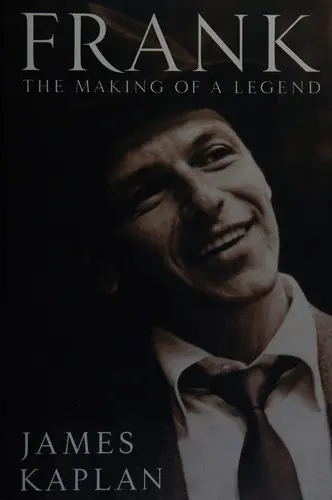
Frank
James Kaplan · 2010
Get the book
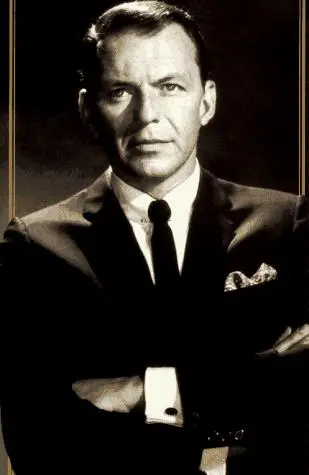
Sinatra
J. Randy Taraborrelli · 1997
Get the book
His Way
Kitty Kelley · 1983
Get the book
Anchors Aweigh
George Sidney 1945
Watch it
From Here to Eternity
Fred Zinnemann 1953
Watch it
Sources
- Frank by James Kaplan (2010)
- Sinatra: The Chairman by James Kaplan (2015)
- Sinatra by J. Randy Taraborrelli (1997)
- His Way by Kitty Kelley (1983)
- Eddie: My Life, My Loves by Eddie Fisher
- Frank: The Voice (Google Books record), Google Books, accessed 2026-11-06
- Frank Sinatra, Wikipedia, accessed 2026-11-06
Photo credits
- Frank Sinatra in a still from Anchors Aweigh (1945). Photo: DoctorMacro.com