Scandals and rivalries
Why Cary Grant and Dyan Cannon divorced: her 1968 testimony about LSD and his conduct at home
Cannon won the divorce in March 1968 on testimony about Grant's LSD use, spankings and a locked room, though by her own account the first request for a split came from Grant, through a messenger.
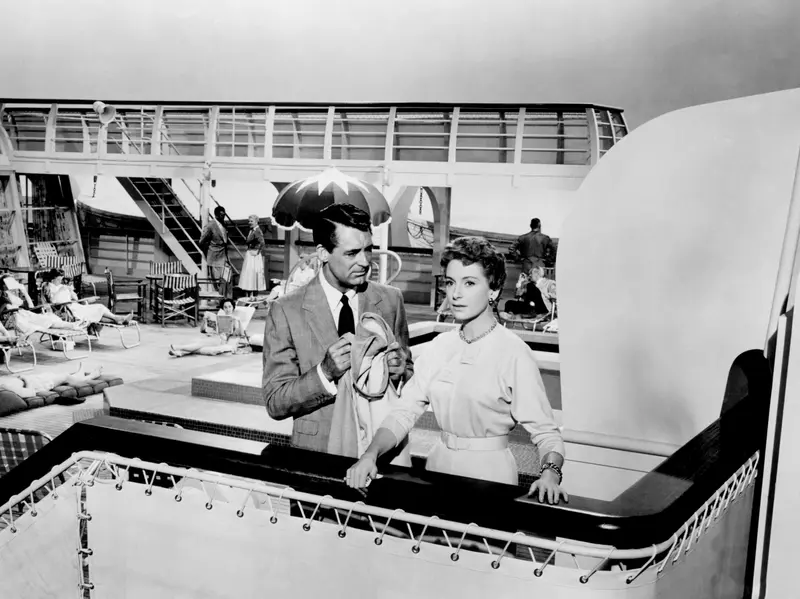
Photo: DoctorMacro.com
Dyan Cannon won her divorce from Cary Grant in March 1968 on sworn testimony about his LSD use and his treatment of her at home, and the judge’s decision named the drug. Judge Wenke said Grant’s ongoing use of LSD had made him “irrational and hostile,” according to Marc Eliot’s biography. Entertainment Weekly’s 2009 account of the marriage lists what she told a packed courtroom: he criticized her often, spanked her and locked her in her room. Grant spent the trial in a hospital, and after her testimony he withdrew the rebuttal statement he had prepared. There is one complication: by Cannon’s account the first word of a divorce came from Grant, through another man, while the filing came from her.
The couple began dating in 1961, when Grant was 33 years her senior. Entertainment Weekly says he saw her on the television series Malibu Run and had her agent on the telephone before the program ended. They married in Las Vegas on July 22, 1965. They then flew to Bristol to see his mother, and Entertainment Weekly reports that reporters drove them out a back window of the Royal Hotel at 3 a.m. Scott Eyman’s biography records that Elsie Leach congratulated the bride as “Betsy,” the first name of Grant’s third wife, Betsy Drake, and that the couple corrected her together. Their daughter, Jennifer, was born on February 26, 1966, and a photo caption in Eliot’s book calls that year the short time they “appeared to be happily married.”
Cannon is the main witness to life inside the house. Eyman writes that Grant kept to himself, seldom telephoned anyone except Stanley Fox, and went barefoot around the house watching television. Cannon recalled a man whose “shell opened and closed,” more “withdrawn” than temperamental, with moods that moved “without warning, or apparent cause.” She compared it to sitting at a television with someone “always changing the channel.” Eliot’s biography of James Stewart adds that Grant had grown uneasy at being photographed in public with his much younger bride. Entertainment Weekly says his temper and need for control terrified her, and that he once told an unnamed friend he would “break her like a pony.”
LSD was the other subject of dispute in the house. Radiologist Mortimer Hartman had begun treating Grant with the drug in the late 1950s, and the sessions are estimated at 100 over several years. Cannon had tried it herself, and Eyman writes that Grant came back to the idea of her taking more; she refused while pregnant, saying she did not want a two-headed child. Grant was still seeing Hartman, and he sometimes took the drug at home with no supervision and a Valium at hand. When Cannon said she could not tell what the experience was meant to give her, his advice ended with the words “Just experience it.” Eyman’s summary of the attempt is two words long: “Nothing helped.”
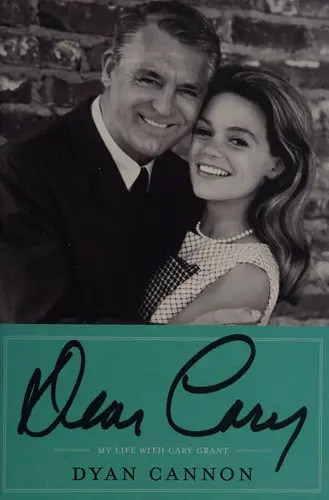
Then came the scene the divorce turns on. While Grant was at Universal, Fox came to the house and told a stunned Cannon, “He wants a divorce.” She asked Fox “what kind of a man” would send someone else to his own home to say so. The scene comes from Cannon’s own account, in Dear Cary. A Los Angeles Herald-Examiner headline of January 24, 1967, read “Cary Grant’s Rift Reported.” The couple tried a reconciliation, then separated in August 1967, and Cannon filed in September.
New articles by email
An occasional email when a new article is out. No spam, unsubscribe any time.
Thanks. You are on the list.
On March 12, 1968, a truck struck Grant’s limousine in Queens on the way to JFK Airport, and he spent 17 days in a hospital with three broken ribs. A companion, Baroness Gratia von Furstenberg, was also hurt. The Los Angeles Times headline of March 21, 1968, said LSD had been “Long Used” by Grant, and the New York Daily News of the same date ran “Says Dreamboat Cary Took Nightmare Trips.” Cannon testified to his “outlandish, irrational and hostile” conduct, called him an “apostle of LSD,” and said he was still taking it in 1967 as a remedy for the marriage. Dr. Judd Marmor, briefly his psychiatrist and a witness for Grant, testified that Grant had told him of spanking his wife for “reasonable and adequate causes.” Friends suggested to the press that she had set him up and married him for her career, which Eliot calls “unprovable speculation” that gained little attention. Entertainment Weekly treats the LSD admission as the final blow to his screen image.
Eliot records that Cannon was granted the divorce on March 22, two days after the trial began, with custody of Jennifer, then 2. Grant was allowed 60 days of visitation a year and a “reasonable” number of overnight visits, with a nurse or governess present for extended stays.
Grant himself later called taking LSD “an utterly foolish thing to do.” Later witnesses to his private life described a man close to the one Cannon had described in court. Kirkus Reviews, on 16 Feb 1989, said Maureen Donaldson’s memoir shows a “Jekyll/Hyde personality” and a Grant who “forever pushed away each woman he loved.” In Eyman’s 2020 biography, Grant’s friend Bill Royce said Grant was the same man with his fifth wife, Barbara Harris, as he had been with Cannon: “He was not going to change.” Kirkus, reviewing Eyman on Oct. 20, 2020, wrote that the child of the marriage “brought him lasting happiness.”
Relations between Grant and Cannon ran hot and cold after the divorce. Eliot says Grant cleared Cannon to talk to columnist Sheilah Graham after his 1970 honorary Oscar; she described the night before the ceremony, when she “read him my loser’s speech,” and Eliot reads the hint of a reunion as deliberate publicity. By Eliot’s account, in 1974 Grant had Donaldson carry Jennifer to Cannon so he could avoid seeing his ex-wife. Royce credited Harris with having “effected a truce with Dyan,” and Entertainment Weekly says the former couple became friends before he died. After Grant’s death in 1986, Cannon turned down Swifty Lazar’s offer of “millions” to write about him. She was not invited to the October 19, 1988, memorial dinner, attended by 940 guests including Frank Sinatra and Jennifer Grant. Some years later she declined another book offer, from Jacqueline Kennedy Onassis, saying healing was still needed. She published her own version in 2011, and it became a New York Times best seller. In 2023 it became the miniseries Archie, with Cannon as executive producer.
How Grant died in Davenport, Iowa, in 1986, refusing to be taken to the hospital as a stroke worsened, is its own story.
Read next
Star profile / Cary Grant
“He wouldn’t let us”: How Cary Grant died of a stroke in Davenport, Iowa, after refusing the hospital
Cary Grant died of a massive stroke on November 29, 1986, on tour in Davenport, Iowa, after refusing the hospital until a coma ended the argument. Reporters waiting at his hospital got the news from London.
Continue readingQuick answers
Why did Cary Grant and Dyan Cannon divorce?
Dyan Cannon divorced Cary Grant over his LSD use and his conduct at home, as she testified in March 1968. She said he criticized her, spanked her and locked her in her room. The judge said his ongoing LSD use had made him “irrational and hostile.”
What happened to Dyan Cannon?
Dyan Cannon built a film career after the 1968 divorce, with Oscar nominations for Bob & Carol & Ted & Alice and Heaven Can Wait. She wrote, directed and starred in The End of Innocence (1990), played a judge on Ally McBeal, and published the memoir Dear Cary in 2011.
Where did Dyan Cannon go to high school?
Dyan Cannon attended West Seattle High School. She was crowned Miss West Seattle in 1954, then spent two and a half semesters at the University of Washington.
How did Cary Grant die?
Cary Grant died of a massive stroke on November 29, 1986, at age 82, in Davenport, Iowa. He fell ill at the Adler Theater and refused to go to the hospital. He slipped into a coma by 8:45 p.m., was taken to St. Luke’s Hospital and died at 11:22 p.m.
The full story is more complicated: "He wouldn't let us": How Cary Grant died of a stroke in Davenport, Iowa, after refusing the hospital
Why did Cary Grant and betsy drake divorce?
The Grant and Drake divorce followed his 1957 affair with Sophia Loren and their 1958 separation. He also arranged for Loren to take Drake’s place in Houseboat, a film Drake had written. They divorced on August 14, 1962.
In this article
Cary Grant
Scott Eyman · 2020
Get the book
Cary Grant
Marc Eliot · 2004
Get the book
Dear Cary
Dyan Cannon · 2011
Get the book
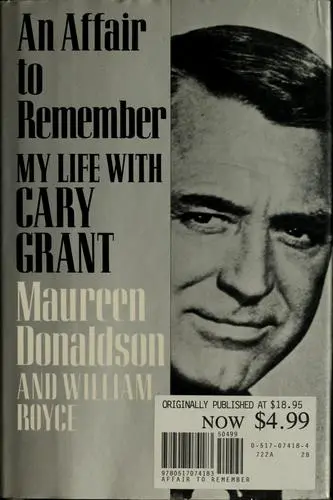
An affair to remember
Maureen Donaldson · 1989
Get the book
Sources
- Cary Grant by Scott Eyman (2020)
- Cary Grant by Marc Eliot (2004)
- Jimmy Stewart: A Biography by Marc Eliot
- Cary Grant weds Dyan Cannon (1965), Entertainment Weekly, accessed 2026-11-06
- AN AFFAIR TO REMEMBER: My Life with Cary Grant, Kirkus Reviews, accessed 2026-11-06
- CARY GRANT by Scott Eyman, Kirkus Reviews, accessed 2026-11-06
- Cary Grant, Wikipedia, accessed 2026-11-06
- Dyan Cannon, Wikipedia, accessed 2026-11-06
- Betsy Drake, Wikipedia, accessed 2026-11-06
Photo credits
- Cary Grant in a still from An Affair to Remember (1957). Photo: DoctorMacro.com