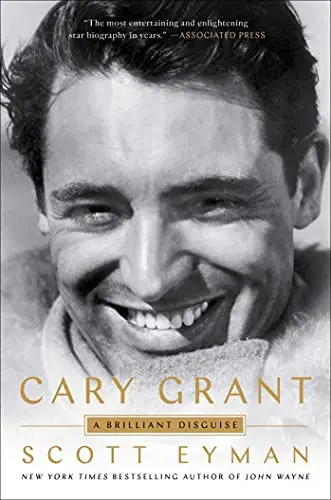
Cary Grant
Scott Eyman · 2020
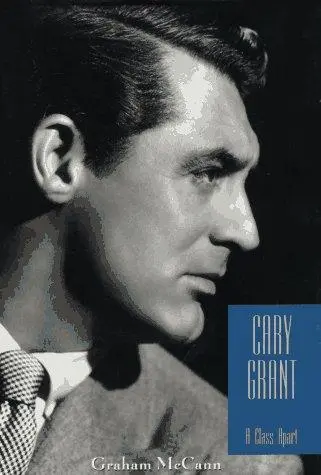
About Cary Grant
Graham McCann’s Cary Grant is a biography of Cary Grant, published in 1996 by Columbia University Press. Google Books lists it under a longer title, Cary Grant: A Class Apart. Open Library files it under biography and under motion picture actors and actresses, and its description says the book examines the ambiguities in Grant’s life and work.
The catalog lists 15 books on Grant, all classed as biographies. Ten came out before McCann’s, from Lionel Godfrey’s Cary Grant (1981) to Nancy Nelson’s Evenings with Cary Grant (1991). One shares its year, Geoffrey Wansell’s Cary Grant, dark angel (1996, Arcade), and Wansell’s other two listed titles date from 1983 and 1984. Three came later: Marc Eliot’s biography (2004), Dyan Cannon’s Dear Cary (2011) and Scott Eyman’s Cary Grant (2020). McCann’s is the only one of the 15 from a publisher with “University” in its name.
The two records disagree on length: Open Library gives 346 pages and Google Books gives 380. Open Library prints the book’s first sentence as “Cary Grant was a working-class invention.” Its description, which mostly spells the name “Gary Grant,” calls him “Hollywood’s quintessential democratic gentleman” and counts a star career of over 30 years across more than 70 movies.
That description names three contrasts as the book’s subject: an English working-class man playing a well-bred American, a playful entertainer turned powerful businessman, and an “intimate stranger” who was often “the seduced male.” It quotes Grant himself, “There are always ambiguities,” and it describes the book as “thorough” and “meticulously researched.” The Open Library record quotes no outside review.
Wikipedia’s article on Grant calls McCann his biographer and reports several judgments under McCann’s name, though those passages name the author and not a particular title. McCann is credited with the view that Grant’s mother could neither give affection nor accept it. He is reported as saying that Grant spoke his lines in the 1931 short Singapore Sue “without any conviction,” and as ranking The Howards of Virginia as Grant’s worst film and performance.
The article also has McCann attributing Grant’s “almost obsessive maintenance” of a tan to Douglas Fairbanks. It reports his note that Grant, from a working-class background and not well educated, worked throughout his career to move among high society and pick up its manners. McCann’s verdict, as Wikipedia quotes it, is that Grant was “the funniest actor cinema has ever produced.”
Cary Grant died of a massive stroke on 29 November 1986, at St. Luke’s Hospital in Davenport, Iowa. Wikipedia’s article says he was taken ill at the Adler Theater while preparing A Conversation with Cary Grant, and that he refused at first to go to the hospital.
No. Cary Grant died on 29 November 1986 in Davenport, Iowa, at age 82. Wikipedia’s article says no funeral was held, at his request, and that his ashes were scattered in the Pacific Ocean.
Yes. Wikipedia’s article says he married five times: Virginia Cherrill, Barbara Hutton, Betsy Drake, Dyan Cannon and Barbara Harris. His marriage to Drake, from 1949 to 1962, was his longest.
Cary Grant’s daughter, Jennifer Grant, his only child with Dyan Cannon or anyone else, was born on 26 February 1966. Wikipedia’s article says he retired from the screen that year to focus on raising her, and that the bulk of his estate went to her and Barbara Harris.
Cary Grant was born in Horfield, a Bristol suburb, at 15 Hughenden Road on 18 January 1904, as Archibald Alec Leach. Open Library’s description of McCann’s book gives the name as Archie Leach.
Scott Eyman · 2020
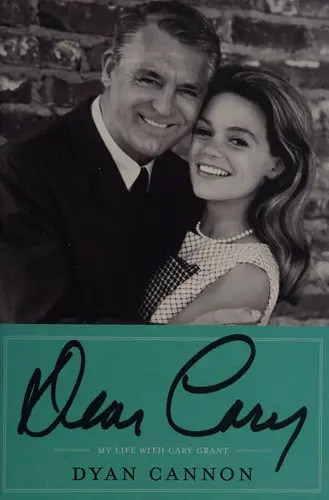
Dyan Cannon · 2011
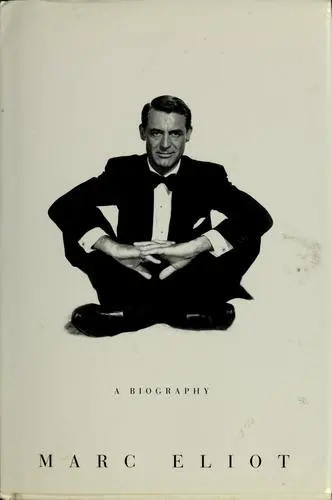
Marc Eliot · 2004
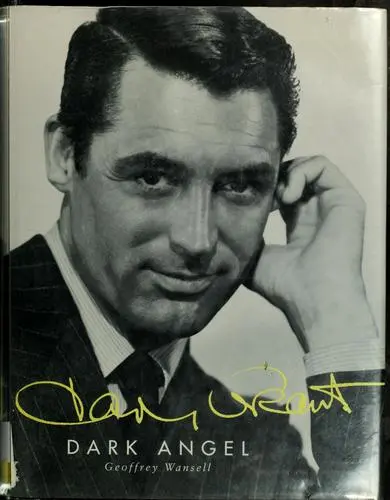
Geoffrey Wansell · 1996
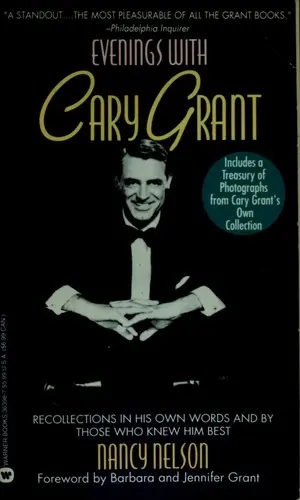
Nancy Nelson · 1991
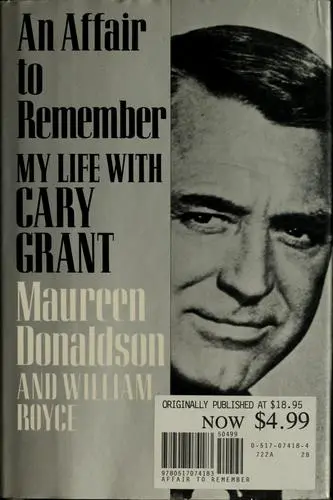
Maureen Donaldson · 1989
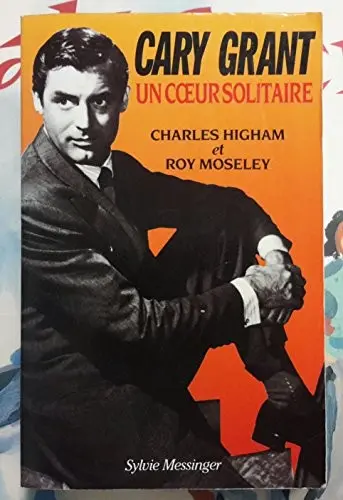
Charles Higham, Roy Moseley · 1989
Warren G. Harris · 1987
Pamela Trescott · 1987
Geoffrey Wansell · 1984
Geoffrey Wansell · 1983
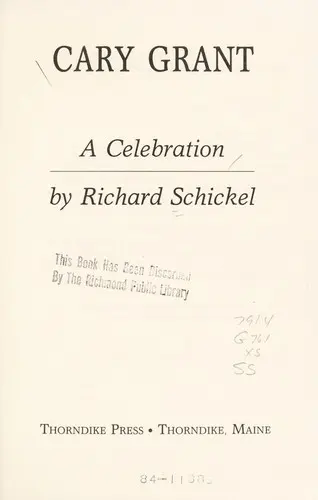
Richard Schickel · 1983
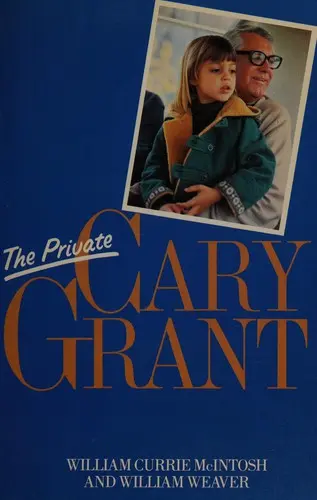
William Currie McIntosh · 1983
We use Google Analytics to see which pages help. Allow it?