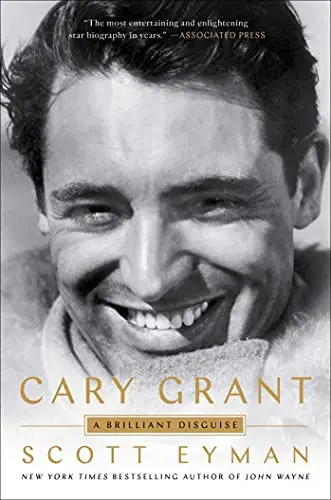
Cary Grant
Scott Eyman · 2020
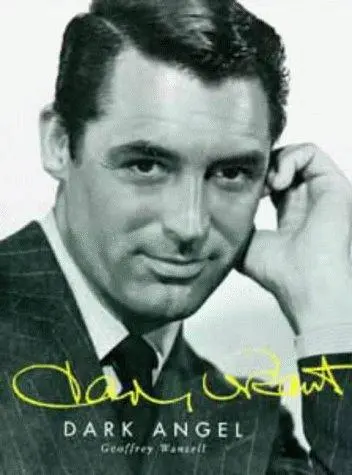
About Cary Grant
Not listed on Amazon right now. Search Amazon for it.
The Fontana Cary Grant by Geoffrey Wansell is a biography published in 1984. Its subject is Cary Grant. The Open Library record gives it 350 pages and 1984 as its first publication date, and lists HarperCollins Distribution Services beside Fontana. The subject headings cover motion picture actors and actresses, biography and the United States, and they name Grant with the dates 1904-1986. That record carries no summary of the contents.
The book matters most to a reader sorting out Wansell’s own work on Grant, because the catalog listing gives him three titles: Cary Grant, haunted idol (1983, Quill), this Fontana volume (1984) and Cary Grant, dark angel (1996, Arcade). The Open Library record does not say how the 1984 book relates to the other two. Google Books lists the 1996 title at 200 pages, and the publisher’s description there promises 150 photos and “threads of both light and dark” in Grant’s life.
In the catalog listing, four Grant biographies carry earlier dates. They are Lionel Godfrey’s Cary Grant (1981, Hale), Richard Schickel’s Cary Grant: a celebration (Pavilion, 1983), The private Cary Grant by William Currie McIntosh (Sidgwick and Jackson, 1983) and Wansell’s own Haunted idol. The next listed dates are from 1987, with books by Warren G. Harris at Doubleday and Pamela Trescott at Acropolis Books. Wansell’s Dark angel shares the year 1996 with Graham McCann’s book from Columbia University Press. The most recent title listed is Scott Eyman’s, from 2020.
Wikipedia’s article on Grant names Wansell as a biographer several times. Its running text does not say which of his Grant books each point comes from, so these points cannot be assigned to the Fontana volume with confidence. The article reports his view that Grant’s mother blamed herself for the death of Grant’s older brother, John, and never got over it. It gives his claim that Grant deliberately sought expulsion from Fairfield in 1918 in order to perform with the Pender troupe. It also credits him with saying that Penny Serenade moved Grant because he and Barbara Hutton had begun to talk about having children.
On the screen work, Wikipedia quotes Wansell as saying that Grant could question his own image “with the arch of an eyebrow.” It also reports his view that a darker, mysterious side reached into Grant’s private life, and that Grant went to great lengths to hide it and protect his debonair image. Neither the Open Library record nor Wikipedia’s article says how the 1984 book was reviewed.
Cary Grant died of a massive stroke on 29 November 1986, aged 82. Wikipedia’s article says he fell ill at the Adler Theater in Davenport, Iowa, while preparing his stage show, and died that night at St. Luke’s Hospital.
No. Cary Grant died on 29 November 1986, aged 82. The Open Library record for Wansell’s biography gives his dates in its subject heading as 1904-1986.
Yes. Wikipedia’s article counts five marriages: Virginia Cherrill, Barbara Hutton, Betsy Drake, Dyan Cannon and Barbara Harris. The marriage to Drake, from 1949 to 1962, was his longest.
Cary Grant’s daughter, Jennifer Grant, was his only child, born to Dyan Cannon on 26 February 1966. Wikipedia’s article says he retired from the screen that year to bring her up, and that most of his estate went to her and Barbara Harris.
Cary Grant was born in Bristol, England, at 15 Hughenden Road in the suburb of Horfield. Wikipedia’s article gives the date as 18 January 1904 and his birth name as Archibald Alec Leach.
Scott Eyman · 2020
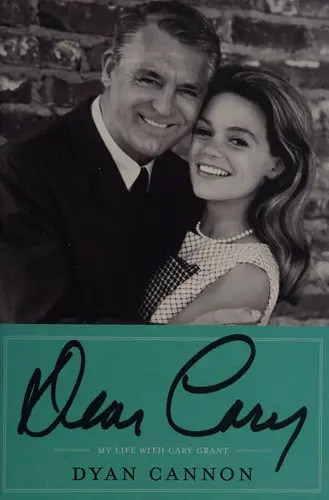
Dyan Cannon · 2011
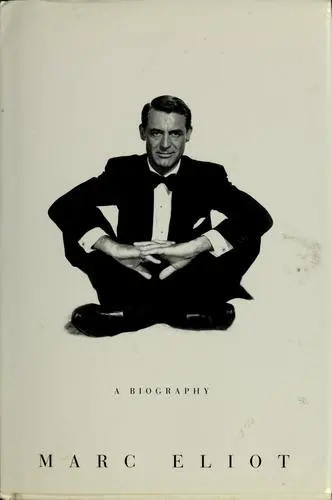
Marc Eliot · 2004
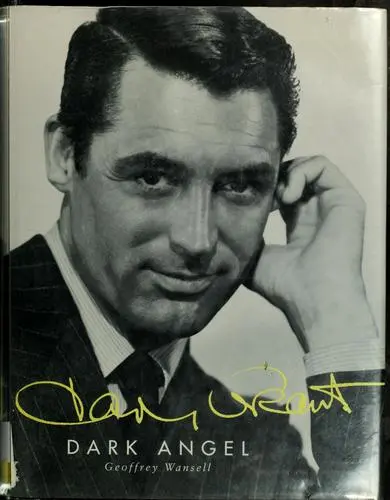
Geoffrey Wansell · 1996
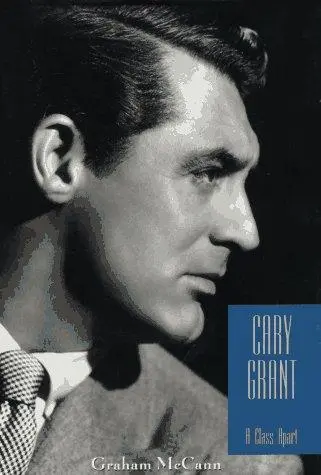
Graham McCann · 1996
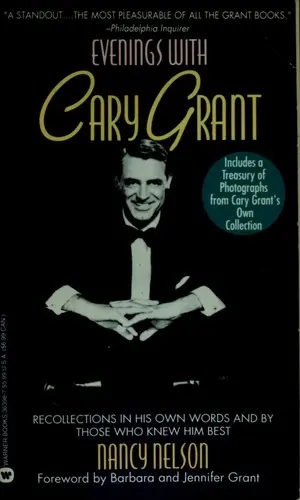
Nancy Nelson · 1991
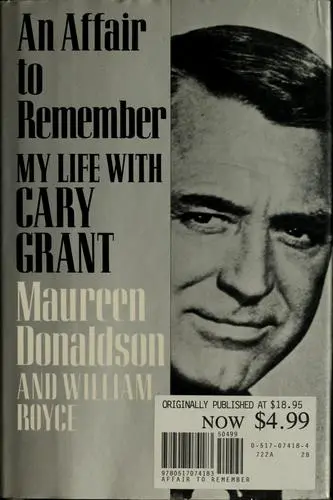
Maureen Donaldson · 1989
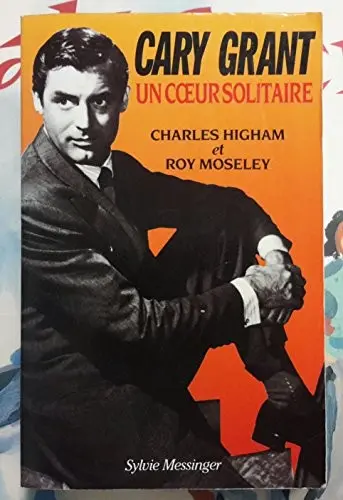
Charles Higham, Roy Moseley · 1989
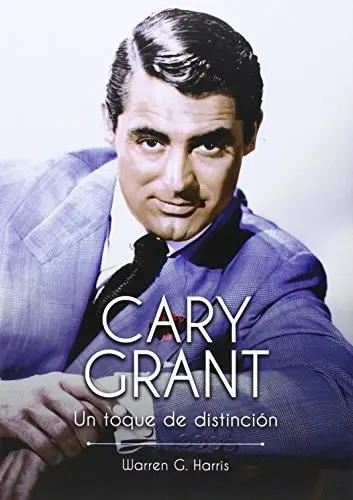
Warren G. Harris · 1987
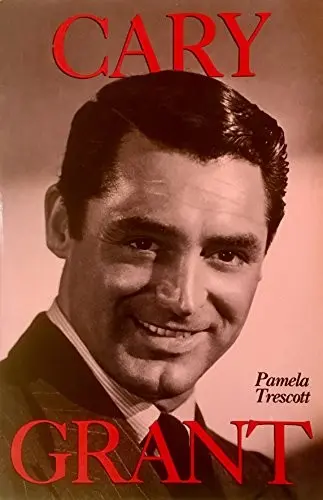
Pamela Trescott · 1987
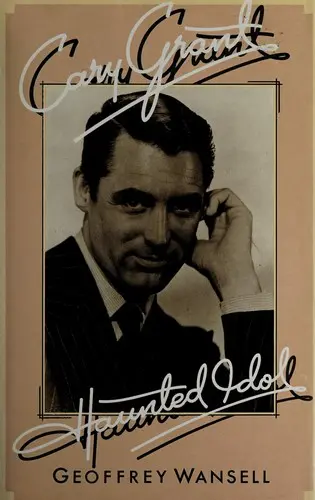
Geoffrey Wansell · 1983
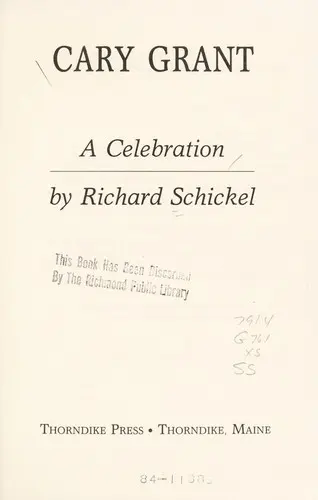
Richard Schickel · 1983
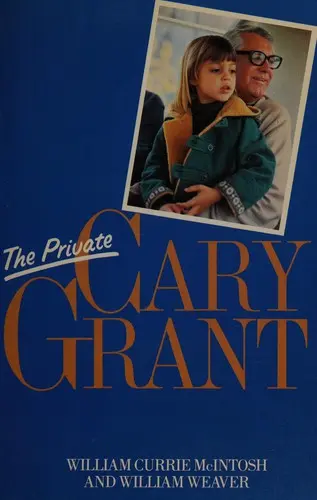
William Currie McIntosh · 1983
We use Google Analytics to see which pages help. Allow it?