Anchors Aweigh
George Sidney 1945
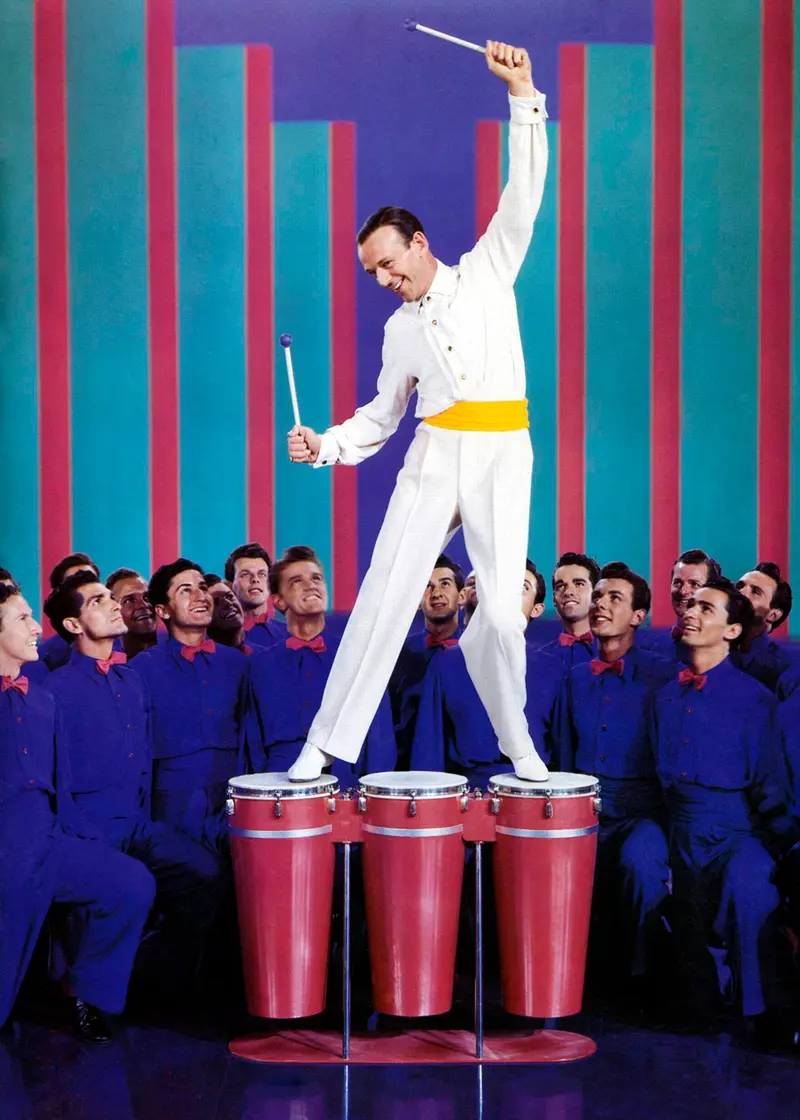
MGM’s all-star musical revue, framed by William Powell as Florenz Ziegfeld planning one more show from Heaven. Fred Astaire, Gene Kelly, Judy Garland, Fanny Brice, Lena Horne and Red Skelton perform separate numbers and sketches. It holds the only screen teaming of Astaire and Kelly in their prime.
Not listed on Amazon right now. Search Amazon for it.
Photo: DoctorMacro.com
Ziegfeld Follies is a Metro-Goldwyn-Mayer musical revue, and its producer, Arthur Freed, wanted a picture modeled on Florenz Ziegfeld’s Broadway shows. It is built from musical numbers and comic sketches that have no connection to one another. William Powell plays Florenz Ziegfeld, Fred Astaire appears as himself and as a jewel thief in “This Heart of Mine,” and Fanny Brice plays Norma Edelman in “A Sweepstakes Ticket.” Of the whole company, only Brice had starred in the original Broadway Follies, according to Wikipedia’s entry on the film.
The picture opens in a Heaven where Ziegfeld, played by Powell in a return to his part in The Great Ziegfeld, muses on staging another show. A long red crayon and a sheet of paper appear, and he begins to write, with Astaire as his chosen introduction. The film does not go back to Ziegfeld after that. The numbers that follow include Esther Williams in a water ballet, Lena Horne singing “Love,” Red Skelton in “When Television Comes,” Judy Garland in “A Great Lady Has an Interview,” and Astaire with Gene Kelly in “The Babbitt and the Bromide.”
The date on the picture needs explaining. Wikipedia’s entry calls it a 1945 film but gives 1946 as the release year, and its entry on Astaire says the film was previewed in November 1944 and held back until April 1946. The Spanish-language magazine Cinelandia was already printing photographs from the production in its August 1944 issue.
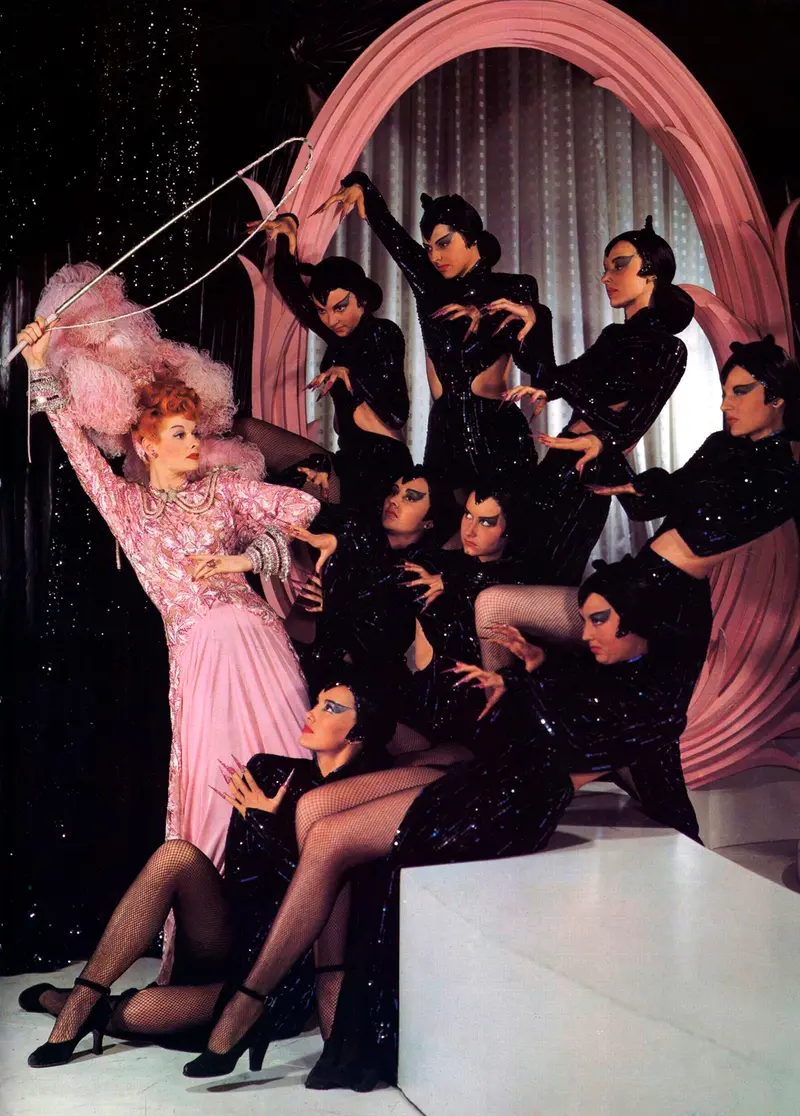
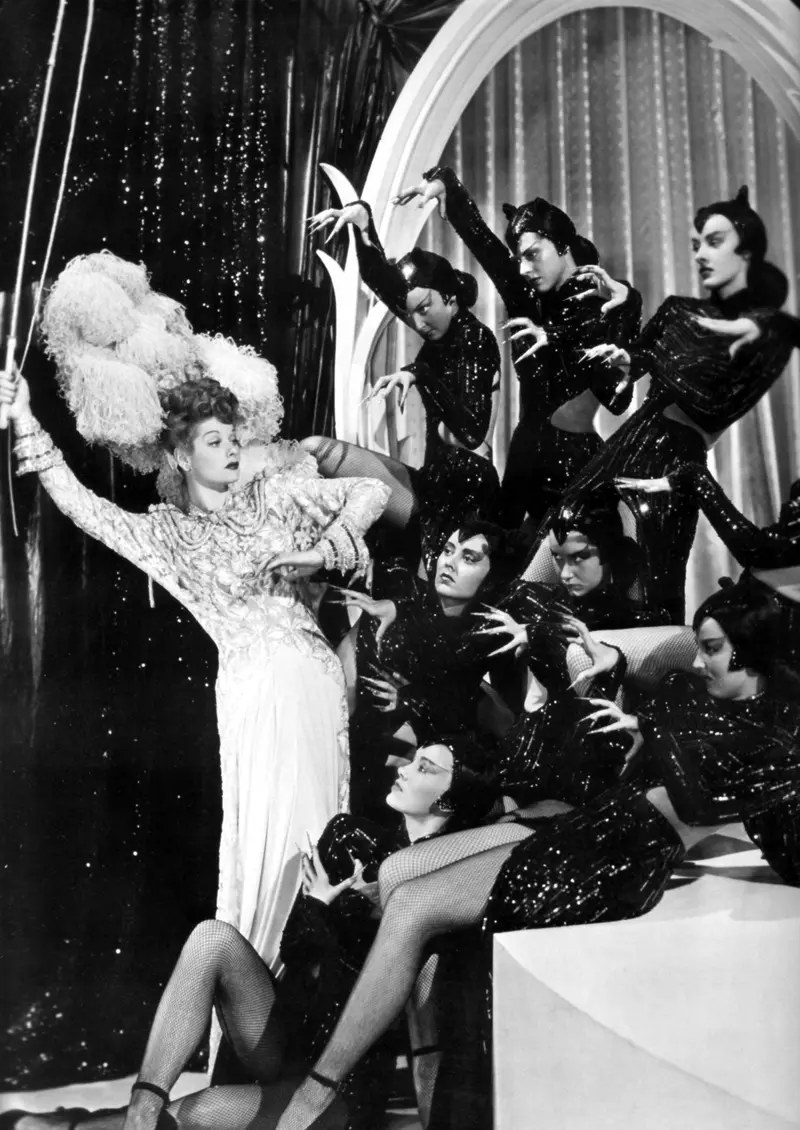
Two issues of Cinelandia carried captioned pictures while the film was being made. The August 1944 issue reported that the baritone James Melton had been away from the screen for a long time and was returning in Ziegfeld Follies. The photograph shows him with a very old automobile that ran on steam and burned kerosene, which the caption notes was not rationed during the gasoline shortage. His passenger was Hedda Hopper, identified as a former actress and now a newspaper columnist. The January 1945 issue showed a scene being shot, with the camera on Lucille Ball, who the caption says had an important part in the film. The same issue called Melton the central figure of an “escena exótica.” Neither caption names the number being shown.
Bosley Crowther of The New York Times placed a pair of comedy skits at the top of the film, one by Red Skelton above all. He wrote that Fanny Brice played a Bronx housewife “quite funnily” and that Garland was “also amusing as a movie queen.” His verdict was that the picture was entertaining, adding “that’s what it’s meant to be.” Newsweek wrote that at least three numbers could lead any revue on stage or screen. It credited Garland with “an unexpected flair for occupational satire” and called Keenan Wynn, in the sketch “Number Please,” “one of Hollywood’s foremost comedians.” Its highest praise went to Astaire and Kelly, whose routine it called “the dance act for the archives.”
The credits are not settled. The catalog record lists seven directors: Roy Del Ruth, Vincente Minnelli, George Sidney, Charles Walters, Robert Lewis, Merrill Pye and Norman Taurog. Wikipedia’s entry calls Minnelli the primary director and Sidney the original director before Minnelli took over, adds Lemuel Ayers for segments, and says Pye, Taurog and Walters are reported to have made uncredited contributions. The filming dates also vary. That entry gives 1944 and 1945, its entry on Astaire says 1944, and its entry on Lucille Bremer places her numbers in 1945.
Several numbers changed on the way to the screen. Kay Thompson and Roger Edens wrote “A Great Lady Has an Interview” for Greer Garson, who declined it, and Garland’s spoof of a typecast Oscar winner went into the film instead. Walters was first assigned to direct that number, but Minnelli, then dating Garland, directed it, and Walters became its choreographer. The finale, “There’s Beauty Everywhere,” was first shot with Melton singing and with Astaire, Bremer and Cyd Charisse dancing among soap bubbles. The bubble machine failed, soap ran into the soundstage hallways, and the number was restaged with Kathryn Grayson replacing Melton and with the Astaire and Bremer section removed. Pieces of Charisse’s bubble dance remain at the start of the finished sequence. An early plan to open the film with a stop-motion puppet of Leo the Lion was cut before release, and the footage survives.
Robert Alton was dance director, and Minnelli directed all of Astaire’s numbers. “This Heart of Mine,” by Harry Warren and Arthur Freed, was written for Astaire, and its dance with Bremer uses rotating floors and hidden treadmills. “Limehouse Blues” casts Astaire as a poor Chinese man infatuated with Bremer’s character, and both perform in yellowface. The sketch “Pay the Two Dollars,” with Victor Moore and Edward Arnold, came from George White’s Scandals.
Astaire and his sister Adele had introduced “The Babbitt and the Bromide” on stage in Funny Face in 1927, according to Wikipedia’s entry on Astaire. In the film it runs through three episodes, set in youth, in middle age and in Heaven. Kelly choreographed the first two sections and Astaire the third. Wikipedia’s entry on the film says this was the only time the two appeared together on screen in their prime. Freed and Minnelli tried to reunite them, but they did not partner again on film until That’s Entertainment, Part II in 1976.
Wikipedia’s entry on the film describes a considerable critical and commercial success, but MGM’s records complicate that. They show $3,569,000 from the US and Canada and $1,775,000 from other markets, with a $269,000 loss to the studio because of the cost. The film won the prize for best musical comedy at the 1947 Cannes Film Festival. The American Film Institute nominated it in 2006 for its list of the greatest movie musicals.
Wikipedia’s entry on Bremer says Arthur Freed spotted her at the Club Versailles in New York, and that she made her screen debut in Meet Me in St. Louis (1944). Its entry on Astaire calls her his next partner, in two Minnelli pictures: this one and Yolanda and the Thief (1945). Yolanda failed at the box office, Bremer took most of the blame, and the Bremer entry says her career never recovered.
For Lucille Ball, the Wikipedia entry records an earlier brush with the producer himself: Ziegfeld hired and quickly fired her from a touring company of Rio Rita. She had also played small parts in Astaire and Rogers pictures, including Roberta, Top Hat and Follow the Fleet. In Ziegfeld Follies she has a brief dance-sequence role, cracking a whip over eight chorus girls costumed as panthers.
Astaire, according to Wikipedia’s entry on him, believed his career was beginning to falter after these films, and he announced his retirement during the production of Blue Skies (1946). He returned in Easter Parade (1948), replacing an injured Kelly.
Yes. The MGM picture is a musical comedy built from separate songs, dances and sketches, and Wikipedia’s entry on Fred Astaire calls it a musical revue. It won the prize for best musical comedy at the 1947 Cannes Film Festival.
Ziegfeld Follies is an MGM revue film that producer Arthur Freed modeled on Florenz Ziegfeld’s Broadway shows. William Powell plays Ziegfeld in a framing scene set in Heaven, and the stars then perform unconnected numbers. Only Fanny Brice had starred in the original Follies.
The film Ziegfeld Follies was previewed in November 1944 and then held back until April 1946, according to Wikipedia’s entry on Fred Astaire. MGM records show $3,569,000 from the US and Canada and $1,775,000 from other markets, with a $269,000 loss because of its cost.
We use Google Analytics to see which pages help. Allow it?