Anchors Aweigh
George Sidney 1945
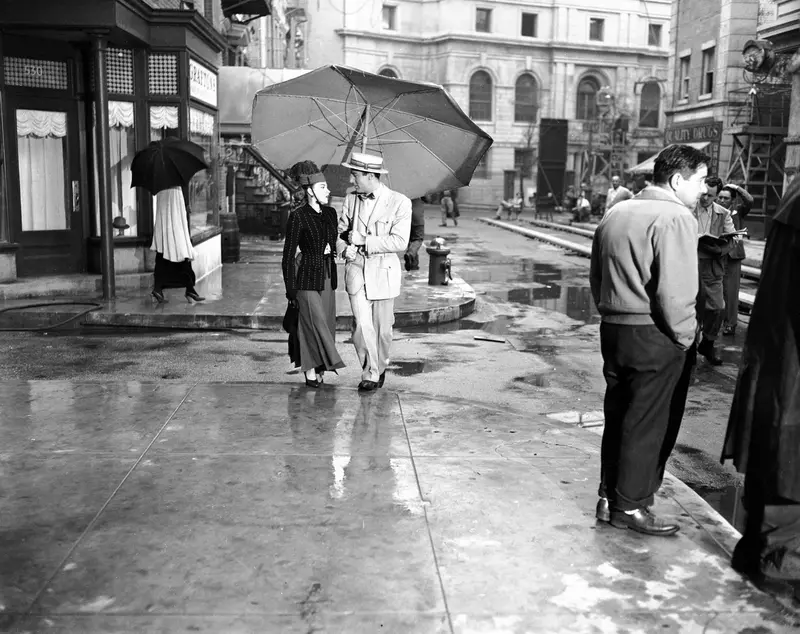
Easter Parade is a 1948 MGM Technicolor musical set about 1912, with Irving Berlin’s songs and the only co-starring teaming of Judy Garland and Fred Astaire. When his partner (Ann Miller) leaves for a show of her own, a Broadway dancer (Astaire) boasts that he can make a star of any chorus girl and picks one (Garland), while his best friend (Peter Lawford) falls for her.
Photo: DoctorMacro.com
Easter Parade is a 1948 Metro-Goldwyn-Mayer musical in Technicolor, directed by Charles Walters, with songs by Irving Berlin. Judy Garland plays Hannah Brown, Fred Astaire plays Don Hewes, Peter Lawford plays Jonathan Harrow III and Ann Miller plays Nadine Hale. Wikipedia’s Garland entry records it as the first and only time she and Astaire co-starred. Wikipedia’s Astaire entry names it with Holiday Inn, The Band Wagon, Funny Face and Silk Stockings among the films in which his fame grew.
Film Daily’s review places the story about 1912, which it calls “the hey-day of vaudeville.” Nadine, Don’s sweetheart and dancing partner, leaves him for a show of her own, and he boasts that he can turn any girl from a floor show into her equal. He picks Hannah and trains her as a copy of Nadine until he changes his approach and the new act succeeds. Don’s best friend Johnny falls for Hannah, while Hannah falls for Don.
The review, reprinted in Canadian Film Weekly on 18 Aug 1948, gave the running time as 103 minutes and said the box office would “jingle-jangle with the shekels.” For home viewing, Wikipedia’s entry on the film describes the 2013 Warner Bros. Blu-ray as remastered, with commentary among its extras. It also lists a 2005 special edition DVD with documentaries and interviews, and says the DVD release carried outtakes of a deleted Garland number.
The Canadian Moving Picture Digest of 14 Aug 1948 carried an MGM advertisement that put the title under Berlin’s name, above Garland, Astaire, Lawford and Miller, and also named Robert Alton, Walters and producer Arthur Freed. The same issue’s list of Canadian playdates had the film at Loew’s in Toronto, marked Technicolor. That list also showed Garland in The Pirate, with Gene Kelly, at the Capitol in Calgary and the Orpheum in Vancouver. By 25 Sep 1948 the Digest was running an MGM advertisement headed “What a Summer!” that counted Irving Berlin’s Easter Parade among the studio’s summer pictures. A news item in that issue said Garland would begin rehearsals in October for Annie Get Your Gun, with Freed, who “handled the reins” on Easter Parade, producing. The item described Berlin as “enthused over the success” of the film and expected at the studio for the shooting.
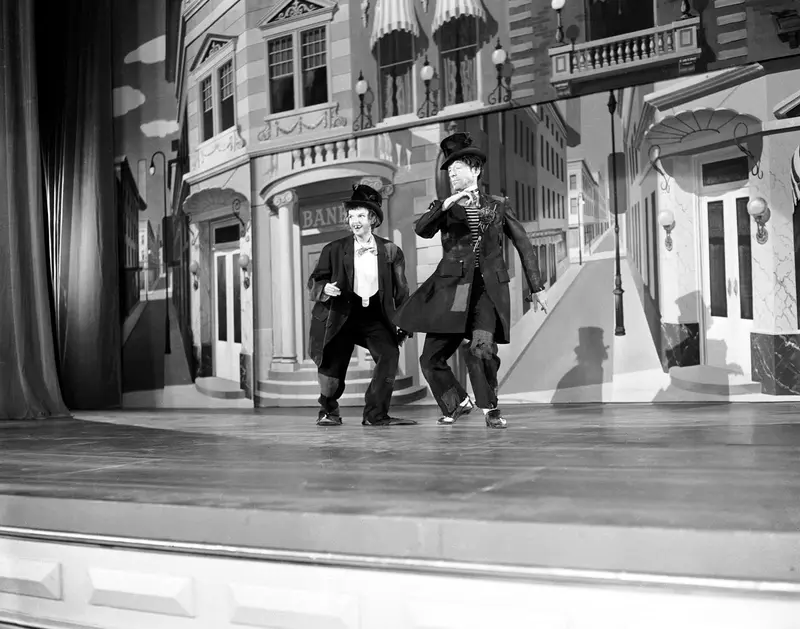
The reviewer wrote that Garland’s unsophisticated charm “is like a gem” and that Astaire “is syncopation itself.” “A Couple of Swells,” with its “silk-hatted evening-dudded tramps,” was singled out as the number patrons would talk about. Freed “rates laurels,” Walters did “a thorough-going job of direction, plus,” and cameraman Harry Stradling was “on the beam.” The notice rated the direction Excellent and the photography Fine. Its cast line names Jeni LeGon, whom Wikipedia’s cast list marks as uncredited in the part of Nadine’s maid, Essie. It also gives “The Girl on a Magazine Cover” to Miller, while Wikipedia credits the singing to Richard Beavers and the dancing to Miller.
Wikipedia’s entry on the film says Gene Kelly, the first choice for Don, broke an ankle shortly before production and that the part then went to Astaire, who had retired two years earlier. The entry tells the rest in two ways: in one passage Astaire consults Kelly and Kelly backs his decision, and in another Kelly coaxes him back. Wikipedia’s Astaire entry says he announced the retirement while making Blue Skies (1946), then turned to horse racing and founded his dance studios in 1947. The two men had danced together in Ziegfeld Follies, according to the same entry. Miller stepped in for Cyd Charisse, who left with torn knee ligaments, and the film entry calls the part Miller’s major MGM debut, after contracts at RKO and Columbia.
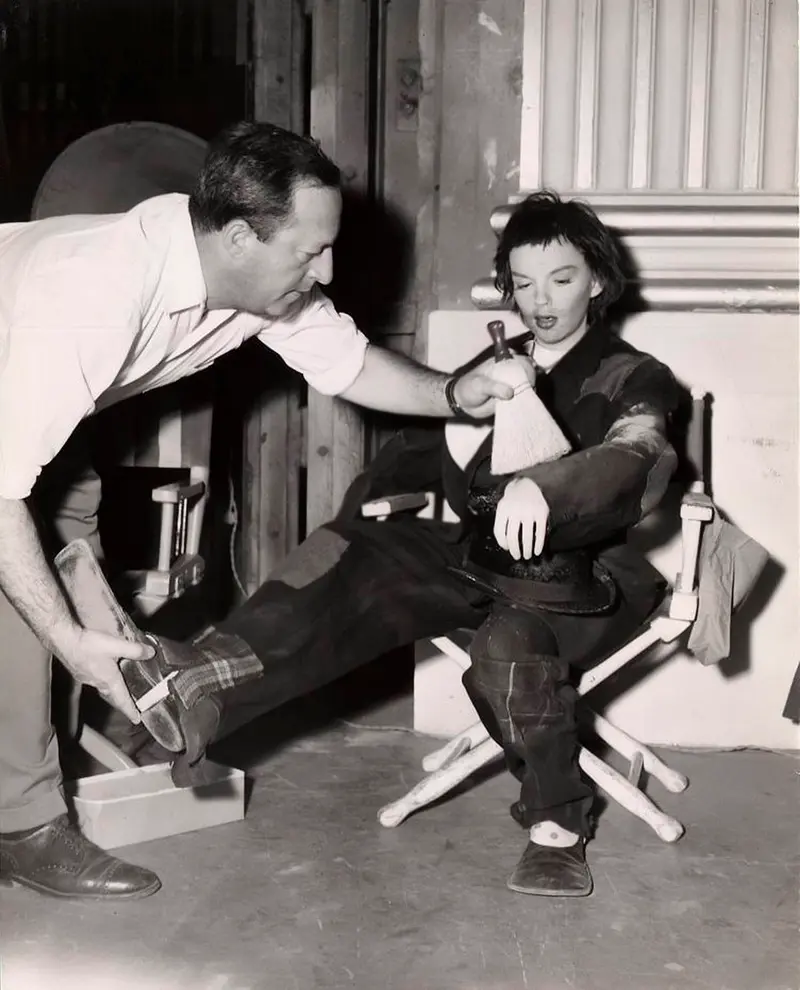
Frank Sinatra was considered at one stage for Lawford’s part, according to Wikipedia’s film entry. Filmink, quoted in Wikipedia’s Lawford entry, said MGM used him in part as a “handsome male prop” for its female stars in musicals. The number removed from the film was “Mr. Monotony,” sung by Garland in a tuxedo jacket, fedora and black nylons, and judged too risqué for a story set in 1912. An edited version reached audiences in That’s Entertainment! III (1994). The film entry adds that a fire destroyed the original audio recordings, so the numbers cannot be remixed for stereo or surround sound.
That entry gives the money in two forms. Its release section says the film premiered on July 8, 1948, in New York City and earned over $6.8 million. Its reception section gives $4,144,000 in the United States and Canada and $1,659,000 overseas, and it does not explain the difference. It also records the Academy Award for Best Original Music Score.
Wikipedia’s Garland entry says The Pirate, released in May 1948, failed to make a profit, and that Easter Parade was Hollywood’s highest-grossing musical that year. MGM then teamed Garland and Astaire again in The Barkleys of Broadway, but she missed several shooting days, and Freed suspended her on July 18, 1948. Ginger Rogers replaced her, and the Digest’s advertisement of 25 Sep 1948 already listed Astaire and Rogers in the picture. The Annie Get Your Gun project reported in that issue ended with Garland’s dismissal on May 10, 1949, and Betty Hutton took over the role. She was next cast with Astaire in Royal Wedding, which also featured Lawford, but MGM suspended her on June 17, 1950, and replaced her with Jane Powell. Wikipedia’s film entry says Easter Parade returned Astaire to the rank of a top MGM star. Asked later about working with Garland, he called her “the greatest entertainer who ever lived” and “an amazing girl,” as Wikipedia’s Garland entry quotes him.
Yes, Easter Parade was made in Technicolor. Film Daily’s 1948 review counted its Technicolor appeal among the things that would draw audiences, and the Canadian Moving Picture Digest of 14 Aug 1948 marked it Technicolor in its list of playdates.
Yes, Easter Parade is a musical, with songs by Irving Berlin and musical numbers directed by Robert Alton. Wikipedia records that it won the Academy Award for Best Original Music Score and was the highest-grossing musical film of 1948.
Yes, Easter Parade has a long television record, particularly around Easter. Wikipedia’s entry says it first reached American television in the mid-1950s and that Turner Classic Movies has traditionally shown it on Easter Sunday as the first film of prime time.
We use Google Analytics to see which pages help. Allow it?