Show Boat
George Sidney 1951
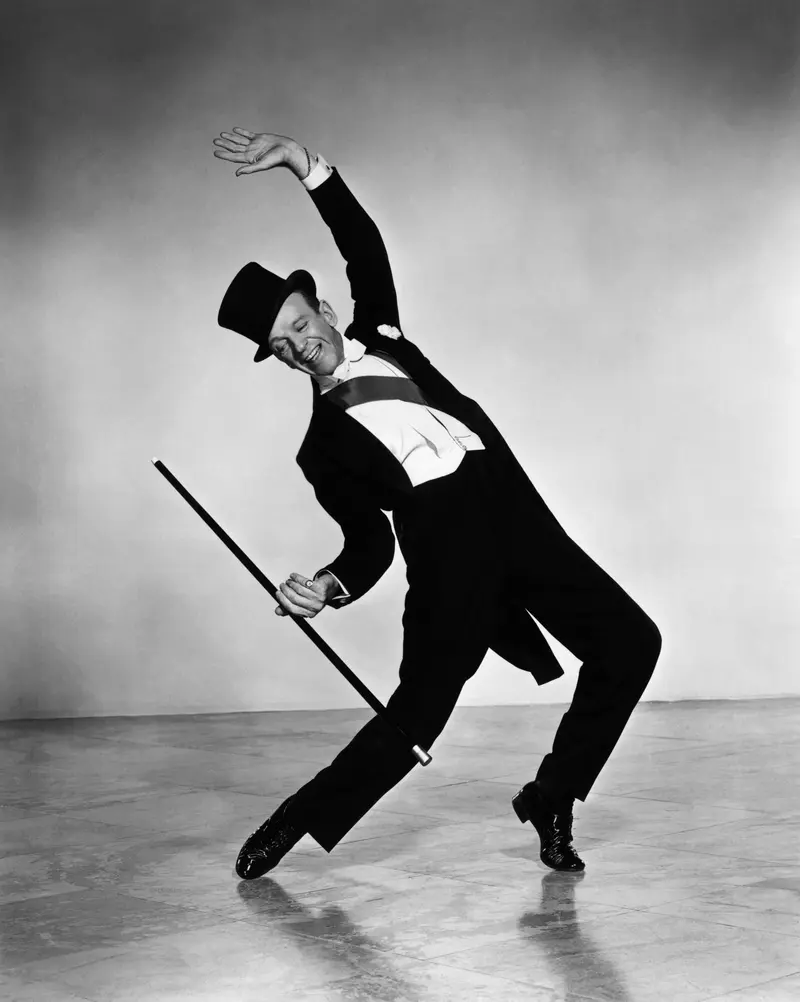
Rouben Mamoulian’s 1957 MGM musical of the Broadway show drawn from Ninotchka. Fred Astaire plays an American producer in Paris, Cyd Charisse the Russian agent sent to bring home a composer, and Janis Paige a Hollywood actress. Cole Porter wrote the songs, and Bosley Crowther of The New York Times called it “an all-round refreshing show.”
Photo: DoctorMacro.com
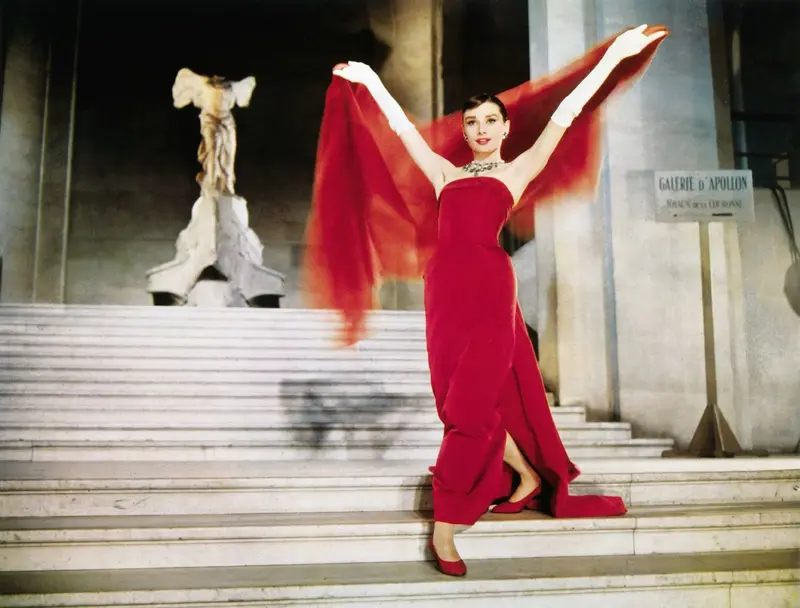
Silk Stockings is the 1957 Metro-Goldwyn-Mayer musical directed by Rouben Mamoulian, with music and lyrics by Cole Porter. It comes from the 1955 Broadway musical of that name, itself adapted from the 1939 film Ninotchka. Fred Astaire plays the American producer Steve Canfield, Cyd Charisse plays the Russian agent Nina “Ninotchka” Yoschenko, and Janis Paige plays the Hollywood actress Peggy Dayton. In Astaire’s record the film comes after Funny Face and stands as his final musical for MGM. Charisse had already danced with him in Ziegfeld Follies and The Band Wagon.
Canfield is in Paris and wants the Russian composer Peter Ilyitch Boroff to write the music for his next picture. Three Soviet commissars, played by Peter Lorre, Jules Munshin and Joseph Buloff, arrive to take Boroff home and are persuaded to let the collaboration go ahead. Moscow then sends Ninotchka to retrieve the composer, and Canfield tries to win her over with the city. The rewriting of Boroff’s music into popular songs for the picture sets the romance against her sense of duty.
Motion Picture Exhibitor’s check-up listing in its July to October 1957 volume gave the film a line of its own: “High rating musical comedy.” The entry carries the date 5-29-57, a running time of 117 minutes, and the marks for MetroColor and CinemaScope. MGM records put its earnings at $1,740,000 in the United States and Canada and $1,060,000 in other markets, for a loss of $1,399,000.
The Canadian Moving Picture Digest of 27 Oct 1956 carried a Hollywood item saying that M-G-M had signed Peter Lorre as a Russian commissar in the picture. The item described the film as the screen version of a Broadway musical comedy hit and named Fred Astaire, Cyd Charisse and Janis Paige as its stars. Lorre’s part appears in the cast as Brankov, one of the three commissars. Motion Picture Exhibitor’s 1957 listing credited the same three leads.
Bosley Crowther of The New York Times proposed legislation requiring Astaire and Charisse to appear together in a musical at least every two years, and he recalled their pairing in The Band Wagon in 1953. He called the new film “an all-round refreshing show” with “a bright book, delicious music” and the dancing of its two principals. Harrison’s Reports judged the story “not as mirthful as the original” and somewhat overlong, while granting that it “keeps one chuckling throughout.” Whitney Williams of Variety wrote of Charisse’s “fascinating brightness” and gave Paige “a knock-'em-dead type of performance,” though he too felt the film could have been shorter. Edwin Schallert of the Los Angeles Times called the Porter music “delightful and clever,” and he credited Lorre with “hilarious counterpoint” and Buloff with “antic fun.” The film also received Golden Globe nominations for Best Film and for Best Actress (Charisse) in the Comedy/Musical category.
Later accounts say that producer Arthur Freed decided to buy the screen rights during the Broadway run, making this his first independent film project. Under his arrangement with Loew’s, MGM’s parent company, he held a 25 percent stake in the films he produced with MGM’s money. MGM had the right of first refusal because it owned the 1939 film, and Freed paid $300,000 for the rights. Leonard Spigelgass wrote the first draft, which displeased Mamoulian, and Harry Kurnitz followed him with revisions that also failed to satisfy. Freed then brought in Leonard Gershe to finish the script one month before filming, and principal photography ran from 7 Nov 1956 to 31 Jan 1957. It was Mamoulian’s first film in almost a decade, a period he had spent largely on Broadway.
Charisse was cast first, and Bing Crosby and Howard Keel were both considered as her partner. Freed let her choose between Les Girls with Gene Kelly and this film with Astaire, and she chose Astaire. Astaire, who had finished Funny Face, was unsure about accepting because he felt too old, and he agreed after hearing Mamoulian’s ideas at a luncheon. Freed had promised the part of Peggy Dayton to Ann Miller, who had sought it on Broadway and could not take it because of scheduling conflicts. Miller came to MGM for a costume test and found that Freed had already cast Paige. Paige, who had left Hollywood after Two Gals and a Guy (1951) and become a Broadway star in The Pajama Game in 1954, was returning after six years away.
Mamoulian said he wanted the two leads’ relationship told through dance rather than dialogue, and he described the action itself as “merely a repeat of Ninotchka.” Hermes Pan, Astaire’s frequent collaborator, worked with him on the choreography. Astaire asked Porter for a rock and roll song to show that he had kept up with current music, and Porter studied the appropriate records and returned with “The Ritz Roll and Rock.” The number, a parody of the new genre, ends with Astaire smashing his top hat, a gesture read as a sign of the retirement from movie musicals he announced after the release.
In his autobiography, Steps in Time, Astaire called Charisse “beautiful dynamite.” In her own autobiography Charisse compared her two great partners, writing that Kelly was the stronger and the more inventive choreographer, while Astaire had the better coordination and “his sense of rhythm is uncanny.” Astaire’s retirement was partial, since he went on to four television specials with Barrie Chase, a non-dancing role in On the Beach, and a last major film musical, Finian’s Rainbow, in 1968.
The later judgments of the film do not agree on how it was first received. Tom Milne, author of the 1970 book Rouben Mamoulian, called the film “so crammed with delights” that he found it hard to credit that “the entire pack of British critics” had failed to respond, and he hoped writers on cinema would someday see it as “one of the great musicals.” Marc Spergel, in Reinventing Reality (1993), wrote that audiences and critics praised it as “an inventive, enjoyable entertainment” and that Mamoulian’s standing with Hollywood executives rose as a result. MGM’s figures record a loss all the same. Accounts of Charisse’s career now describe it as a classic MGM musical that initially lost money for the studio.
Yes, by way of the stage. The 1957 film is based on the 1955 Broadway musical, which was adapted from the 1939 film Ninotchka, and Cyd Charisse takes over Greta Garbo’s role. Director Rouben Mamoulian himself called the action “merely a repeat of Ninotchka” and put his interest in the dances.
Yes. Silk Stockings is a musical romantic comedy with music and lyrics by Cole Porter, including a rock and roll parody for the film, “The Ritz Roll and Rock.” Motion Picture Exhibitor’s 1957 listing called it a “High rating musical comedy.”
Silk Stockings was made between November 7, 1956, and January 31, 1957, the dates of its principal photography. The Canadian Moving Picture Digest of October 27, 1956, had just reported that M-G-M signed Peter Lorre for the picture.
We use Google Analytics to see which pages help. Allow it?