On the Beach
Stanley Kramer 1959
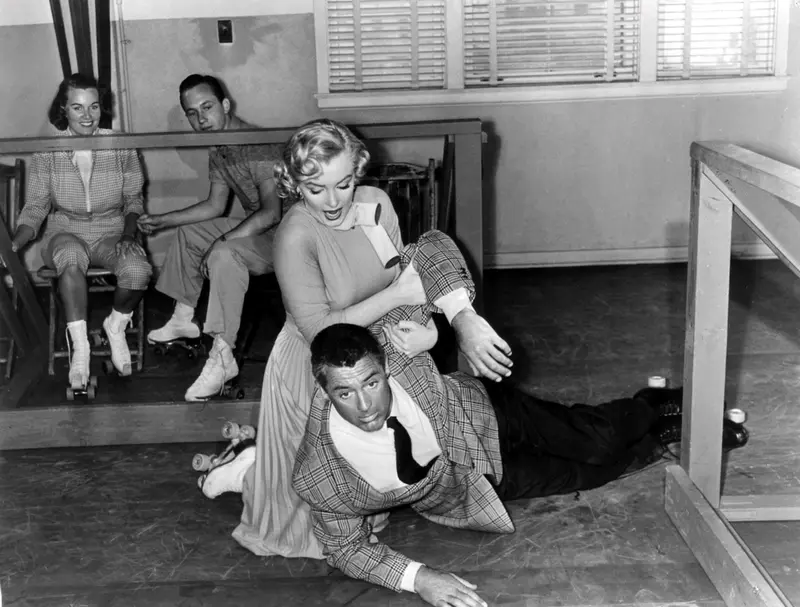
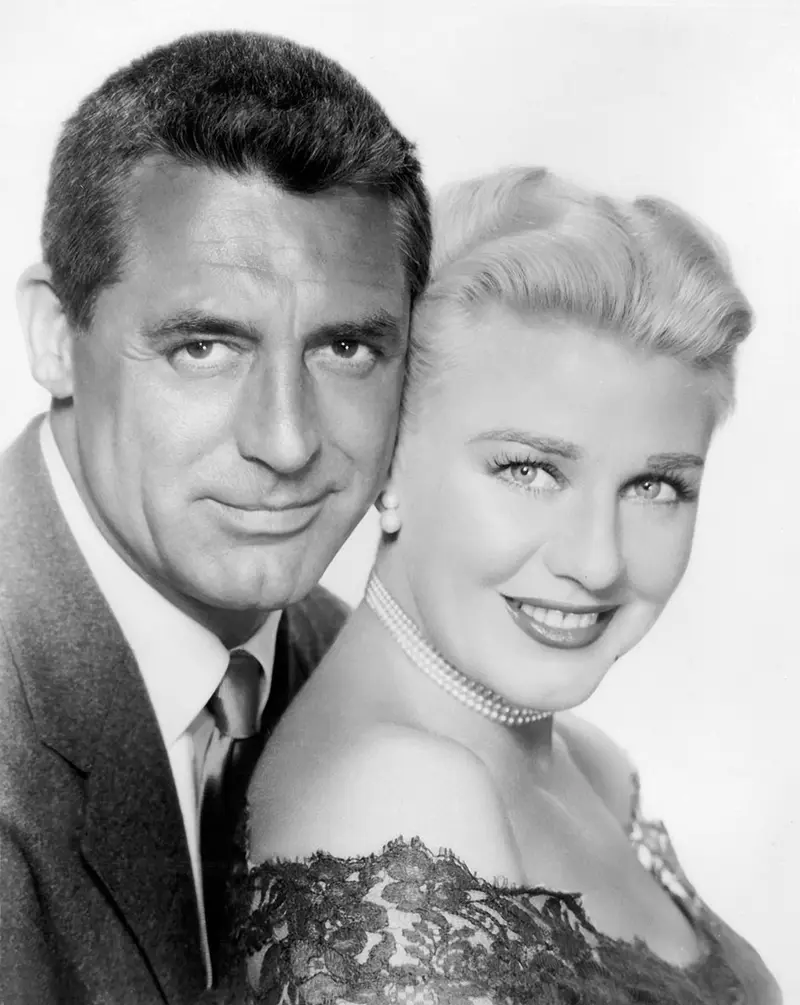
Howard Hawks’s 1952 screwball comedy follows a research chemist hunting an elixir of youth, with Cary Grant billed first, Ginger Rogers in the female lead and Marilyn Monroe as a secretary. The period record is split: the Washington Evening Star called it dreary, while Motion Picture Herald’s critic credited Grant with a career’s best.
Not listed on Amazon right now. Search Amazon for it.
Photo: DoctorMacro.com
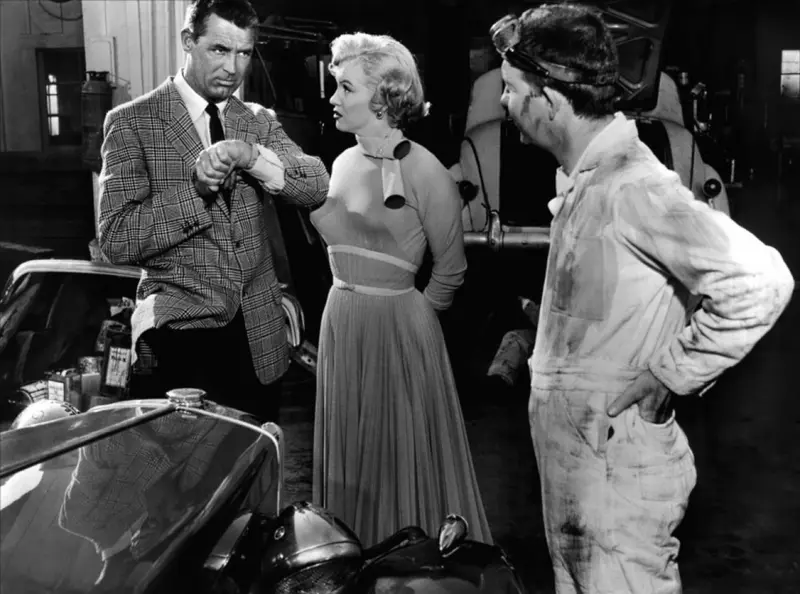
Monkey Business is a 1952 screwball comedy that Howard Hawks directed for 20th Century Fox, with Cary Grant billed first, Ginger Rogers in the female lead and Marilyn Monroe as a secretary opposite Grant. A modern account of Grant’s career places the film in the slump that began for him in the early 1950s, calls it an “off-beat comedy” and says he reunited with Hawks to make it. Hawks had directed Grant in Bringing Up Baby, Only Angels Have Wings and His Girl Friday.
Dr. Barnaby Fulton, a research chemist, works for the Oxly chemical company on an elixir of youth, and his absorption in the job has cooled his marriage to Edwina. A chimpanzee named Esther gets loose in the laboratory, combines chemicals in a beaker and empties it into the water cooler. Barnaby tests his own formula, drinks from the cooler, behaves like a 20-year-old and spends the day out with Lois, his boss’s secretary. Edwina then takes the same mixture and turns into a prankish schoolgirl, and the contaminated water goes on to reach the boss and his scientists.
A 20th Century-Fox advertisement in Motion Picture Herald of Oct 11, 1952 sold the picture under the line “Top Money Everywhere!” The Marx Brothers made an unrelated film with the same title in 1931, so the billing Howard Hawks’ Monkey Business is sometimes used.
Motion Picture Herald’s advertising checklists of Oct 4 and Oct 11, 1952 both list “Monkey Business (4 Pages)” among recent or forthcoming releases. The Oct 11 list gives The Quiet Man the same 4 pages and Ivanhoe 27. A note printed with the checklists argued that the amount a distributor says about a picture in the trade papers generally shows its confidence in that picture. The Fox advertisement names Grant, Rogers, Charles Coburn and Monroe, in that order, and sets the film alongside other Fox pictures such as The Steel Trap and My Pal Gus. Wikidata’s billing order differs from the advertisement on one point, placing Monroe third and Coburn fourth.
The Canadian Moving Picture Digest of Oct 18, 1952 lists the film at the Capitol in Winnipeg, naming only Grant, in a column that also has High Noon at the Garrick. The Digest of Nov 29, 1952 has it in a second week at Shea’s in Toronto, again naming only Grant, with The Snows of Kilimanjaro at the University. A production column in the Herald’s Oct-Dec 1952 volume reports that Paramount’s Pat Duggan had started Forever Female with Rogers, William Holden and Paul Douglas under the director Irving Rapper, and it calls the name “a title likely to be changed.”
Jay Carmody’s contemporary notice in the Washington Evening Star was lukewarm: “Dreary business is what it really is.” Carmody warned that farce writing “can be a treacherous trade” and held that the three stars’ names gave the picture too little protection against its script. He called Grant and Rogers “a pair of gifted farceurs” who earned “a kind of grudging admiration” for trying so hard with thin material. Of Monroe, set beside the film’s “silky” veterans, Carmody wrote that her acting had risen “no higher than one degree above zero,” and added that nobody would mind. The critic of Motion Picture Herald went the other way, crediting Grant with a career’s best in an “extraordinary and agile performance” and saying Rogers matched it. A modern account of Grant’s career sums up the overall reception as mixed.
Hawks said he did not think the premise was believable, and that the film was less funny than it could have been as a result. Leslie Halliwell, writing in 1989, called it a “remarkably laboured comedy” whose funny moments were “few and far between.” Pauline Kael’s 1991 compendium of films she had seen dismissed it as a “grating screwball farce” and “boisterous, labored whimsey.” In 2011 Peter Bogdanovich noted that the Grant and Monroe scenes work especially well, and he regretted that Rogers rather than Monroe has the female lead. Gregory Lamb of The Christian Science Monitor disagreed about Rogers, describing her in the film as “a comedienne par excellence.” Rotten Tomatoes lists an approval rating of 74% from 27 reviews, with an average score of 6.8 out of 10.
For Grant, the modern record frames the film between disappointments: Crisis and People Will Talk were poorly received, and he hoped Dream Wife would salvage his career, only to see it fail in July 1953. He thought his career in film had ended and left the industry for a short time, then agreed in 1955 to make To Catch a Thief with Grace Kelly.
An account of Rogers calls Monkey Business a successful comedy and pairs it with We’re Not Married! as her two 1952 comedies featuring Monroe, within a decade of gradual decline as parts for older actresses grew harder to get. It adds that she followed those two with a role in Dreamboat alongside Clifton Webb.
An account of Monroe names Monkey Business among the comedies that made her a popular actress after she began a longer Fox contract in 1951. The same account counts her secretary as one of the 1952 comic roles that continued her typecasting around sex appeal, and it describes the part as a “dumb, childish blonde” with no idea of the disruption she causes.
No. Monkey Business is a 1952 film directed by Howard Hawks, not a place with opening hours. It was playing in Canadian theaters that fall: the Canadian Moving Picture Digest listed it at the Capitol in Winnipeg on Oct 18, 1952 and in a second week at Shea’s in Toronto on Nov 29.
No. Monkey Business is a film released by 20th Century Fox in 1952, so it keeps no daily hours. Fox advertised it in Motion Picture Herald of Oct 11, 1952 under the line “Top Money Everywhere!”
Yes, Monkey Business is a 1952 American screwball comedy directed by Howard Hawks, with Cary Grant, Ginger Rogers and Marilyn Monroe. The Marx Brothers made an unrelated film with the same title in 1931, so the Hawks picture sometimes carries the billing Howard Hawks’ Monkey Business.
We use Google Analytics to see which pages help. Allow it?