Bringing Up Baby
Howard Hawks 1938
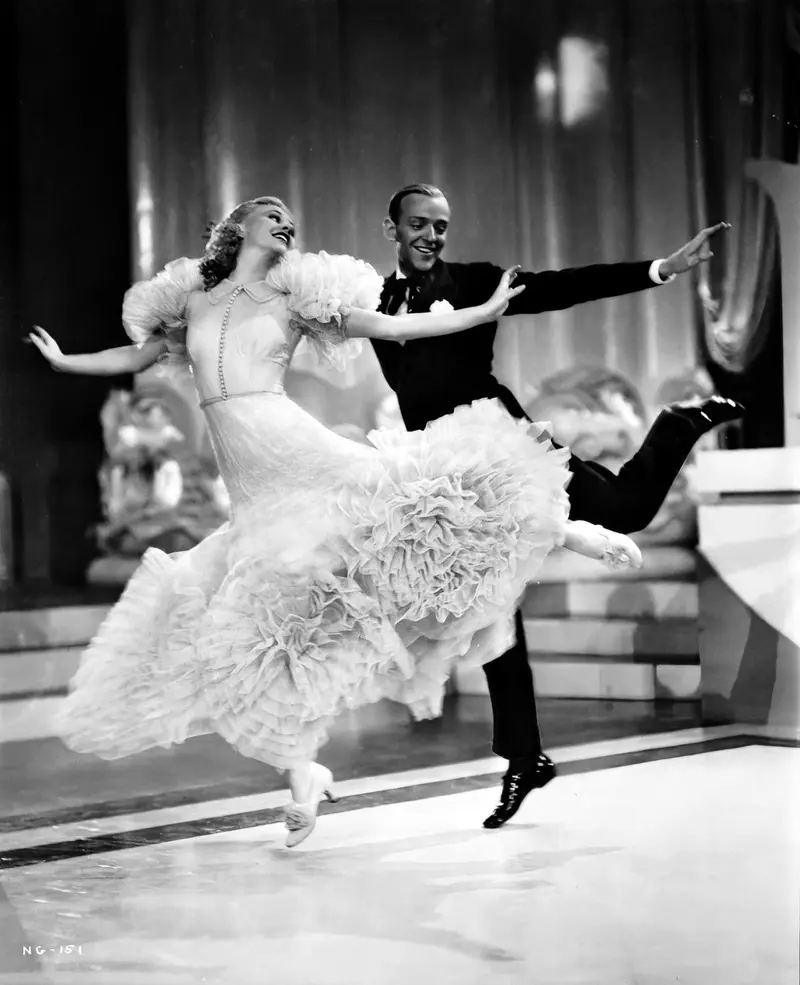
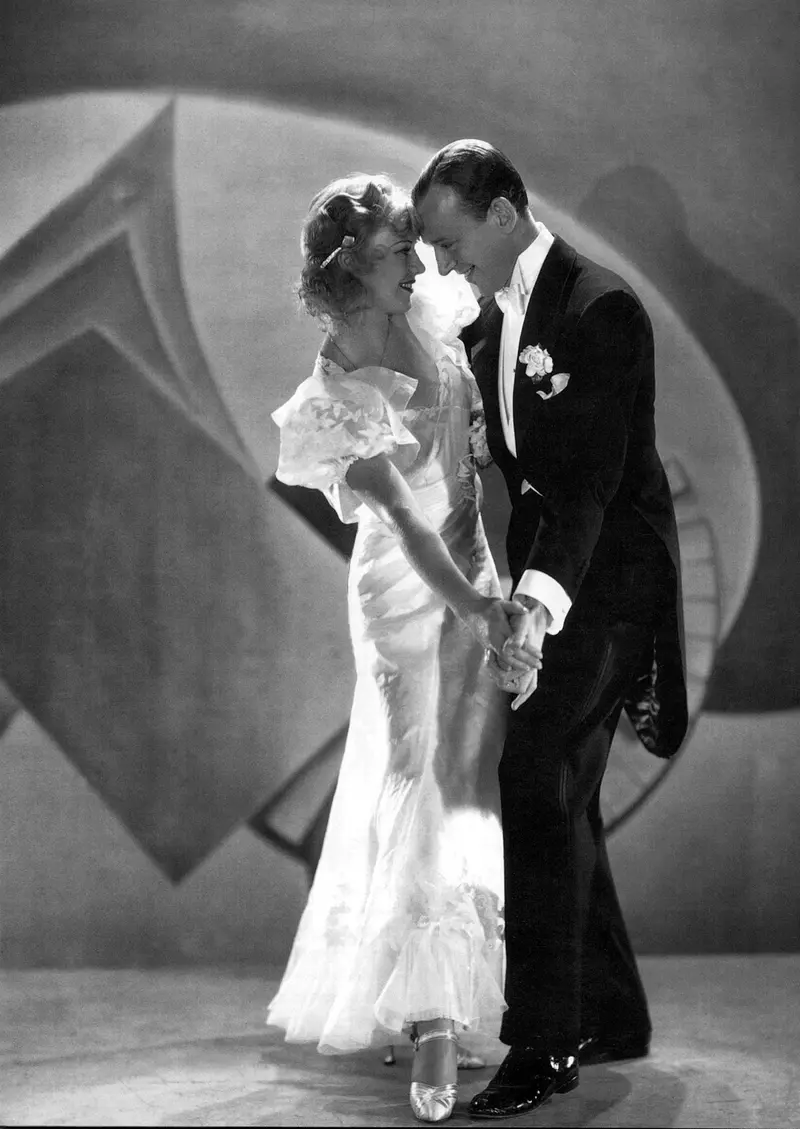
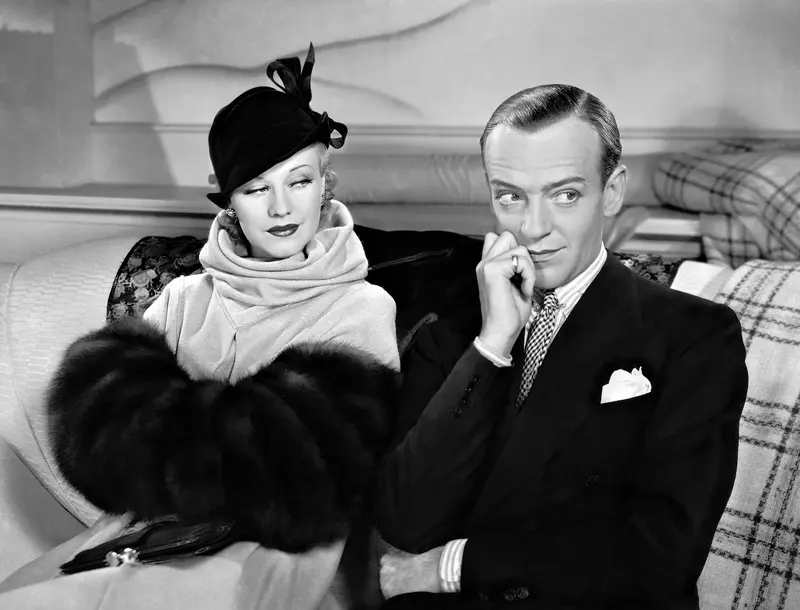
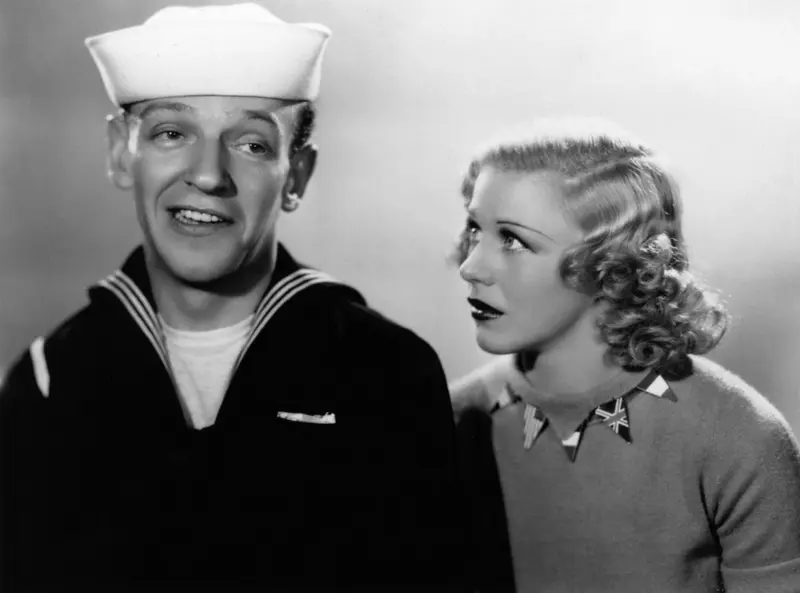
Swing Time (1936) is the RKO musical in which Fred Astaire plays a gambler and dancer who must earn $25,000 before he can marry, then falls for Ginger Rogers’s dance instructor. George Stevens directed, and Jerome Kern and Dorothy Fields wrote the songs, including the Oscar-winning “The Way You Look Tonight.” Critic Arlene Croce ranks it the pair’s best dance musical.
Unknown authorUnknown author, Wikimedia Commons (Public domain)
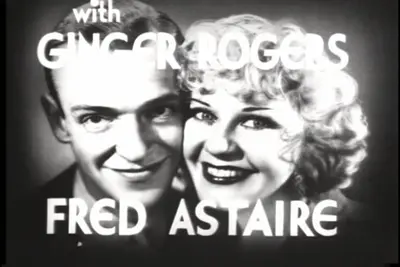
Swing Time is a 1936 RKO musical comedy directed by George Stevens, and it is the sixth of the ten pictures Fred Astaire and Ginger Rogers made together. Astaire plays John “Lucky” Garnett, Rogers plays Penelope “Penny” Carroll, and Victor Moore plays Edwin “Pop” Cardetti. Lucky is a gambler and dancer whose fiancee’s father, Judge Watson, tells him to earn $25,000 as proof of his good intentions. In New York he meets Penny, a dance school instructor, over a lucky quarter, becomes her dance partner, and falls in love with her while lacking the nerve to tell her about the fiancee. Jerome Kern wrote the music and Dorothy Fields the lyrics. The pair’s nine RKO pictures also include Top Hat and Shall We Dance.
The Canadian Moving Picture Digest of 19 Dec 1936 reported that the film grossed $250,000 in two weeks at Radio City Music Hall, which the paper called “a new high for the whole world.” RKO records cited in the film’s Wikipedia entry give a cost of $886,000 and a profit of $830,000. Among later writers, Arlene Croce, author of The Fred Astaire and Ginger Rogers Book, considers it the pair’s best dance musical, and John Mueller and Hannah Hyam agree. The Oxford Companion to the American Musical calls it “a strong candidate for the best” of their films, while describing the screenplay as “contrived.”
Warner Home Video issued a digitally restored Swing Time in Region 1 in 2005, alone and in The Astaire & Rogers Collection, Vol. 1, with a commentary by Mueller. The Criterion Collection released it on Blu-ray and DVD in the United States on June 11, 2019, and has also issued a UK Blu-ray. Universal’s restored Region 2 release of 2003 carries an introduction by Astaire’s daughter, Ava Astaire McKenzie.
Variety’s September 1936 issue carries the film as a booking and as part of a studio plan. A list of theater dates in that issue sets Swing Time for the Orpheum in New Orleans and the Brandeis in Omaha on Sept. 3, for the Keith in Boston, the Palace in Chicago and the Stanley in Philadelphia on Sept. 4, and for San Francisco’s Golden Gate on Sept. 16. A Washington dispatch datelined Sept. 1 says Keith’s was holding Walking On Air only so that the house could launch a new front and Swing Time at the same moment. A Hollywood dispatch of the same date says Sam Briskin would team Rogers with Jack Oakie once the following Astaire and Rogers picture, tentatively titled Stepping Toes, was finished.
The Canadian Moving Picture Digest of 19 Dec 1936 looked back on the year from RKO’s side. Its survey of the studio calls the pair RKO Radio’s “most famous starring team,” records two pictures from them in 1936, with Follow the Fleet first, and dates the release of Swing Time to September. A New Year message from RKO in the same issue says Astaire and Rogers “reached undreamed-of heights” during the year with those two films. Advertising in the issue names Pandro S. Berman as the man who gave the trade Roberta, Follow the Fleet and Swing Time. In its letters column of November 1936, the Spanish-language magazine Cinelandia told a reader in Guadalajara that the pair had recently finished the film, and a caption in the issue called them the most famous dance couple in Hollywood films.
Variety’s review of 2 Sep 1936, signed Abel, rated the film “perhaps a shade under previous par” and still counted it another box-office and personal winner for the team. The reviewer wrote that the 103 minutes “could have been pared to advantage,” and predicted the picture would “swing 'em past the wickets” at an above-average pace. The Digest’s survey of 19 Dec 1936 quotes its own notice, which credited Kern with “some swell new numbers” and called the dances spectacular.
The dance press wrote in November 1936. American Dancer said Astaire’s work could no longer be filed as “mere tap,” describing a blend of tap, modern and ballet. The same notice found “Rogers is vastly improved,” but said she could not yet match his agility and grace. Joseph Arnold Kaye wrote in Dance Magazine that “Astaire and Rogers are the picture,” and that everything else seemed put in “to fill the time between swings.” He called the routines “fresh and interesting” and said Hollywood had yet to make a dance picture as good as its dancing.
Cinelandia’s Spanish-language review of November 1936 was cooler about the star. It reduced the high points to Kern’s music, “zapateos y muecas” (tap steps and grimaces) from Astaire, and tap and feminine neatness from Rogers, and preferred not to discuss the plot. The reviewer expected at least two of Kern’s tunes to become popular after three hearings and said the pair advanced in technique with each film. Astaire’s grimaces drew the complaint: a novelty at first, the review said, and now a habit that “va cansando” (was growing tiresome). It judged the jokes more good than bad and the cast well chosen.
The film’s Wikipedia entry gives the writing history. RKO bought an original screen story from Erwin Gelsey and hired him to adapt it in November 1935, and he was still being considered for screenplay credit as late as July 1936, though he received none. Howard Lindsay wrote a first draft, Allan Scott rewrote it heavily, and Scott was called back from New York for more dialogue before shooting began in April 1936. I Won’t Dance and Never Gonna Dance were working titles, dropped because executives feared nobody would attend a musical in which no one danced. Pick Yourself Up and 15 other titles were also considered.
The same entry gives the shoot. Astaire prepared the dances for almost eight weeks, and the picture took several weeks longer to film than was normal for the team. “Bojangles of Harlem” was shot last because of its effects, and the two-minute passage with three shadows of Astaire, an idea credited to Hermes Pan, took three days. The number pays tribute to Bill Robinson while using the dance style of John W. Bubbles, Astaire’s one-time teacher, and it is the only number in which Astaire appears in blackface. The closing routine of “Never Gonna Dance” is reported to have been shot 47 times in one day, leaving Rogers’s feet bruised and bleeding. Astaire’s coat in “A Fine Romance” reappears in the opening scene of Holiday Inn.
Kern’s part is disputed in its details. He was hired to write seven songs for $50,000 and a gross percentage of up to $37,500, and Astaire asked that two of them be swing numbers. Fields recounted that Astaire won over a reluctant Kern by singing and dancing on and around the furniture of his home, while another passage in the Wikipedia entry places the effort in Kern’s hotel room and says the “Bojangles” draft remained unacceptable. Robert Russell Bennett told Croce in 1976, and later wrote to Mueller, that Kern asked him to “see what Freddie wants,” meaning Astaire, for the “Waltz in Swing Time.” The sheet music credits Bennett with its construction and arrangement. Rehearsal pianist Hal Borne added the waltz’s interlude, and Kern insisted that Borne receive no credit, although Astaire had requested it.
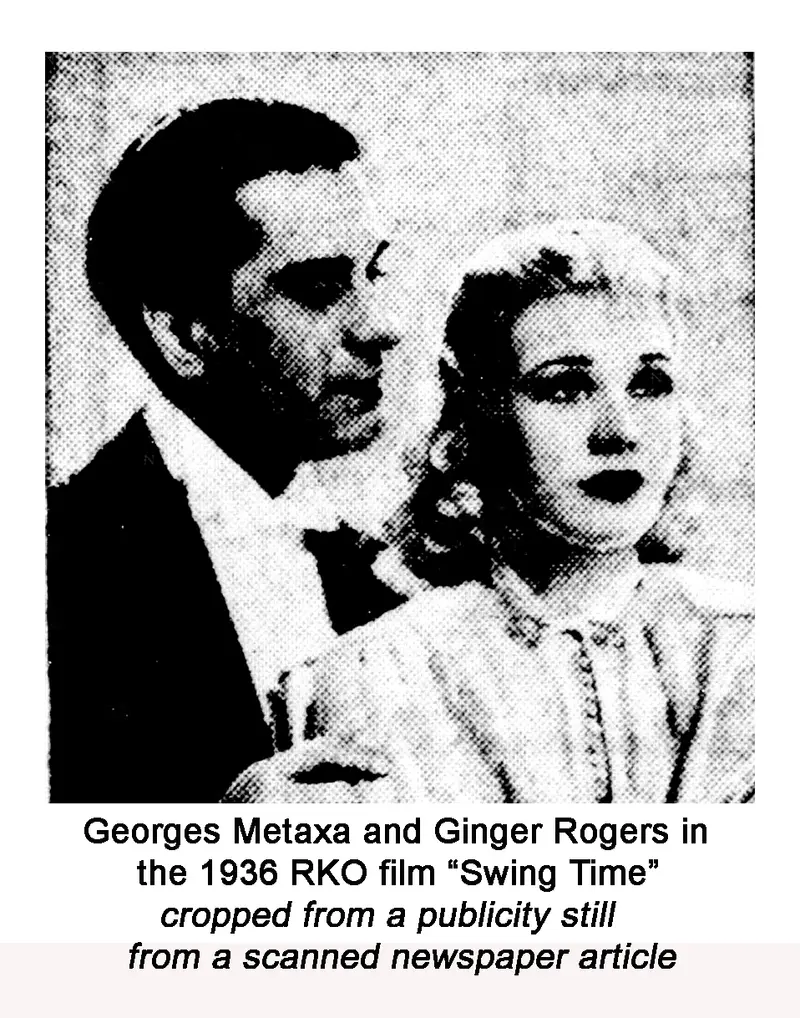
Later writers divide the praise. Rogers credited Stevens with much of the film’s success, saying “He gave us a certain quality” that set it above the others. Croce and Mueller single out the spontaneity of her “Pick Yourself Up,” and Georges Metaxa’s performance and the plot are the parts that have been criticized. Mueller’s general claim for Rogers is that she understood acting did not stop when the dancing started. Astaire told Michael Parkinson in 1976 that she was “the most effective partner I ever had.” According to Berman, the 10% of the team’s profits he gave Astaire ended Astaire’s objections to the partnership.
The commercial record reads differently now than it did in RKO’s message of December 1936. RKO records show $1,624,000 from the U.S. and Canada and $994,000 from elsewhere, yet the Wikipedia entry dates the start of the partnership’s decline with the public to this film, with receipts falling faster than usual after a strong opening. At the 1937 Academy Awards, Kern and Fields won Best Original Song for “The Way You Look Tonight,” and Pan was nominated for “Bojangles of Harlem.” The Library of Congress added the film to the National Film Registry in 2004, and the American Film Institute placed it at No. 90 on its 2007 list. A Broadway musical based on it, Never Gonna Dance, opened on December 4, 2003, and closed on February 15, 2004, after 84 performances, and Zadie Smith took the title for her 2016 novel.
Swing Time is a 1936 RKO musical comedy directed by George Stevens, with Fred Astaire as a gambler and dancer and Ginger Rogers as a dance instructor. The Canadian Moving Picture Digest of 19 Dec 1936 reported that it grossed $250,000 in two weeks at Radio City Music Hall.
Yes. Swing Time is a musical comedy with music by Jerome Kern and lyrics by Dorothy Fields, and their “The Way You Look Tonight” won the Academy Award for Best Original Song. Variety’s review of 2 Sep 1936 counted it another box-office and personal winner for Astaire and Rogers.
Swing Time’s streaming home is not named in its Wikipedia home-media record, which lists disc releases only. Warner Home Video issued a digitally restored version in 2005, and the Criterion Collection released it on Blu-ray and DVD in the United States on June 11, 2019.
We use Google Analytics to see which pages help. Allow it?