Bringing Up Baby
Howard Hawks 1938
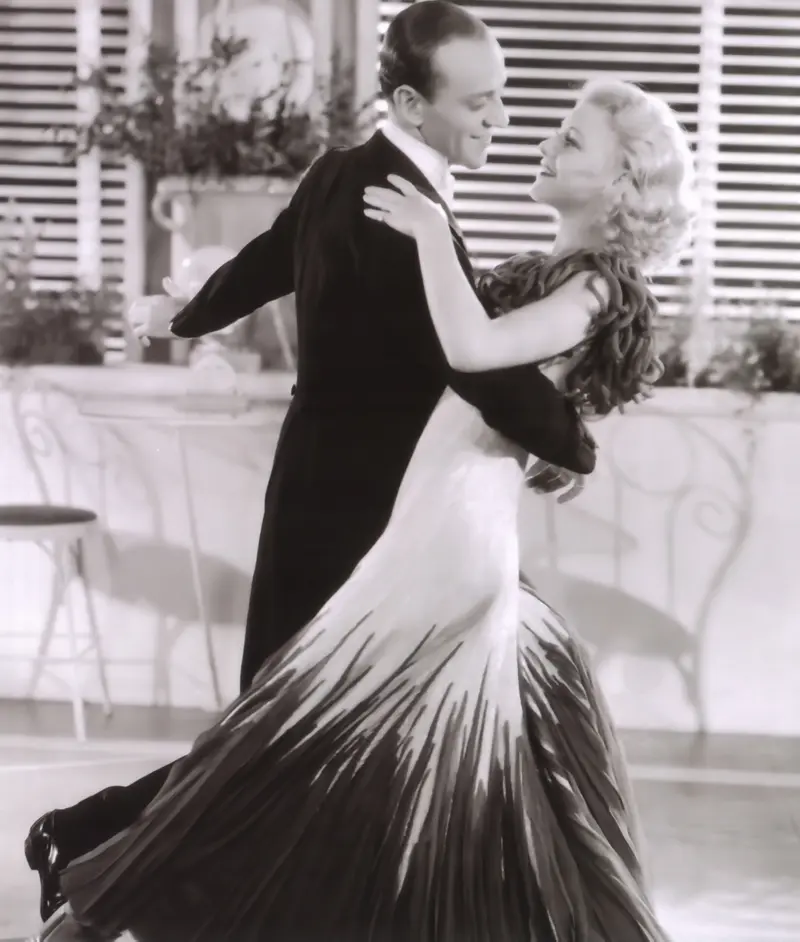
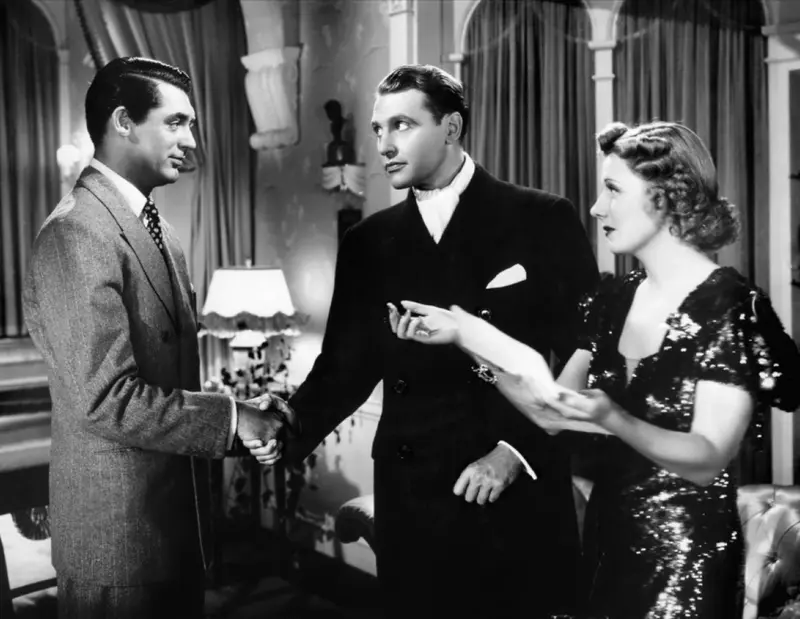
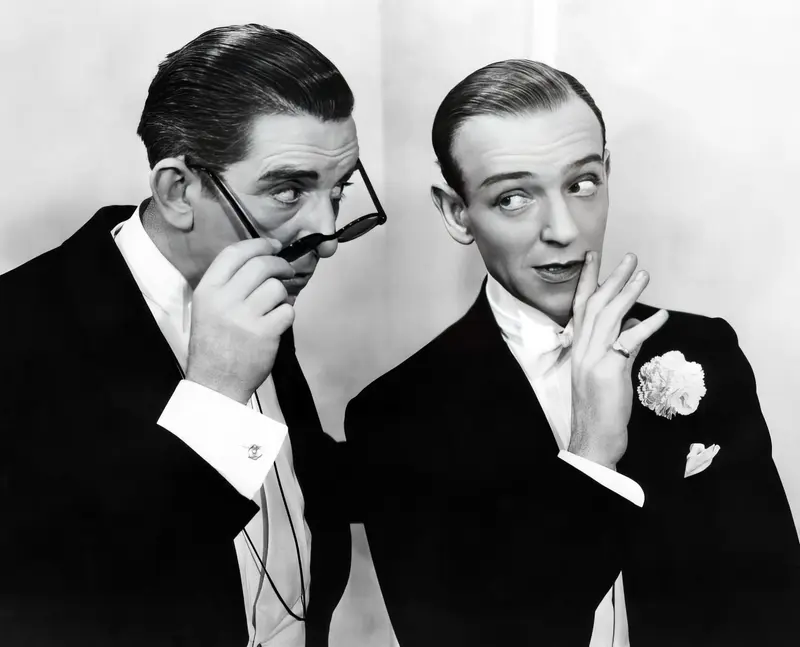
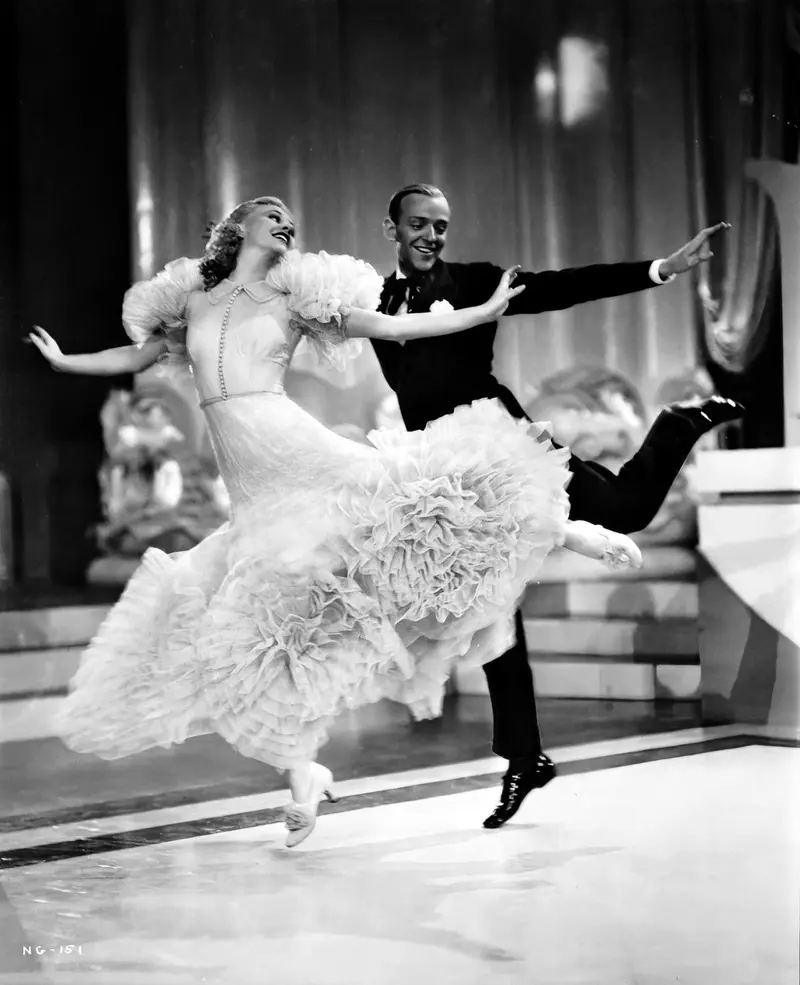
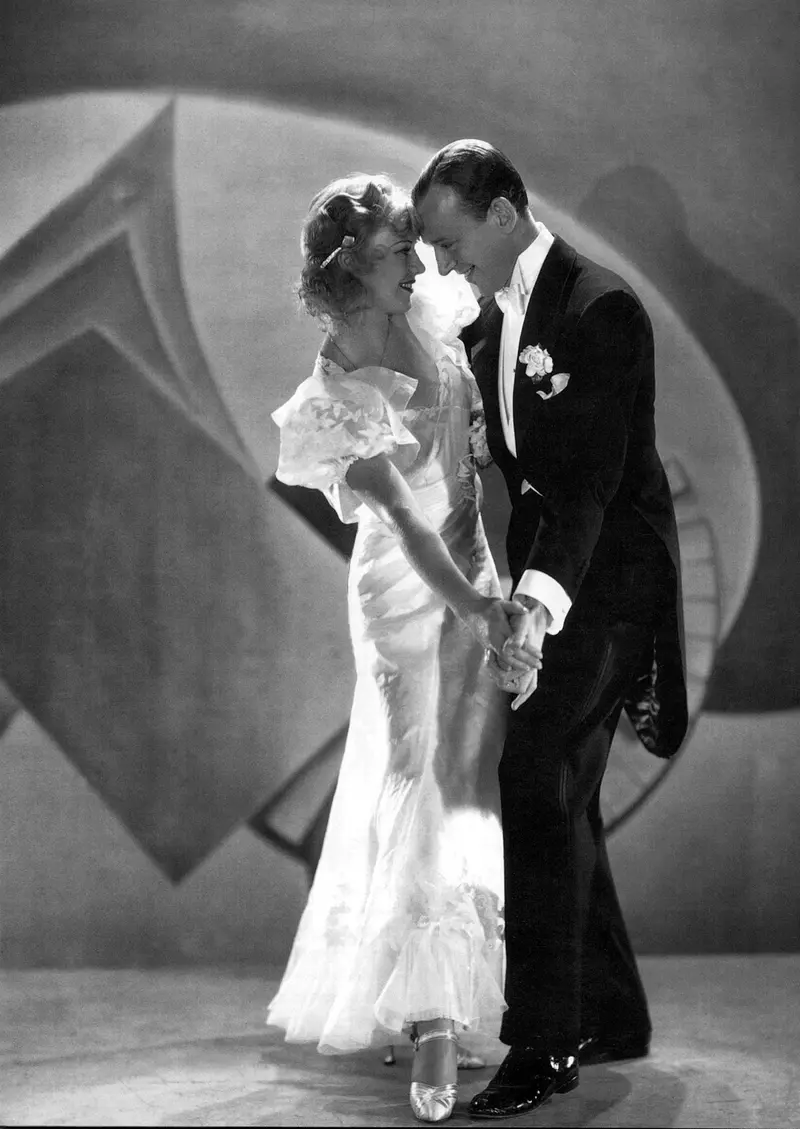
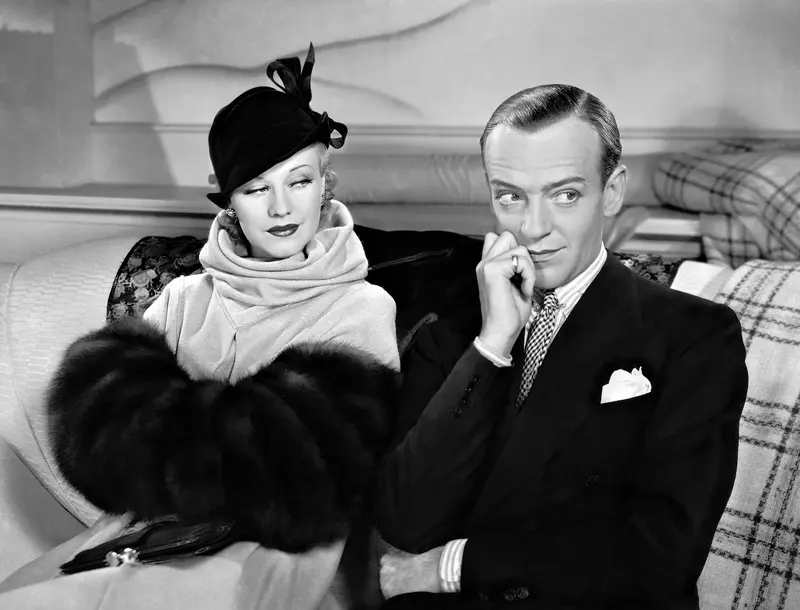
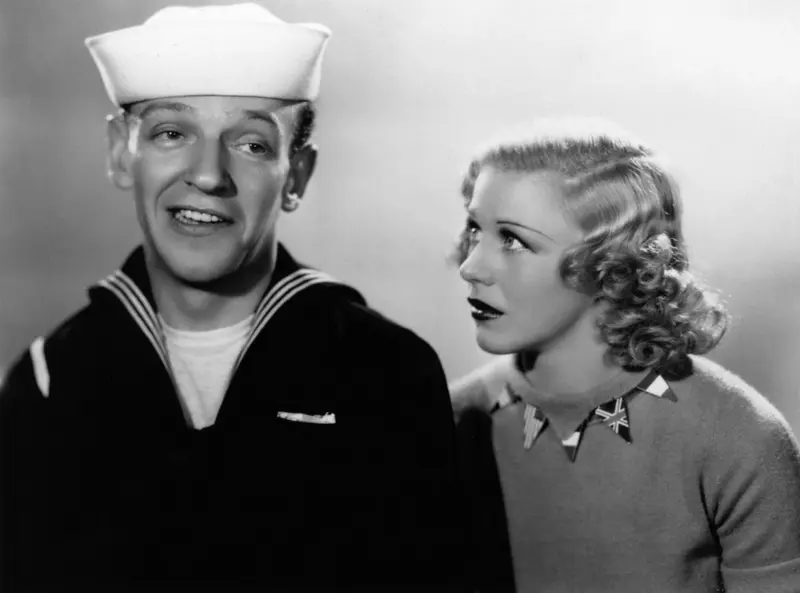
A 1934 RKO musical comedy in which a dancer, Guy Holden (Fred Astaire), pursues Mimi Glossop (Ginger Rogers), who has gone to a seaside hotel to stage grounds for divorce and takes him for the man hired to compromise her. Edward Everett Horton plays her lawyer, Egbert Fitzgerald. It has “Night and Day” and “The Continental,” the first winner of the Best Original Song award.
Photo: DoctorMacro.com
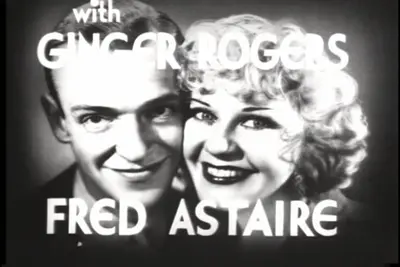
Andre Sennwald, writing in the New York Times on November 16, 1934, called The Gay Divorcee “gay in its mood” and “smart in its approach.” It is a 1934 RKO musical romantic comedy directed by Mark Sandrich, with Ginger Rogers as Mimi Glossop, a wife seeking a divorce, Edward Everett Horton as Egbert Fitzgerald, her bumbling lawyer, and Fred Astaire as Guy Holden, a famous American dancer. It was the second of ten Astaire and Rogers pairings, after Flying Down to Rio, and their first as a duo in leading roles.
At a seaside hotel in Brightbourne, Mimi is to be caught in a staged adultery with a paid co-respondent, Rodolfo Tonetti. Egbert arranges this after she consults him, under the guidance of her much-married Aunt Hortense, about divorcing her geologist husband. He gives her a code phrase for recognizing the hired man, “Chance is the fool’s name for fate,” a line he heard earlier from his friend Guy. Guy, who tore her skirt while trying to free it from a trunk on a ship bound for England and then searched London for her for two weeks, speaks the phrase to her at the hotel without knowing what it means. She takes him for the co-respondent.
An item in the February 1935 issue of Cinelandia, a Spanish-language film monthly, reported that RKO had insured Astaire’s feet for $1 million. The same item said his success in the picture meant star billing from then on, a higher salary and a share of the profits.
The picture drew Academy Award nominations for Sound Recording (Carl Dreher), Scoring (Max Steiner), Art Direction (Van Nest Polglase and Carroll Clark) and Best Picture. It won for “The Continental,” the song-and-dance sequence of more than 16 minutes toward the end of the film, with lyrics by Herb Magidson and music by Con Conrad. The song was the first winner of that award and defeated “Carioca” from Flying Down to Rio. RKO records show a profit of $584,000, with $697,000 earned outside the United States and Canada and $1,077,000 inside them.
In the United Kingdom the film was released as The Gay Divorce. RKO offered $50 to any employee who could come up with a better title than The Gay Divorcee. Accounts differ on why the stage name was changed. Astaire’s autobiography, Steps in Time, has Sandrich telling him that RKO acted on its own initiative because the studio considered the new name “a more attractive-sounding title.” The other account has the Hays Office demanding a change from Gay Divorce because it found the old name “too frivolous toward marriage,” on the reasoning that a divorcée might be lighthearted but a divorce should not seem so. James Wingate, the Director of Studio Relations, warned that the subject was delicate, urged care in the scenes involving Mimi’s lingerie, and wrote that “no intimate article should be used.” He also insisted that no player appear in pajamas alone.
The Canadian Moving Picture Digest of December 15, 1934 carried the film in its Toronto Theatres listing, at the house managed by D. Krendal, naming Astaire and Rogers and giving RKO as the producer. Cinelandia’s February 1935 item used the Spanish title “La alegre divorciada” and closed its report on Astaire’s new terms with the remark “No está mal” (not bad). In the magazine’s July 1935 issue, Luis Montero profiled Astaire as “El rey del tapping” and identified him by two films, Roberta and The Gay Divorcee. The profile ran a picture of him with Rogers in the latter. Montero wrote that the dancer was somewhat withdrawn in person and hostile to publicity tricks, and he called him perhaps the “hombre más equilibrado de Hollywood,” the most level-headed man there. He also argued that Astaire would last because, among screen dancers, he was a good actor as well as a great dancer.
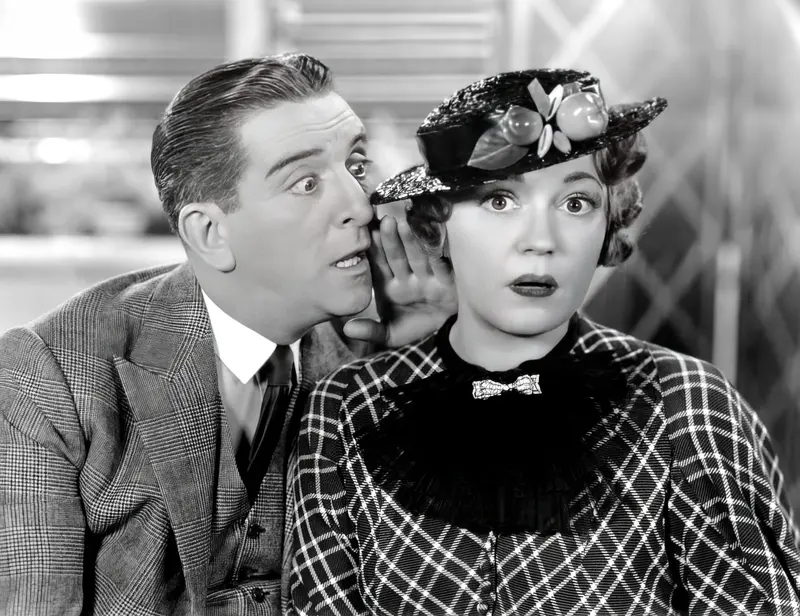
Sennwald’s New York Times notice credited the cast and “The Continental” with making the new Music Hall show the source of “a good deal of innocent merriment.” He wrote of Erik Rhodes as “the excitable co-respondent,” whose character “takes the correct pride in his craftsmanship” and objects when others interfere. He also singled out Horton as “the confused lawyer” and “Alice Brady as the talkative aunt.” For Horton, this was the first of several films with the pair, and his credits also include Top Hat and Shall We Dance.
Production accounts add smaller details. The car Rogers drives was her own 1929 Duesenberg Model J, which still exists. Exteriors were shot in Santa Monica and Santa Barbara, and Clear Lake, California, stood in for the English countryside. Stanley Rauh, H. W. Hanemann and Robert Benchley contributed dialogue without credit. The choreography of “Don’t Let It Bother You” grew out of antics at rehearsal and became a running joke in later Astaire and Rogers films. Among the ensemble dancers in “The Continental” was Neville Goddard, a Barbadian who later became known as a writer, speaker and New Thought mystic. Arthur Fiedler and the Boston Pops recorded the music on July 1, 1935, at their first RCA Victor session, in Boston’s Symphony Hall.
The dance critic Alastair Macaulay wrote that the film, and “Night and Day” in particular, created one of the archetypes of romance, and that no other screen couple so “enshrined romantic love” through dance. That number, sung by Astaire and danced with Rogers in a hotel suite, was their first romantic dance duet on film. Accounts of Astaire’s method date from this picture his policy of a closely tracking camera, few cuts and dancers kept in full view, which he held to until Finian’s Rainbow in 1968. The partnership itself was not at first what he wanted. He wrote to his agent that “this ‘team’ idea” was “out.” Pandro S. Berman, RKO’s head of production, persuaded him by giving him 10 percent of the Astaire and Rogers profits, and according to Berman the objections then stopped.
Later histories trace the film to the stage show. Berman bought the rights to Dwight Taylor’s Broadway musical after the success of Flying Down to Rio, with another Astaire and Rogers match in mind. Astaire, Rhodes and Eric Blore repeated their stage roles, and “Night and Day” was the only Cole Porter song from the show kept in the film. On the stage Astaire danced that number with Claire Luce, who said she had to push him toward a more romantic approach, telling him “I’m not your sister.” In 2008 the dancer and historian Betsy Baytos uncovered footage shot by Fred Stone of Astaire in the New York production in 1933, dancing with Luce’s successor, Dorothy Stone. It is now the earliest known performance footage of him.
Yes. It is a 1934 RKO musical romantic comedy, based on the Broadway musical Gay Divorce. Only “Night and Day” survived from the Cole Porter stage songs, and the new number “The Continental” became the first winner of the Best Original Song award.
The Gay Divorcee’s exteriors were filmed in California. Clear Lake stood in for the English countryside, and further exteriors were shot in Santa Monica and Santa Barbara. The car Ginger Rogers drives on screen was her own 1929 Duesenberg Model J.
The Gay Divorcee is about a dancer, Guy Holden, who pursues Mimi Glossop as she tries to divorce her geologist husband. Her lawyer arranges a staged adultery at a seaside hotel, and when Guy accidentally speaks the code phrase, she mistakes him for the hired co-respondent.
We use Google Analytics to see which pages help. Allow it?