Bringing Up Baby
Howard Hawks 1938
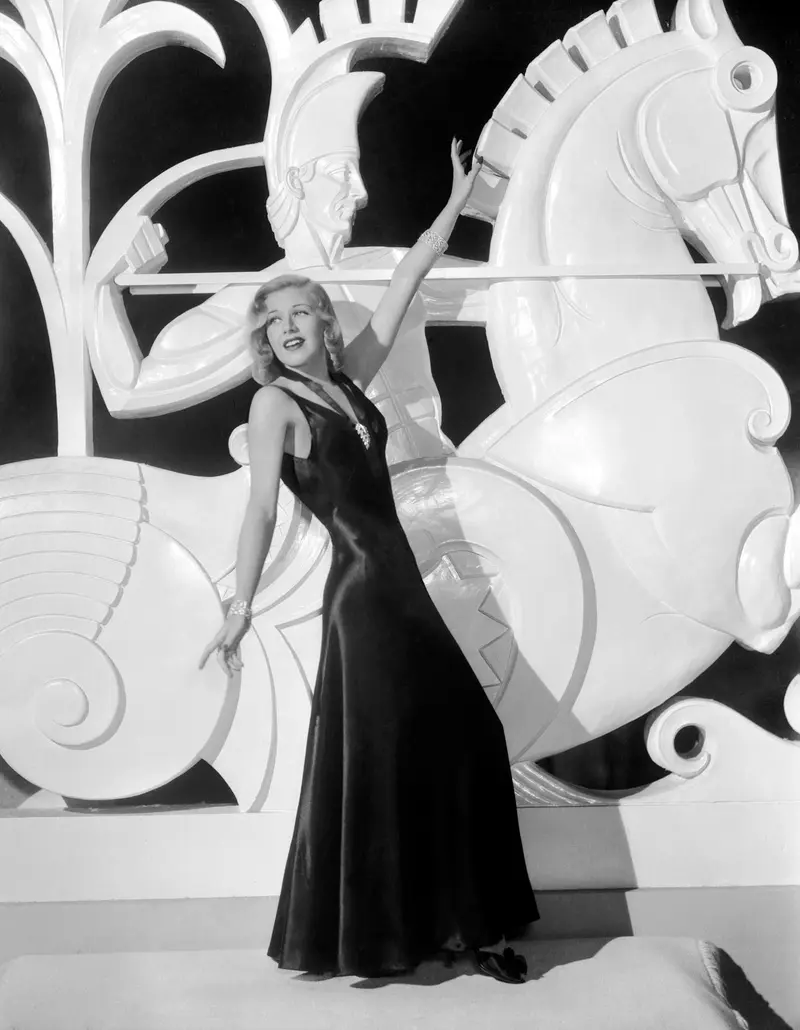
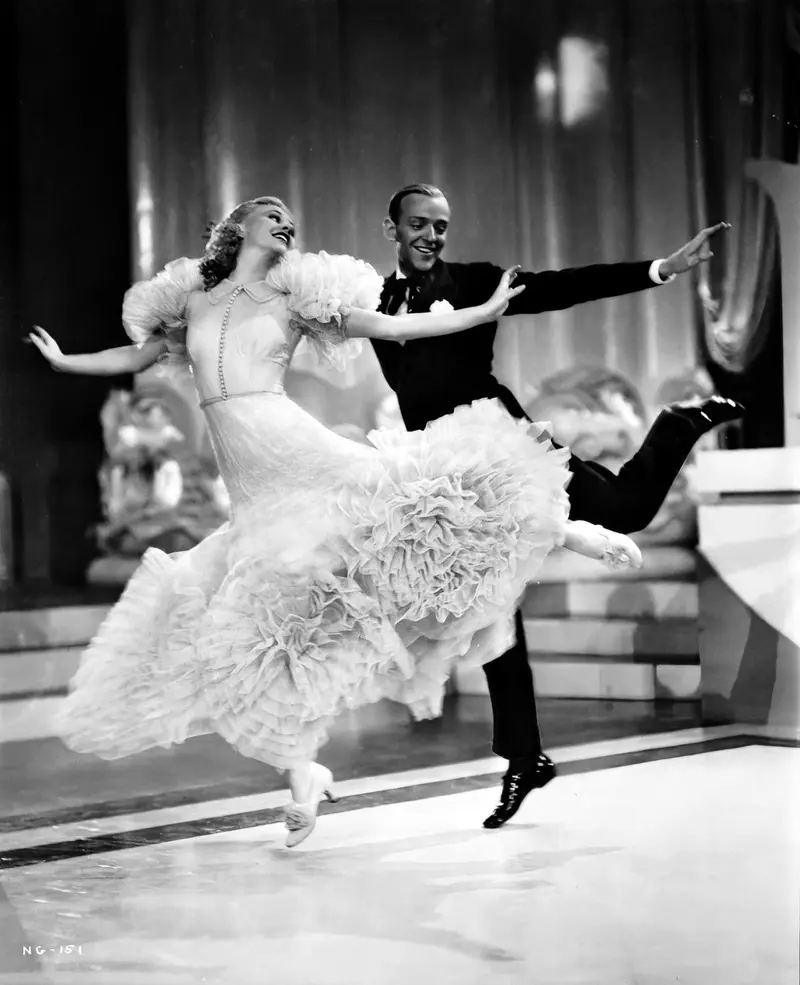
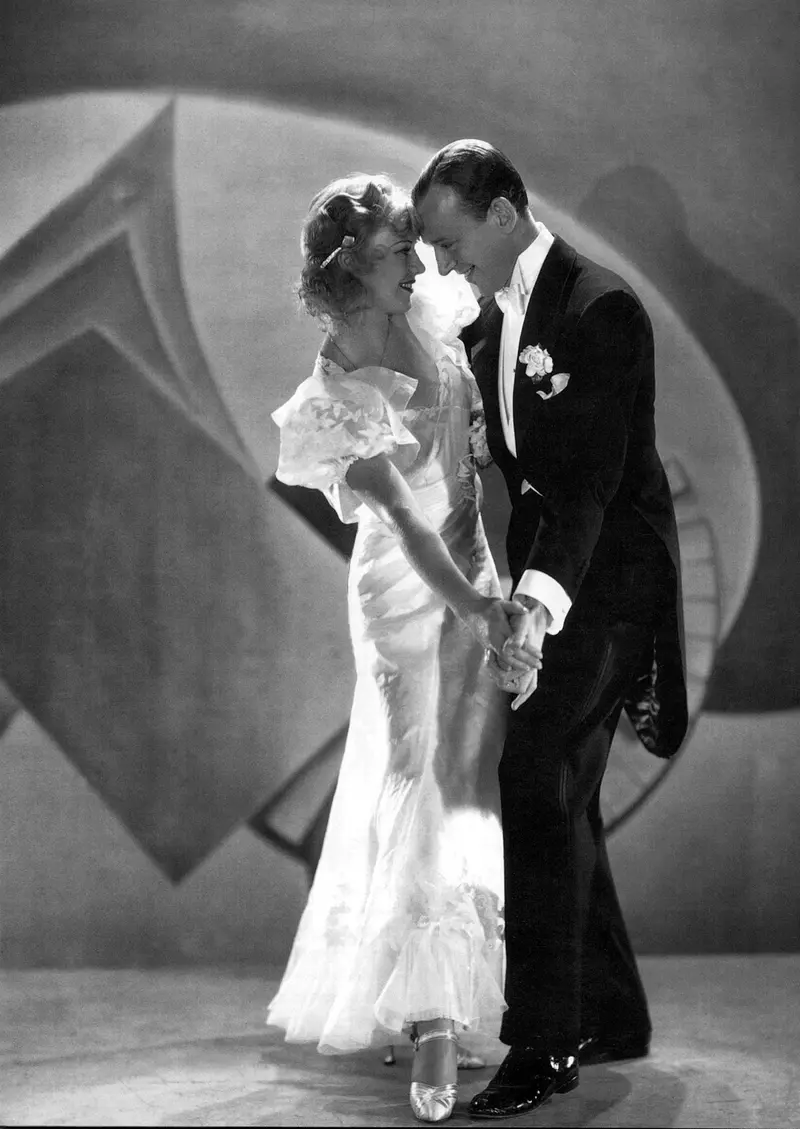
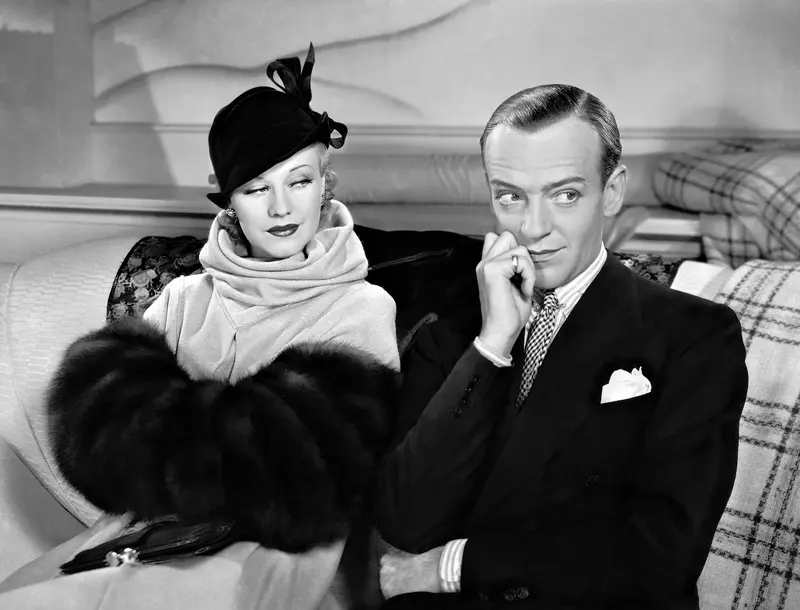
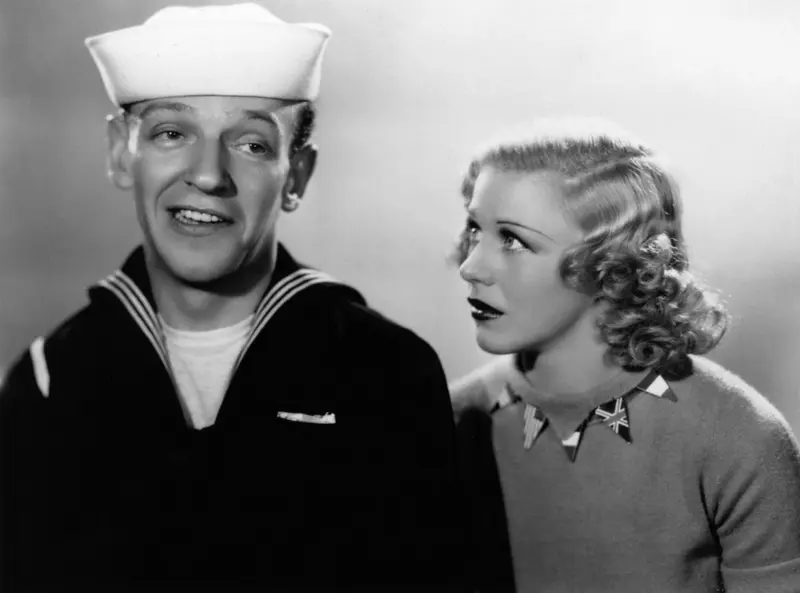
Fred Astaire plays an American ballet dancer posing as a Russian and Ginger Rogers a tap dancer in this 1937 RKO musical comedy, in which faked publicity convinces the press they are married. Its Gershwin score introduced “They Can’t Take That Away from Me,” and Ray Lewis of the Canadian Moving Picture Digest ranked it among the team’s best since Top Hat.
Photo: DoctorMacro.com
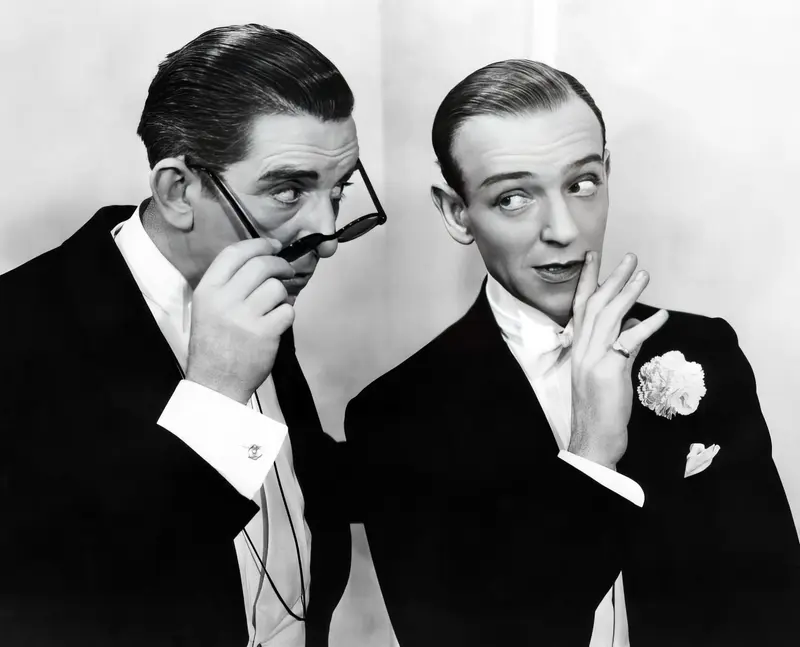
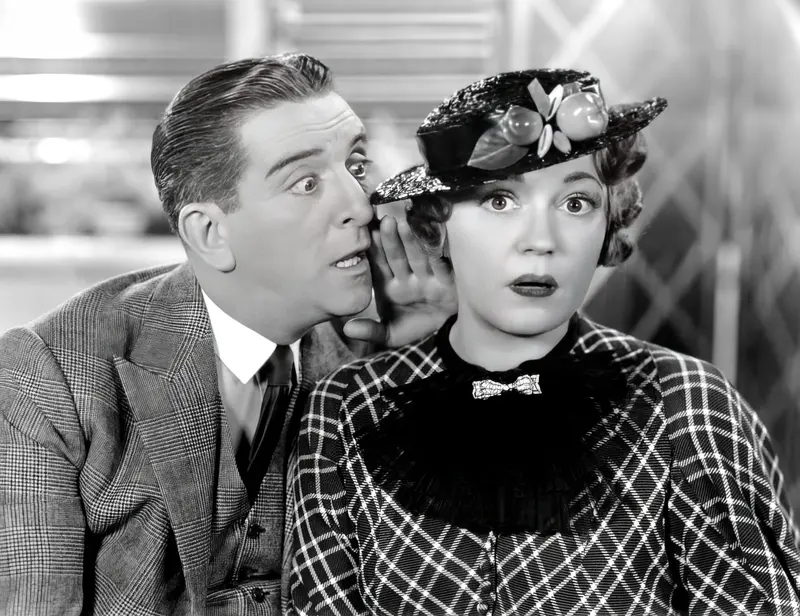
Shall We Dance is a 1937 RKO Radio musical comedy directed by Mark Sandrich, and Wikipedia’s entry on the film counts it seventh among the ten pictures Fred Astaire and Ginger Rogers made together. Fred Astaire plays Peter P. Peters, an American ballet dancer billed as the Russian “Petrov,” Ginger Rogers plays the tap dancer Linda Keene, and Edward Everett Horton plays the friend whom Eric Blore telephones from the “Susquehanna” jail, in a scene described by Ray Lewis in the Canadian Moving Picture Digest of 29 May 1937. The underscore is by George Gershwin and the lyrics by Ira Gershwin, and the entry calls it the Gershwins’ second Hollywood musical, following Delicious (1931).
Peters, dancing with a Paris ballet company owned by Jeffrey Baird, sees a photograph of Keene, falls in love and arranges a meeting in his Russian guise. She is unimpressed at first and warms to him on a liner bound for New York. Their associates then stage bedroom pictures with a wax figure of Keene and a sleeping Peters, and the press takes them as proof of a marriage. To head off the scandal, the two agree to wed in secret and divorce at once.
Astaire introduces “They Can’t Take That Away from Me” in the film, and he and Rogers trade verses of “Let’s Call the Whole Thing Off” before tapping on roller skates at a Central Park rink. The Digest of 22 May 1937 reported that the picture had its run extended to a second week at the Imperial in Toronto, during Coronation Week.
The Digest column of 22 May 1937, written by “Jay L” in place of Ray Lewis, reported that Imperial manager Tom Daley saw “unbounded enthusiasm” for the film in Toronto. The theater listing on the same page gives it as a “2nd week” booking. The same page reports that George and Ira Gershwin, credited with the picture’s music and lyrics, had started on the songs for Samuel Goldwyn’s The Goldwyn Follies. Brunswick’s complete catalog of 1938 lists “Beginner’s Luck” as from the RKO picture, recorded by Astaire with Johnny Green and his Orchestra. Astaire’s entry in that catalog also carries “Slap That Bass,” “They All Laughed,” “Let’s Call the Whole Thing Off” and “They Can’t Take That Away From Me.”
Both Digest issues print the title with a question mark, while the Brunswick catalog prints the song with the mark and the picture without it. Wikipedia’s entry credits the title to Vincente Minnelli, a friend of the Gershwins, and says his original suggestion had the question mark, which disappeared at some point.
Ray Lewis, writing from London in the Digest of 29 May 1937, attended the trade-show opening at the Regal, Marble Arch, where a Coronation film was also shown ahead of the feature. Lewis ranked the picture “one of the best for the team” since Top Hat and wrote that Astaire’s singing voice had “greatly improved.” The scene of Astaire impersonating a Russian was “an excellent bit of comedy,” and the dog scene made even the “hard-boiled exhibitors” laugh aloud. Lewis called “a riot” the telephone call in which Blore, trying to tell Horton where he is being held, gives each letter of “Susquehanna” through a four-syllable word. The joke, Lewis added, played especially well in England, where the telephone was a particular irritant.
Lewis described the closing number, with its chorus in Rogers masks, as “snappy” and “original,” and forecast that RKO Radio had “another million dollar winner.” Wikipedia’s entry gives a less favorable result. It records earnings of $1,275,000 in the US and Canada and $893,000 elsewhere, for a profit of $413,000, less than half that of the previous Astaire-Rogers film. The same entry says the picture was not a critical success and was read as a sign that the pairing was losing its hold on audiences. That account and Lewis’s column of 1937 disagree on how the film was received.
Wikipedia’s entry traces the idea to RKO’s wish to exploit what Rodgers and Hart had done with On Your Toes, their 1936 Broadway hit. It calls the signing of the Gershwins a major coup for producer Pandro Berman and describes the film as the team’s most expensive to that date. Both stars had earlier Gershwin ties: Astaire headlined Lady Be Good! (1924) and Funny Face (1927) on Broadway with his sister Adele, and Rogers first drew Hollywood’s notice in Girl Crazy (1930). The entry says Astaire was not enthusiastic about mixing ballet and jazz, and that some critics link this to his stated disdain for “inventing up to the arty.” He returned to the idea in later pictures, among them Ziegfeld Follies.
Hermes Pan worked with Astaire on the choreography throughout, according to the entry, and Harry Losee was brought in for the ballet finale. A short rumba seen in a flip book, danced with Pete Theodore, is the one partnered dance Rogers has without Astaire across the ten films. The entry sets “Slap That Bass,” staged in a ship’s engine room with African-American musicians, as a successor to Astaire’s shipboard solo in Follow the Fleet. Gershwin’s color home movie of Astaire rehearsing that number was not found until the 1990s. On the partnership as a whole, Wikipedia’s entry on Astaire reports that John Mueller and Arlene Croce, author of The Fred Astaire & Ginger Rogers Book, consider Rogers his greatest dance partner.
According to Wikipedia’s entry on the film, Gershwin was already suffering from a brain tumor during production, and Nathaniel Shilkret and Robert Russell Bennett helped with some of the orchestration. Shilkret, the musical director, built a fifty-piece studio orchestra around Jimmy Dorsey and all or part of his band, and Dorsey solos on “Slap That Bass,” “Walking the Dog” and “They All Laughed.” Gershwin objected when “They Can’t Take That Away from Me” was reprised as part of the dance finale, as “The Way You Look Tonight” had been in Swing Time, writing that they “throw one or two songs away” with no plug. He died two months after the film’s release and was posthumously nominated for the Academy Award for Best Original Song for that number.
Astaire and Rogers each named the song a personal favorite and danced to it again in The Barkleys of Broadway (1949), which the entry calls the one time on film Astaire allowed himself a song from an earlier picture. In 2004 the American Film Institute placed “Let’s Call the Whole Thing Off” at number 34 on its list of 100 songs. On 22 Sep 2013 a critical edition of the full orchestral score was announced, from the Gershwin family with the Library of Congress and the University of Michigan. Apart from “Hoctor’s Ballet” and “Walking the Dog,” it will be the first publication of the score, and the entry says the release date is unclear.
Shall We Dance (1937) is about an American ballet dancer, billed as the Russian Petrov, who falls for the tap dancer Linda Keene. Staged bedroom pictures persuade the press they are married, so they wed in secret and plan an immediate divorce. Ray Lewis, in the Canadian Moving Picture Digest of 29 May 1937, called the story exciting and romantic.
Shall We Dance ends onstage, with Linda Keene joining Peter Peters in his new show. She comes to serve divorce papers, sees him dancing with a chorus masked as her, and takes one girl’s place; he unmasks her for a final duet. Ray Lewis called it “a lively finale” in the Canadian Moving Picture Digest of 29 May 1937.
No. The 1937 film is itself the source of a remake: Wikipedia’s entry says it inspired the 1996 Japanese-language film of the same name. The same entry traces RKO’s idea to Rodgers and Hart’s 1936 Broadway hit On Your Toes, whose formula the studio wanted to exploit.
We use Google Analytics to see which pages help. Allow it?