The Killers
Robert Siodmak 1946
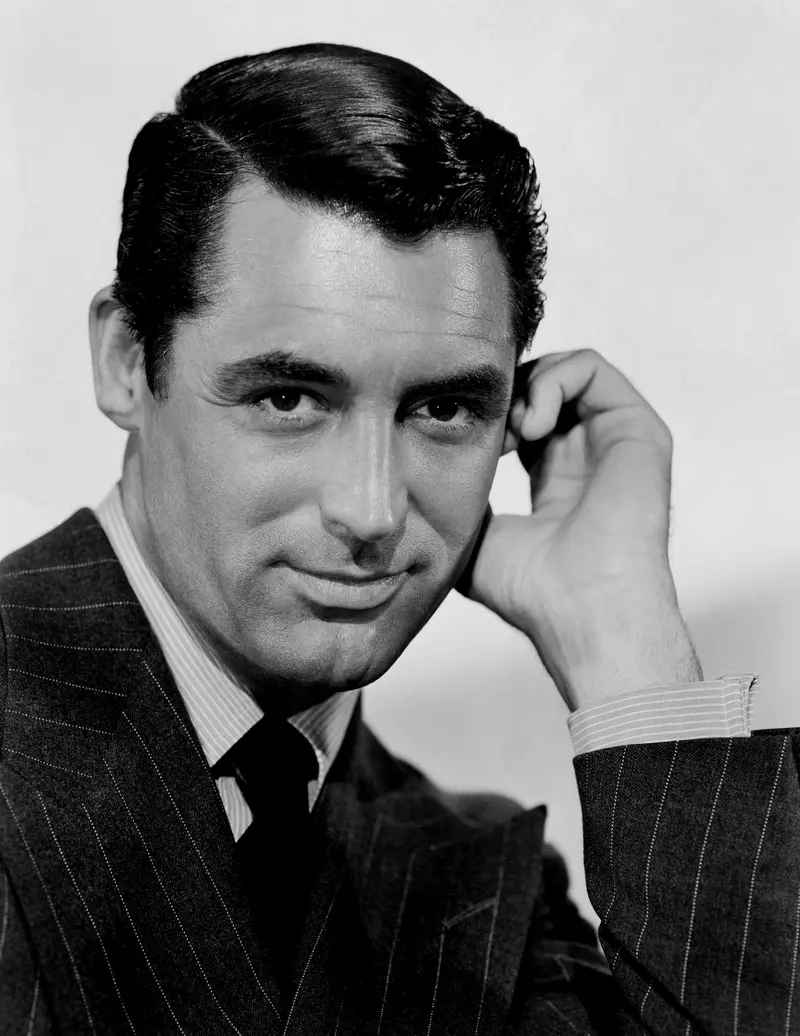
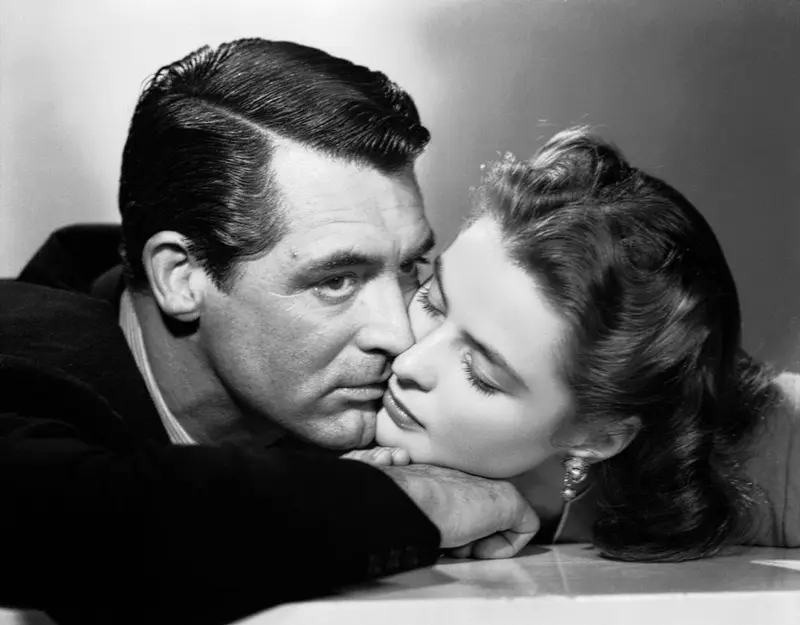
Alfred Hitchcock’s 1941 RKO thriller stars Joan Fontaine as Lina, a romantically inexperienced woman who elopes with Cary Grant’s penniless playboy, Johnnie Aysgarth, and comes to fear he means to kill her. Fontaine took the Best Actress Academy Award for the part, and Hitchcock and his biographer Donald Spoto give opposing accounts of who chose the ending.
Not listed on Amazon right now. Search Amazon for it.
Photo: DoctorMacro.com
The Canadian Motion Picture Exhibitor of 15 Nov 1941 called Suspicion “A classy piece of work.” Canadian Film Weekly reported on 7 Jan 1942 that the New York Critics Circle had given Joan Fontaine its best actress honors for the part. She also took the Best Actress Academy Award, and no other acting performance in an Alfred Hitchcock film has won an Oscar.
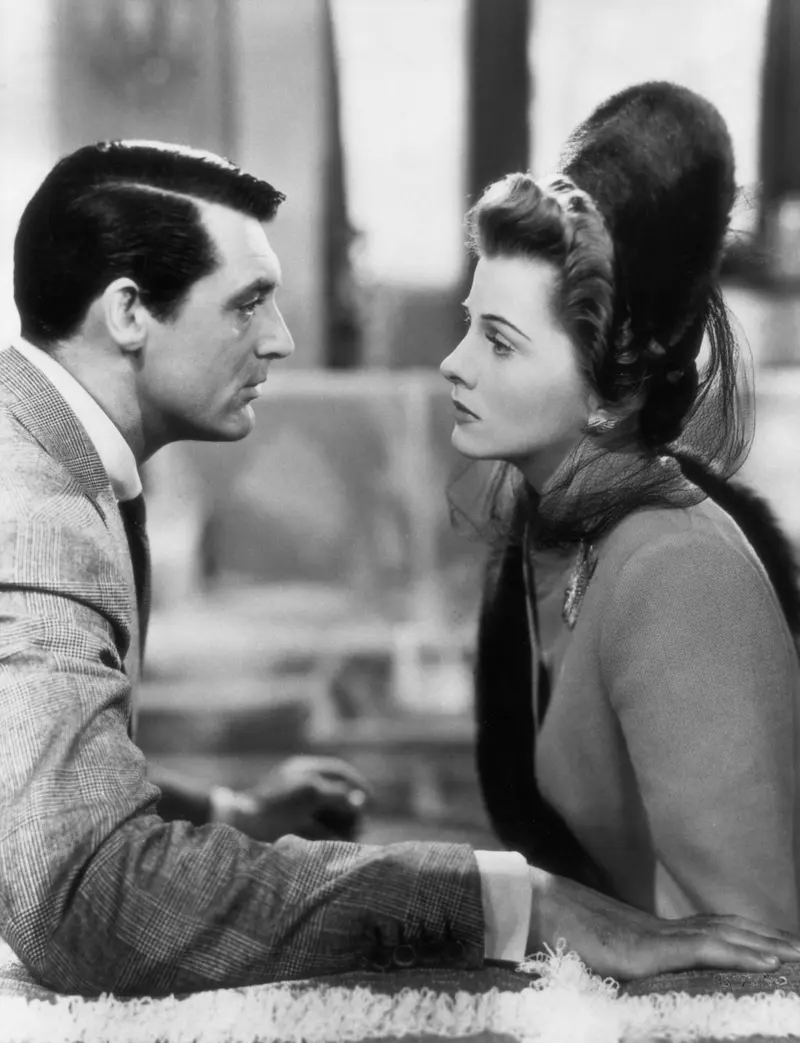
The film is a 1941 RKO Radio Pictures thriller in which Joan Fontaine plays Lina McLaidlaw, Cary Grant plays Johnnie Aysgarth, and Nigel Bruce plays Johnnie’s friend Gordon “Beaky” Thwaite. Cedric Hardwicke appears as General McLaidlaw, Lina’s father, and May Whitty as her mother. It is the first of four films Grant made with Hitchcock, the others being Notorious, To Catch a Thief and North by Northwest.
Lina, who has little romantic experience, elopes with Johnnie against the wishes of her wealthy father. She learns that he has neither work nor income, that he keeps gambling after promising to quit, and that he embezzled from his cousin and employer. As the lies accumulate, she comes to fear that he caused a friend’s death and that he intends to murder her for her insurance.
Variety’s figure for the film’s box office in 1942 was $1.8 million, and a profit of $440,000 is also recorded. The Canadian Motion Picture Exhibitor’s notice of 15 Nov 1941 described a fortune hunter and his wife, with Cary Grant marrying Fontaine for her money and growing worse as the story goes along. The paper credited Hitchcock with “his usual thorough direction” and named Heather Angel, Whitty, Bruce and Hardwicke among the other players. Of the finish, it said only, “It ends with reasonable pleasantness.” Its verdict for exhibitors was “Good for the distaff clientelle.”
Canadian Film Weekly’s issue of 18 Mar 1942 reprinted a clipping sent in by Harrison of the Capitol in Cobourg. The clipping, from the Cobourg World, announced a Monday and Tuesday booking of Suspicion, cited Fontaine’s Academy Award and pronounced her “a clever actress.” The same paper’s issue of 7 Jan 1942 carried two items on the awards season. One reported the New York Critics Circle poll, in which Citizen Kane was the year’s best film and John Ford took the directing award for How Green Was My Valley. The other reported that the Committee on Exceptional Photoplays, which the paper describes as a section of “the Board,” had praised Fontaine’s performance, although the 10 films the item names as the Board’s choices for 1941 do not include Suspicion.
A 2016 Los Angeles Times article recalled that many critics had rated the picture “a middling effort” for Hitchcock, with the ending a point of contention. The same article said admirers still rank it somewhere in the teens among his 50-plus films. The paper’s own reviewer in 1941, Philip K. Scheuer, had called the ending “abrupt” and held that this made it “effective.” Bosley Crowther of The New York Times wrote that Grant was “provokingly irresponsible” and “oddly mysterious,” which he considered right for the role.
In 1988 American Playhouse televised a remake with Anthony Andrews and Jane Curtin. The radio record is earlier, with six adaptations between 1942 and 1949. Screen Guild Theater’s broadcast of November 24, 1949, reunited Cary Grant, Fontaine and Bruce. CBS Radio’s Academy Award Theater aired a half-hour version on October 30, 1946, with Grant and Ann Todd, and Screen Guild Theater had Grant, Bruce and Loretta Young on January 21, 1946. Lux Radio Theatre’s remake of September 18, 1944, starred Olivia de Havilland, Fontaine’s sister, with William Powell and Charles W. Irwin. On Screen Guild Theater on January 4, 1943, Basil Rathbone stepped in at the last minute for an ill Brian Aherne, opposite Fontaine and Bruce. The initial adaptation was Lux’s one-hour version of May 4, 1942, which had Fontaine and Bruce, with Aherne, Fontaine’s husband, in Cary Grant’s part.
Fontaine’s first Best Actress nomination had come for Hitchcock’s Rebecca (1940), and that award went to Ginger Rogers for Kitty Foyle. After Suspicion, she was one of the biggest female stars in Hollywood, though typecast in melodrama. As she later put it, the studios seemed to want her to “cry the whole Atlantic.” For Grant, the role and the one in Notorious were darker and morally ambiguous, and they tested his screen persona. Geoff Andrew of Time Out read Suspicion as proof that Grant could be “simultaneously charming and sinister.”
The accounts of the 1942 ceremony conflict. Fontaine beat her sister, who was nominated for Hold Back the Dawn. Biographer Charles Higham writes that Fontaine pointedly spurned de Havilland’s congratulations as she went forward to collect the award, leaving de Havilland offended and embarrassed. Fontaine’s autobiography, No Bed of Roses (1978), says she was paralyzed with surprise, that de Havilland insisted she get up, and that “Olivia took the situation very graciously.” After Fontaine’s death, the statuette was to be sold at an animal rights auction, but the Academy threatened to sue because it had not been offered back for $1, and her estate kept it.
The shoot ran from February 10 to July 24, 1941, and all of it took place on sound stages. The filmmakers put a lightbulb in the milk so that the glass would seem to glow on its way upstairs, and Hitchcock’s cameo comes about 47 minutes in, when he posts a letter at the village postbox. Fontaine, whom RKO had dropped from its contract list some years earlier, had to be borrowed from David O. Selznick at an expensive fee. Grant, in the later record, did not warm to her and found her temperamental and unprofessional. Later accounts of the casting say that Frances Dee and Laurence Olivier were to star once Hitchcock joined and the budget rose, and that the story had begun as a B picture for George Sanders and Anne Shirley.
Hitchcock’s memory of the ending he did not use, in the book-length interview with François Truffaut published in English in 1967, is that Lina’s letter told her mother she knew Johnnie was killing her and that her love for him outweighed it. The other recorded version differs in one respect. In it, Lina writes to her mother that she fears Johnnie will poison her, asks him to mail the letter, and drinks the milk, with a last shot of him posting the evidence against himself. Francis Iles’s 1932 novel Before the Fact, the inspiration for the story, finishes with Johnnie bringing his sick wife a drink she knows is poisoned, and she swallows it willingly. The film leaves open whether the glass of milk is poisoned, and the glass is seen untouched the following morning.
The published accounts disagree over who chose the finish. Donald Spoto, in his biography The Dark Side of Genius, disputes Hitchcock’s claim to have been overruled. Spoto says the first RKO treatment and the memos between director and studio show that Hitchcock firmly wanted a picture about a woman’s fantasy life. Hitchcock was himself quoted as saying he had been forced to change it, since the studio cared more about protecting Grant’s heroic image. He later called the ending “a complete mistake” that came of making the story with Grant, adding that without a cynical finish it was “too simple.” William L. De Andrea’s Encyclopedia Mysteriosa (1994) also says that RKO decreed a new ending because Grant was to be the killer and Fontaine the victim, and that Hitchcock supplied it and complained about it for the rest of his life.
The Library of America’s edition of Nathanael West’s collected works prints an adaptation of the novel that RKO never produced. West, hired by RKO as a screenwriter in November 1939, wrote it with Boris Ingster in seven weeks, West handling characterization and dialogue and Ingster the narrative structure. It was abandoned when RKO assigned the book to Hitchcock, who already had a very different screenplay, credited to Alma Reville, Joan Harrison and Samson Raphaelson. Reville was Hitchcock’s wife and Harrison his personal assistant.
Suspicion 1941 was filmed entirely on sound stages. Shooting ran from February 10 to July 24, 1941.
Suspicion was filmed entirely on sound stages for RKO Radio Pictures. The story itself opens on a train in England.
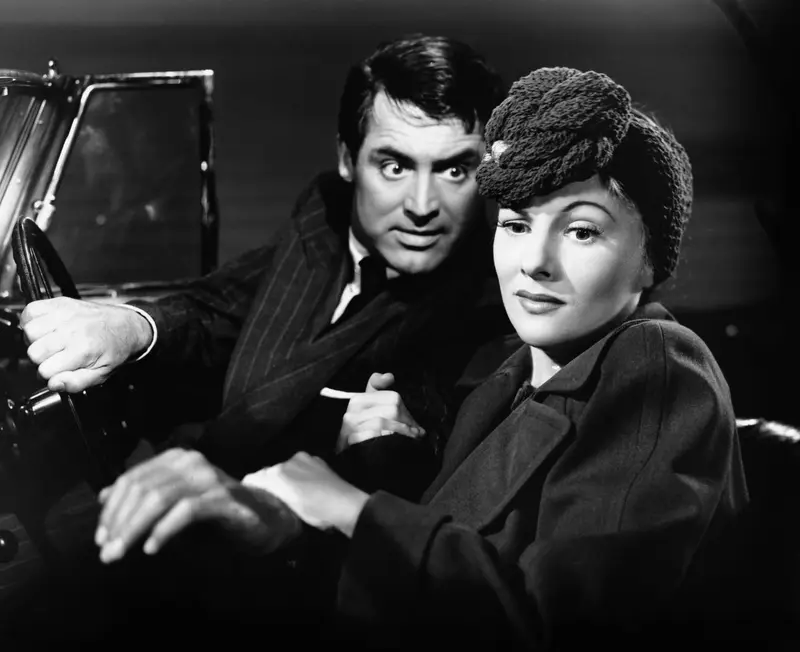
Suspicion ends on a cliff road, after Lina’s car door swings open and Johnnie stops the car. He says he had planned suicide, not murder, and will face prison for embezzlement. Her suspicions allayed, she persuades him to turn back, and they drive away together.
The 1941 movie Suspicion ends with Johnnie and Lina driving away together after he explains himself and her suspicions are allayed. Francis Iles’s novel ends differently, with the wife knowingly drinking the poison her husband brings her.
We use Google Analytics to see which pages help. Allow it?