The Killers
Robert Siodmak 1946
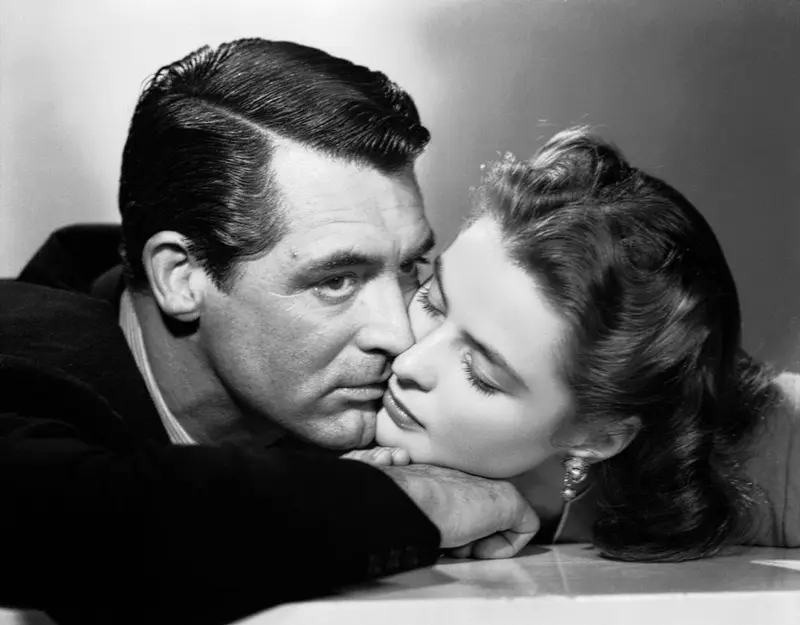
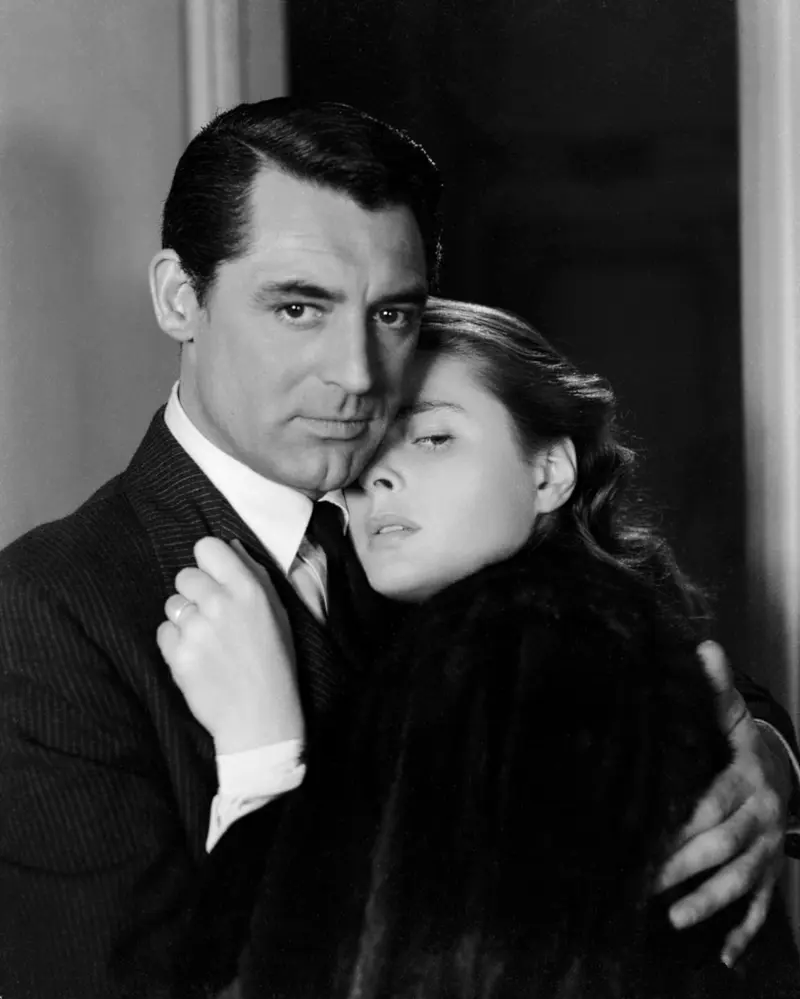
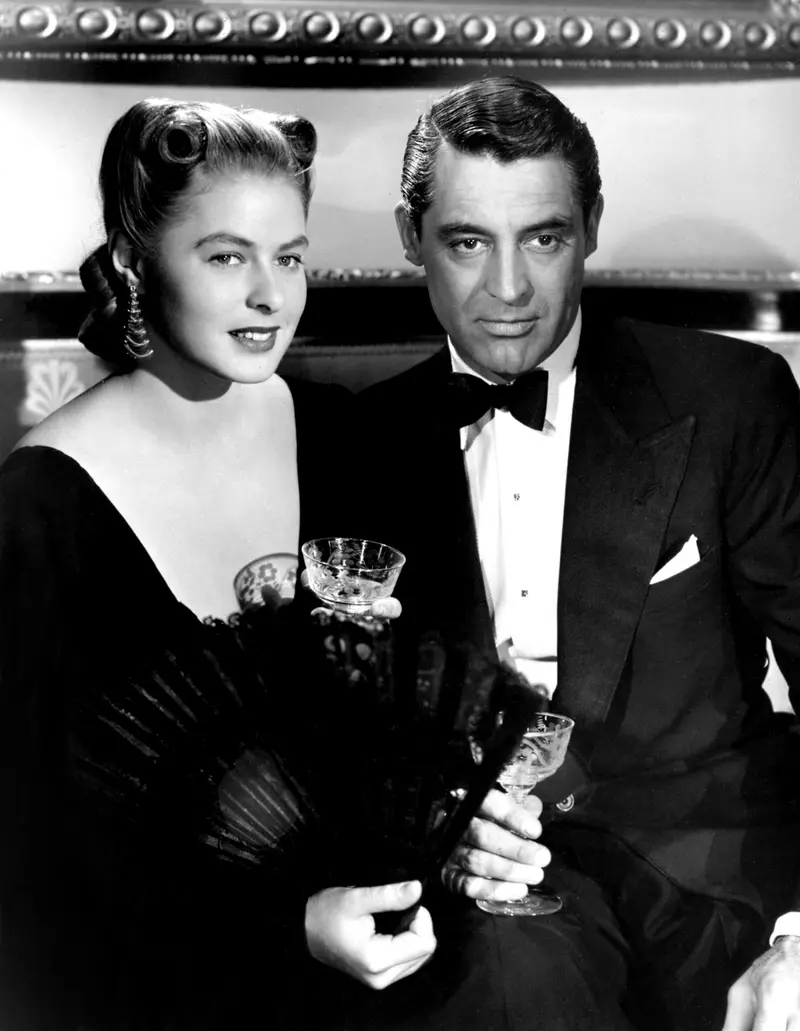
Alfred Hitchcock’s 1946 spy romance for RKO stars Cary Grant as U.S. agent T. R. Devlin, Ingrid Bergman as Alicia Huberman, whose father was convicted as a German spy, and Claude Rains as Alex Sebastian, the man she is told to seduce in Rio de Janeiro. Film Daily headlined it a masterpiece of melodrama, and Rains and screenwriter Ben Hecht drew Academy Award nominations.
Not listed on Amazon right now. Search Amazon for it.
Photo: DoctorMacro.com
Notorious is the 1946 RKO Radio Pictures spy film directed and produced by Alfred Hitchcock, with Cary Grant as U.S. government agent T. R. Devlin, Ingrid Bergman as Alicia Huberman, and Claude Rains as Alex Sebastian. It is one of four films in which Hitchcock cast Grant, along with Suspicion, To Catch a Thief and North by Northwest. It is also one of three Hitchcock made with Bergman, along with Spellbound and Under Capricorn.
Devlin recruits Alicia, whose father was convicted as a German spy, to get inside a circle of German émigrés in Rio de Janeiro after World War II. The two fall in love before Devlin receives the assignment he must pass on to her: she is to seduce Sebastian, an IG Farben executive who once loved her. Hitchcock described the story to François Truffaut as “the old conflict between love and duty.”
Canadian Film Weekly of February 12, 1947, printed the Film Daily review, which gave the running time as 101 minutes and carried the headline “Hitchcock excels himself in masterpiece of melodrama.” The review predicted “an irresistible force at the boxoffice.” Later box office figures give worldwide rentals of $7.15 million and a profit to RKO of $1.01 million.
Canadian Film Weekly of June 26, 1946, carried two items on the film. One said Bergman would play “a beautiful, modern woman” for the first time in 10 pictures, and would wear 24 costumes, including a riding habit and an ermine wrap. The other said Cary Grant had just completed his part and would take the male lead opposite Teresa Wright in Samuel Goldwyn’s The Bishop’s Wife, then set for production in November. When that film appeared in 1947, Grant starred opposite David Niven and Loretta Young.
The Film Daily review described the story as U.S. agents working to uncover a Nazi group in Brazil that was making atom bombs for another world war. It called Alicia a patriotic American of German extraction whose father had worked as a Nazi agent. Its credits list Hitchcock as producer and director, Ben Hecht as screenwriter, Ted Tetzlaff as cameraman and Barbara Keon as production assistant, and it rated both direction and photography “Excellent.”
Film Daily said Hitchcock had put his name to nothing better. It wrote that Bergman’s work “excels anything she has done” and placed her in line for an Academy award, and that the role required Grant to “untap new facets of his dramatic talent.” The love scenes, it predicted, would leave women in “an emotional stew.” Bosley Crowther of The New York Times called the film “velvet smooth in dramatic action” and said Hecht and Hitchcock had made a romantic melodrama “just about as thrilling as they come.”
James Agee, writing in The Nation in 1946, was more guarded. He said the film lacked many qualities of Hitchcock’s best work but had good ones of its own, and he praised the director’s skill at “domestic psychology.” Agee said there was no telling how much of this should be credited to Hecht’s script, though he thought it safe to give Hitchcock much of the credit. At the 19th Academy Awards, Rains was nominated for Best Supporting Actor and Hecht for original screenplay.
The opening date varies between accounts. Wikipedia’s article on the film places the premiere at Radio City Music Hall in New York on August 15, 1946, with Hitchcock, Bergman and Grant attending, while its article on Bergman gives September 6.
Later production histories trace the project to an August 1944 lunch, after which Selznick story editor Margaret McDonell wrote in a memo that Hitchcock wanted a story about “confidence tricks on a grand scale,” with Bergman as the woman. Hitchcock and Hecht wrote the script at Hecht’s house in Nyack, New York. The same histories say Selznick, drained by Duel in the Sun, sold the script, Bergman and Hitchcock to RKO for $800,000 and 50 percent of the profits. Hitchcock received no money from the deal but became his own producer for the first time.
Selznick then pushed to replace Grant with Joseph Cotten, whose contract he owned, until Hitchcock and RKO executive William Dozier invoked a clause in the sale contract and blocked him. Hitchcock had wanted Clifton Webb as Sebastian, and Selznick pressed for Rains. After attempts to get Ethel Barrymore and Mildred Natwick for Sebastian’s mother fell through, the actor Reinhold Schünzel suggested Leopoldine Konstantin, whose only American film this was. Biographer Patrick McGilligan calls the cast “a glorious exception” among Hitchcock’s 1940s pictures. Hitchcock later claimed the FBI followed him for several months after he and Hecht discussed uranium with Robert Millikan at Caltech in mid-1945.
Clifford Odets was hired for a rewrite while Hitchcock was abroad. Hecht wrote on the draft, “This is really loose crap,” and Hitchcock apparently used none of it. Shooting ran from October 22, 1945, to February 1946, almost entirely on RKO sound stages. Rains stood three or four inches shorter than Bergman, so Hitchcock built ramps for their walking scenes and suggested elevator shoes. Richard Chamberlain, in a 2009 Turner Classic Movies tribute, recalled that Rains found the ramp “a bit embarrassing and very funny.”
Later accounts say Grant coached a nervous Bergman through her first days on the picture, and that the two stayed friends for life. Those accounts also place two private matters on the set: Hitchcock’s growing infatuation with Bergman and her affair with the photographer Robert Capa. At a dinner sequence close-up, one account has Bergman telling the director that the girl’s look was wrong, and Hitchcock answering, “I think you’re right, Ingrid.” McGilligan writes that both stars felt strange during the two-and-a-half-minute kiss, which Hitchcock broke up every three seconds to get past the Production Code. He quotes Hitchcock’s reassurance to Bergman: “It’ll look right on the screen.”
Film scholar Jack Sullivan writes that few writers or fans discuss Roy Webb’s score, which he calls “one of the most deftly designed” of the Hitchcock scores. Before the sale, Selznick had considered eighteen “gooey, sentimental songs” for the picture.
Hitchcock’s biographer Donald Spoto calls the film the director’s first attempt, at 46, at “a serious love story.” Truffaut told Hitchcock it got “a maximum of effect” from very little. Pauline Kael wrote, “Great trash, great fun.” Roger Ebert called it the “most elegant expression” of Hitchcock’s visual style, and in 1991 named it among his 10 greatest films and his favorite of the director’s work. Patricia Hitchcock O’Connell told biographer Charlotte Chandler, “What a perfect film!”
Geoffrey Wansell, Grant’s biographer, reads the performance as a measure of how far the actor had matured since The Awful Truth. In his biography of Grant, Scott Eyman writes that what set Bergman apart for Grant was “her indifference to her looks.” The Library of Congress named the film to the National Film Registry in 2006. As of April 2024 it held a Metacritic score of 100, a mark shared with Rear Window and Vertigo.
At the American Film Institute’s tribute to Hitchcock on March 7, 1979, Bergman handed him the wine cellar key from the film, the prop Grant had kept after shooting ended. By her own count that night, Grant held it for 10 years and she held it for 20, though another account says he passed it to her a few years after filming. She closed with “God bless you, Hitch.” The story itself went on without the original team. Bergman repeated Alicia on Lux Radio Theater on January 26, 1948, with Cotten in Grant’s part, and on The Screen Guild Theater on January 6, 1949, with John Hodiak. A television remake followed in 1992, and Hans Gefors’s opera premiered in Gothenburg in September 2015.
Notorious was filmed almost entirely on RKO sound stages, with many seeming exteriors achieved by rear projection. The one scene that needed outdoor shooting, the riding club meeting, was done at the Los Angeles County Arboretum and Botanic Garden in Arcadia, California. Second unit crews shot footage in Miami, Rio de Janeiro and at Santa Anita Park.
Yes. The Film Daily review, printed in Canadian Film Weekly on February 12, 1947, headlined it a masterpiece of melodrama, and Bosley Crowther of The New York Times praised Hitchcock’s brilliant direction. The Library of Congress named it to the National Film Registry in 2006.
Notorious is about a government agent named Devlin who recruits Alicia Huberman to spy on German émigrés in Rio de Janeiro after World War II. They fall in love, and she is then told to seduce Alex Sebastian, who once loved her. Hitchcock described it to Truffaut as the old conflict between love and duty.
We use Google Analytics to see which pages help. Allow it?