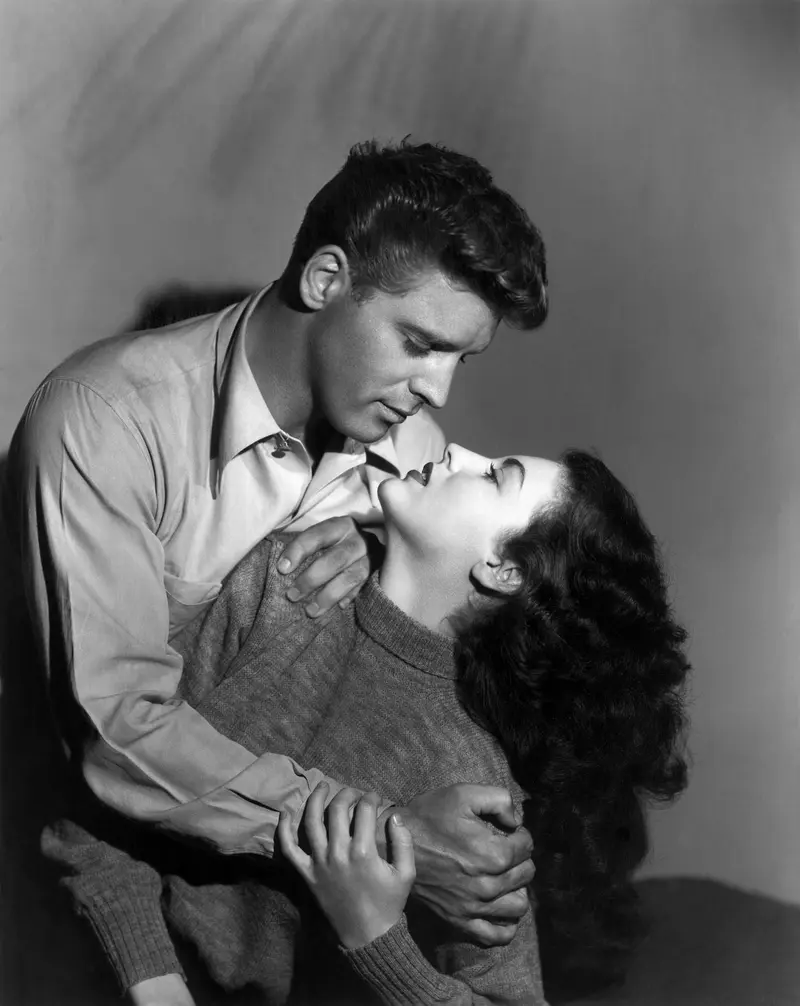
The Killers
Robert Siodmak 1946
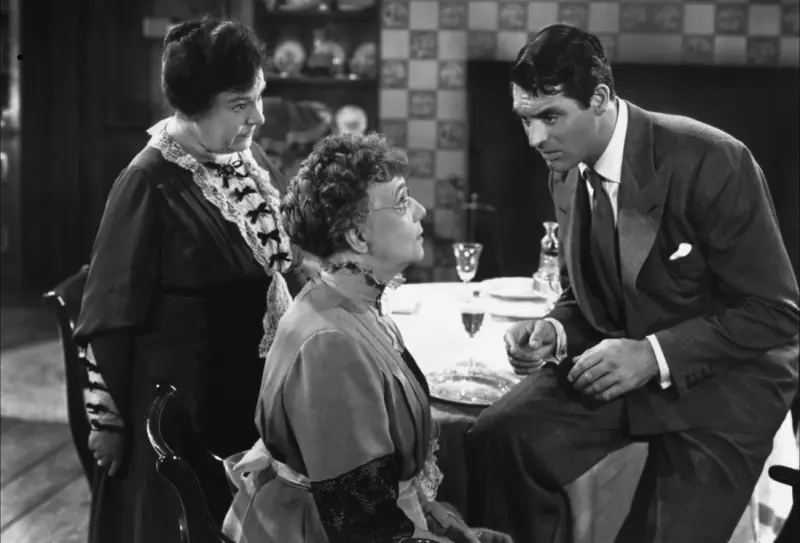
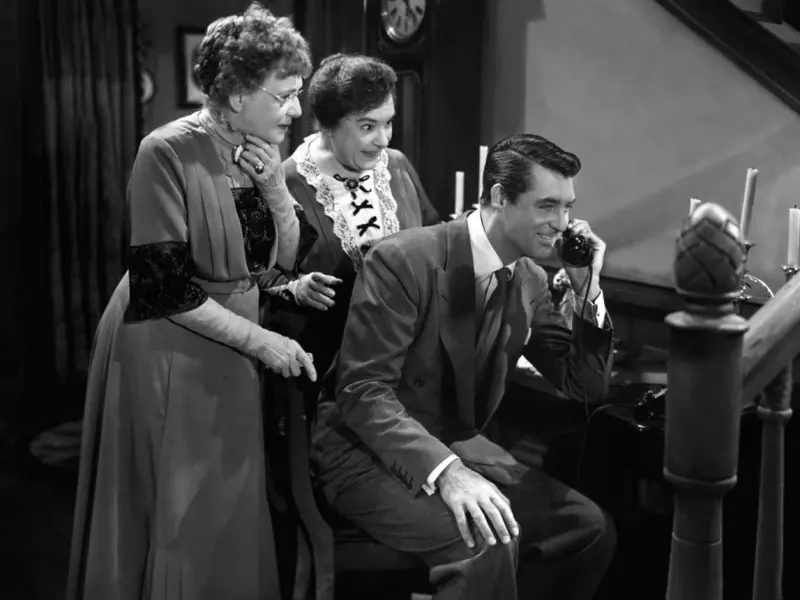
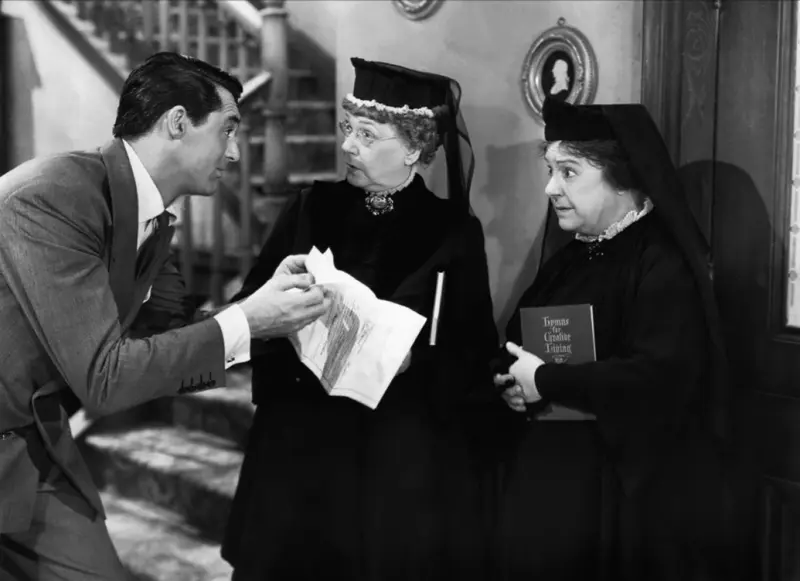
Frank Capra’s 1944 Warner Bros. comedy from Joseph Kesselring’s stage hit casts Cary Grant as Mortimer Brewster, a theater critic and newlywed who learns that his two aunts, played by Josephine Hull and Jean Adair, poison lonely old men with elderberry wine. A 1944 trade review called the pace breathless and warned that the noise might leave heads bursting.
Photo: DoctorMacro.com
Arsenic and Old Lace is the Warner Bros. film of Joseph Kesselring’s stage play, produced and directed by Frank Capra before he entered the service, according to Canadian Film Weekly’s review of 15 Nov 1944. Cary Grant plays Mortimer Brewster, Josephine Hull plays his Aunt Abby, and Jean Adair plays his Aunt Martha. Wikipedia’s biography of Grant calls it a dark comedy, and says he had gained renown in screwball pictures such as The Awful Truth, Bringing Up Baby and His Girl Friday.
On Halloween day Mortimer, a critic who has written against marriage, weds his neighbor Elaine Harper (Priscilla Lane) and stops at his aunts’ Brooklyn house, where he finds a corpse in the window seat. The aunts explain cheerfully that they relieve lonely old bachelors of their suffering with spiked elderberry wine. Teddy, a brother who thinks he is Theodore Roosevelt, buries the dead in the cellar, and the older brother Jonathan (Raymond Massey) then arrives with a surgeon, Dr. Einstein (Peter Lorre), and a victim of his own. Canadian Film Weekly’s review located the comedy in Grant’s effort to keep the killings from becoming known.
The picture reached theaters late by contract. Wikipedia’s entry says the agreement with the play’s producers held the film back until the Broadway run closed, which pushed a planned release of September 30, 1942, to 1944. Canadian Film Weekly listed it on 13 Sep 1944 as one of Warner’s specials for the coming Canadian season, and its later review gave the running time as 118 minutes.
Canadian Film Weekly’s item of 13 Sep 1944 reported Wolfe Cohen’s announcement that Warner Bros. would release 24 features in Canada during 1944-45. The paper named two specials, this film and “Hollywood Canteen,” and called this one among the season’s “most riotous comedies.” It placed the title second among the first eight releases in their probable order, after “Janie,” and billed Grant, Massey and Jack Carson. The same item grouped it with the forthcoming pictures drawn from stage hits.
Ave Bossin’s column in the paper’s issue of 15 Nov 1944 carried a story from exhibition. Tom Daley, manager of the Imperial, learned from the critic Helen Allen that a tombstone in the film’s graveyard scene bore his name, and Bossin wrote that Daley had “found himself dead.” Dozens of callers then told him the same thing, the column said. Wikipedia’s biography of Grant records a different name on a gravestone in the film: Archie Leach, the actor’s own birth name.
The 1944 Warner pressbook told exhibitors that the film combined “laughs and chills in equal proportion.” It also claimed a Broadway run of more than four years for the play, produced by Howard Lindsay and Russel Crouse. Wikipedia’s entry gives three and a half years. The pressbook counted 25 corpses, with 13 credited to the sisters’ wine and the rest to Massey’s character, who loses to his aunts by one. Wikipedia’s plot account gives each side twelve, and has Jonathan telling police of thirteen bodies in the cellar.
The pressbook quoted Grant, cast as “the only sane Brewster,” as calling the part “the toughest job of my career,” and said he spent two months at the studio bewildered. Its stunts included an elderberry recipe contest with a War Bond prize, doilies rubber-stamped with the playdate, and a contest for local haunted-house legends. It also proposed hiring two “innocent looking little old ladies” to hand out small bottles of elderberry wine at a busy intersection. Resistol Hats, the pressbook noted, featured Carson on counter and window cards with credit to the film, and teaser copy called Hull and Adair “two Brooklyn Borgias.”
Canadian Film Weekly’s review of 15 Nov 1944 headlined the film as a natural for “bulging box office grosses” and described a comedy “full of noise and madness.” The reviewer predicted that many patrons would leave with “bursting heads.” The review rated direction and photography good, but said Capra often let the players get out of hand and allowed Grant “to do everything but bite the camera.”
Wikipedia’s entry calls the contemporary notices uniformly positive and quotes several. The New York Times critic, writing as the film reached the Strand, called it “good macabre fun.” Variety credited Capra with catching the “color and spirit of the play” and praised the Epsteins’ “tightly-compressed script.” Harrison’s Reports called it “An hilarious entertainment” and expected strong box office. John Lardner of The New Yorker found it “practically as funny in picture form” as on the stage.
Wikipedia’s entry says the part of Mortimer was intended for Bob Hope, whom Paramount would not release from his contract, and that Capra also approached Jack Benny and Richard Travis. Wikipedia’s Grant biography gives a different reason, saying Hope turned the role down because of schedule conflicts. It adds that the macabre material gave Grant difficulty and that he considered his work in the film the worst of his career. The biography also calls Teddy an uncle, where the film entry’s plot account makes him a brother.
Hull, Adair and John Alexander, who played Teddy, repeated their roles from the 1941 stage production. The running play gave Hull and Adair eight weeks of leave, according to Wikipedia’s entry, and the whole picture was shot inside those weeks. Boris Karloff, an investor and the show’s chief attraction, played Jonathan on Broadway but received no leave, and Massey took the part on film. Turner Classic Movies, as cited there, says the producers feared for ticket sales if the play lost all its principal players. The entry puts the cost at just over $1.2 million against a $2 million budget, with $175,000 paid for the rights, and says the Brewster set was reused in George Washington Slept Here (1942), after Warner crews knocked out bannisters, rafters and floors.
Later critics divided. Charles Higham and Joel Greenberg, in Hollywood in the Forties (1968), called Capra’s version “rather overstated and strained.” Pauline Kael wrote of Capra’s “hick jollity” and said it made Grant a “manic eunuch.” Leonard Maltin gave the film three and a half of four stars and singled out Lorre and Massey. Leslie Halliwell gave three of four, called it “A model of stage play adaptations,” and judged that its “flippant attitude to death” went over better in wartime than it would have earlier or later. The Capra scholar Matthew C. Gunter reads the Brewsters’ fine house, with bodies in its basement, as a metaphor for a country reconciling past violence with its myths of freedom.
Warner Bros. records, as given in Wikipedia’s entry, show $2,836,000 in domestic gross and $1,948,000 abroad, and the American Film Institute ranked the film No. 30 on its 100 Laughs list in 2000. The story went on in other forms. Karloff and Eddie Albert did a half-hour radio version on The Screen Guild Theater on November 25, 1946, and Hull, Adair and Alexander returned for Ford Theatre on January 25, 1948. Wikipedia’s entry on Hull also records a 1949 CBS-TV version, with Ruth McDevitt playing her sister.
No. Wikipedia’s entry calls it a screwball black comedy crime film, and Canadian Film Weekly reviewed it as a comedy on 15 Nov 1944. Its music is a dramatic score by Max Steiner, with Leo F. Forbstein as musical director.
Yes. Canadian Film Weekly’s review of 15 Nov 1944 described a comedy “full of noise and madness” and said it set off a storm of laughter. Warner’s 1944 pressbook sold it as both laughs and chills, and Wikipedia’s entry calls it a black comedy.
The ending has police arresting Jonathan, while Teddy and the aunts are committed to the Happy Dale asylum. The aunts then tell Mortimer he is not actually a Brewster, since his mother was the family cook and his father a ship’s chef. Delighted, he silences Elaine with a kiss and leaves with her on their honeymoon.
Yes. Wikipedia’s plot account sets the story on Halloween day, and its entry points to the list of films set around the holiday. Warner’s 1944 pressbook also urged theaters to run contests for local haunted-house legends.
We use Google Analytics to see which pages help. Allow it?