Where to start
The best Fred Astaire movies to start with: Swing Time first, then Top Hat
Dance critics rank Swing Time as the best Astaire-Rogers dance musical, so a newcomer starts there. Period reviews and later books set the order after it and mark the pictures to hold back or skip.
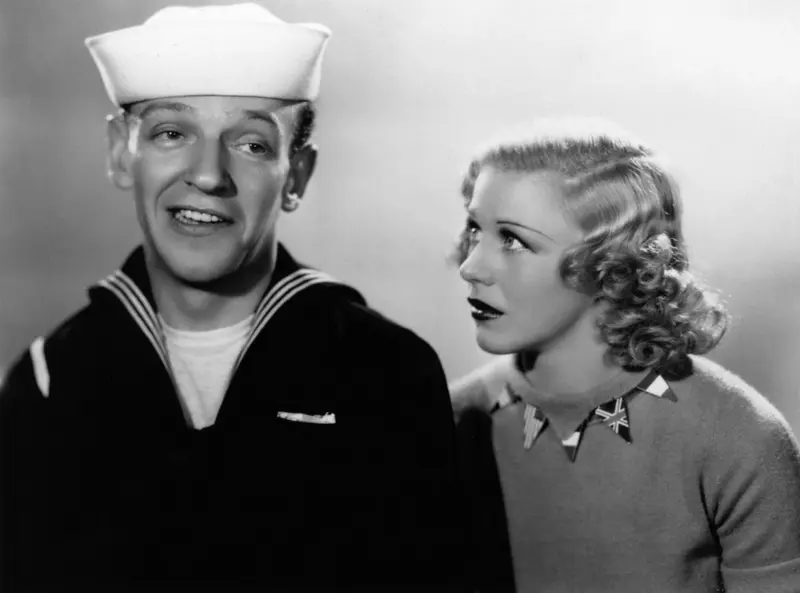
Photo: DoctorMacro.com
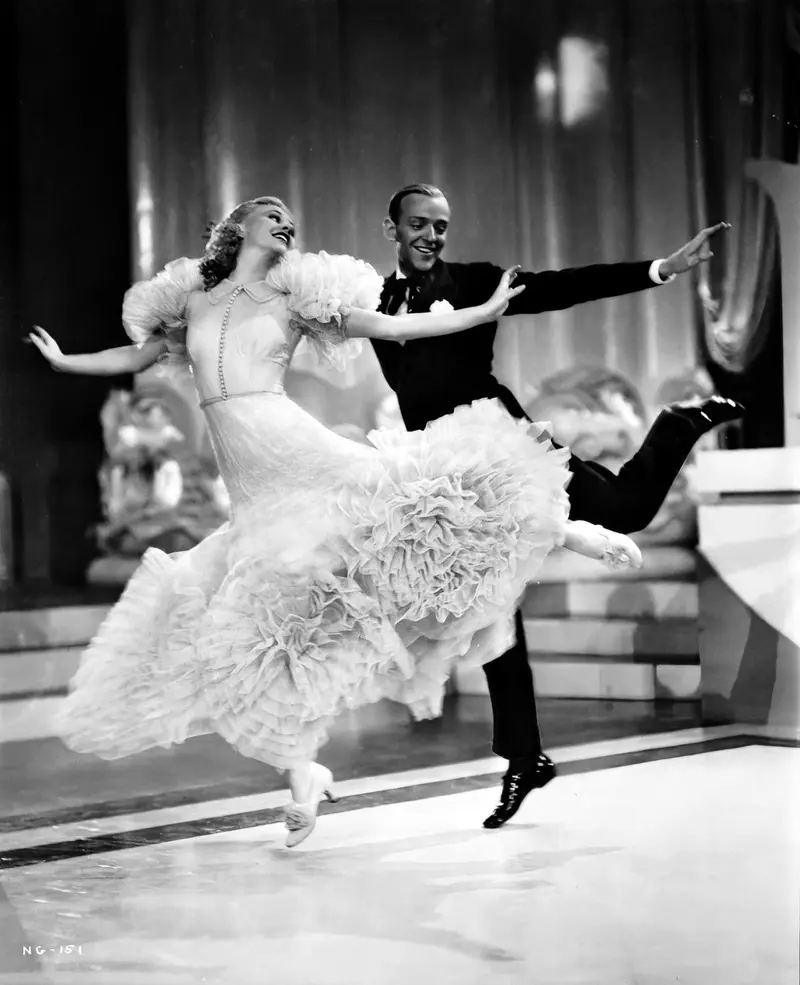
Start with Swing Time (1936), the picture the dance critic Arlene Croce ranks as the best dance musical Fred Astaire made with Ginger Rogers, a view John Mueller and Hannah Hyam share. Then watch Top Hat (1935) and Follow the Fleet (1936) for more of the Rogers partnership, Broadway Melody of 1940 for a different partner, and The Band Wagon (1953) and Funny Face (1957), which Jeanine Basinger names as masterpieces in The Star Machine. The reviews printed at the time do not always agree with that order, and the closing sections list the pictures to hold back or skip.
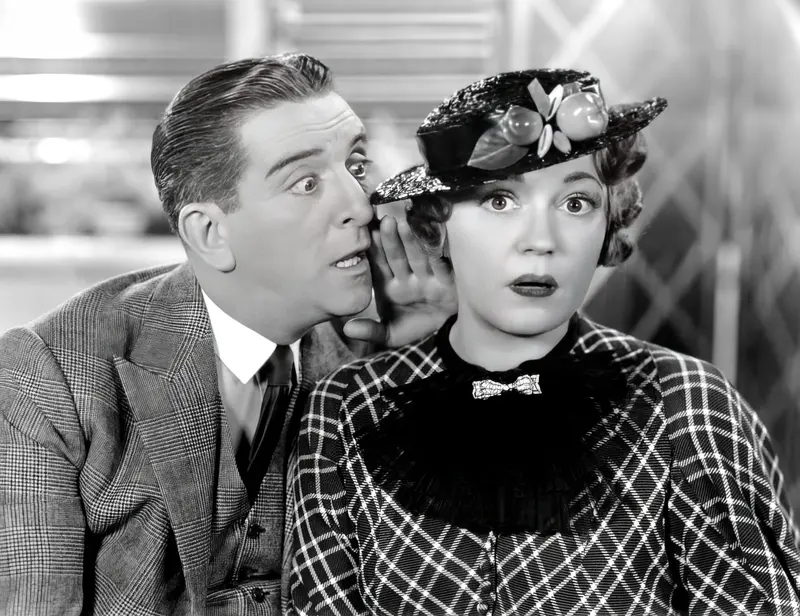
Two of Astaire’s working rules explain what a newcomer is seeing. From The Gay Divorcee (1934) until Finian’s Rainbow (1968), he had a dolly camera follow a dance closely in as few shots as possible, usually four to eight cuts, with the dancers kept in full view. He also required that songs and dances advance the plot and not stand apart as spectacle. Joseph Epstein reports in his 2008 study Fred Astaire that dancers and choreographers including Balanchine, Nureyev and Gene Kelly called him unsurpassable.
Swing Time (1936)
George Stevens directed it for RKO, with music by Jerome Kern and lyrics by Dorothy Fields. The reviews of 1936 were less sweeping than the later critics’ verdicts. Variety’s review of 2 Sep 1936 put it “a shade under previous par” and wanted the 103 minutes trimmed, though it still called the picture a box-office winner. Joseph Arnold Kaye wrote in Dance Magazine in November 1936 that “Astaire and Rogers are the picture.” The closing routine of “Never Gonna Dance” was shot 47 times in one day and left Rogers’s feet bruised and bleeding. “Bojangles of Harlem,” a tribute to Bill Robinson in which Astaire dances beside three of his own shadows, took 3 days to shoot and is the only number in which he appears in blackface.
For an edition, Warner Home Video’s 2005 release, issued alone and in The Astaire & Rogers Collection, Vol. 1, carries a commentary by Mueller. The Criterion Collection issued the film on Blu-ray and DVD in the United States on 11 June 2019. British viewers also have Universal’s 2003 release, with an introduction by Astaire’s daughter, Ava Astaire McKenzie.
Top Hat (1935)
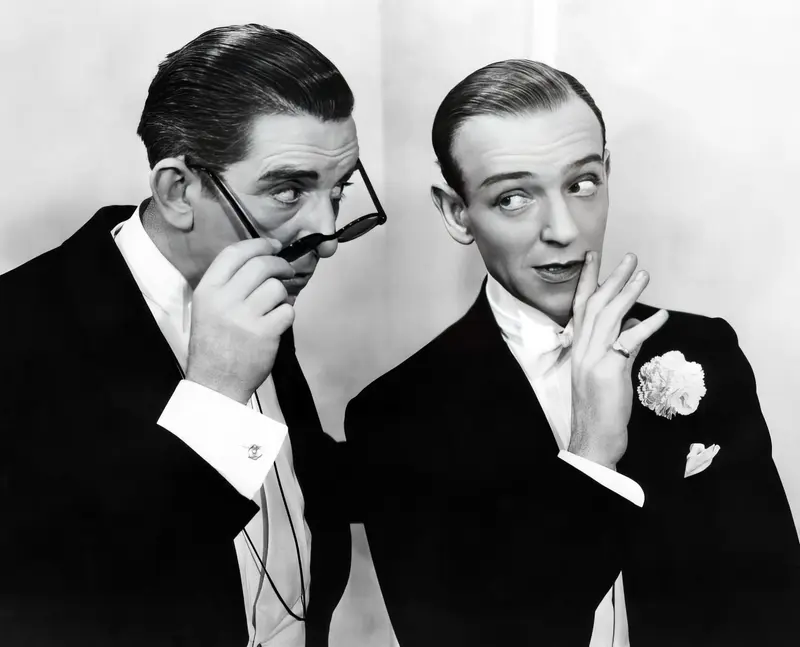
Rogers wrote in Ginger: My Story (1991) that the film drew four Academy Award nominations, for Best Picture, Best Song (“Cheek to Cheek”), Best Dance Direction and Best Art Direction, and won none. Astaire introduced three Irving Berlin songs in it: “Isn’t This a Lovely Day?”, “Cheek to Cheek” and “Top Hat, White Tie and Tails.”
Rogers used the same memoir to dispute the story that the two hated each other, calling it “nonsense” and adding, “We were a couple only on film.” She had denied the feud stories in a first-person piece in Cinema Illustrazione of 8 Sep 1937. One writer, Susanne Topper, suggested in her 1976 book Astaire & Rogers that the two were not friendly.
Follow the Fleet (1936)
Frank S. Nugent wrote in The New York Times that it was not the best of the series but still led “this year’s class” in song and dance. John Mosher of The New Yorker thought the plot lacked “the lightness of the Astaire feet,” and said the dancing overcame that fault and the length. Variety judged the 110 minutes “way overboard,” and Graham Greene, in The Spectator in 1936, called it Astaire’s “best since Gay Divorce.” The number to wait for is “Let’s Face the Music and Dance,” filmed in one continuous shot of 2 minutes and 50 seconds. On the first take, Rogers’s weighted dress hit Astaire in the face midway through, and he still chose that take from twenty. Croce credits the strength of the numbers to Rogers’s improvement under his coaching.
Broadway Melody of 1940
Broadway Melody of 1936 had introduced Eleanor Powell to film audiences as “the feminine Fred Astaire.” Basinger reports the conventional wisdom that the two are mismatched and rejects it, writing that Powell’s taps needed no dubbing and gave him a challenge he relished. She singles out the “Jukebox Dance” in an Italian restaurant and the “Begin the Beguine” finale on a black mirrored floor. Astaire wrote in Steps in Time that Powell tapped “in a class by herself.”
Holiday Inn (1942) and Easter Parade (1948)
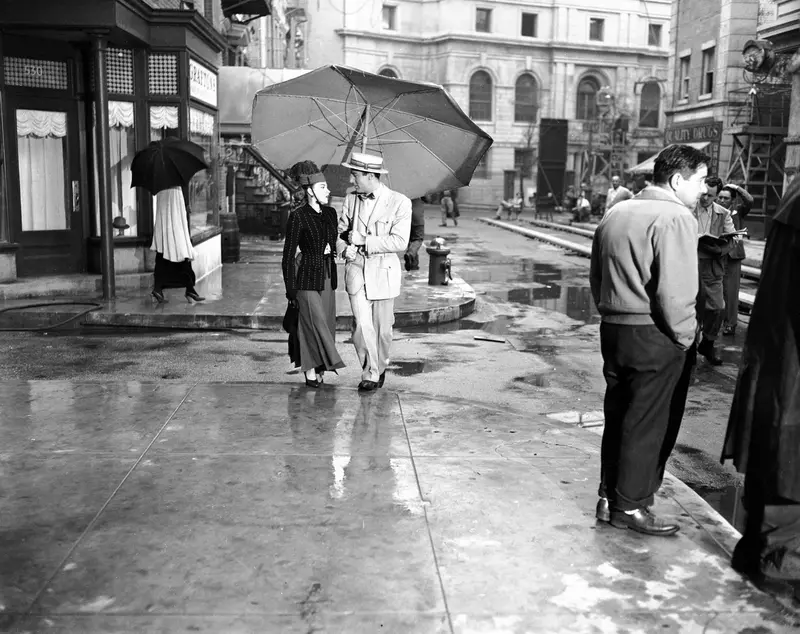
Holiday Inn pairs him with Bing Crosby and holds his solo to “Let’s Say it with Firecrackers.” Astaire announced his retirement during the production of Blue Skies (1946), and he came back to replace an injured Gene Kelly in Easter Parade. There he sings Berlin’s “A Couple of Swells” with Judy Garland.
New articles by email
An occasional email when a new article is out. No spam, unsubscribe any time.
Thanks. You are on the list.
The Band Wagon (1953)
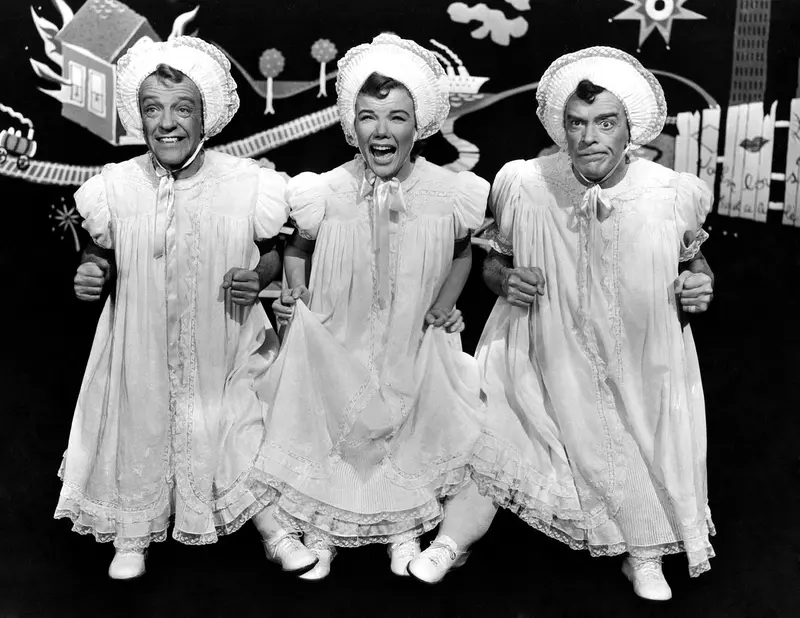
The film drew rave reviews and large crowds, yet its cost kept it from a profit on first release. Astaire sings “That’s Entertainment!” with Jack Buchanan, Oscar Levant and Nanette Fabray. His co-choreographer, Michael Kidd, later recalled Astaire putting technique ahead of emotional motive: “Let’s add the looks later.” Bosley Crowther of The New York Times, writing in 1957, remembered that when Astaire and Cyd Charisse appeared in it “the world was brightened.”
Funny Face and Silk Stockings (1957)
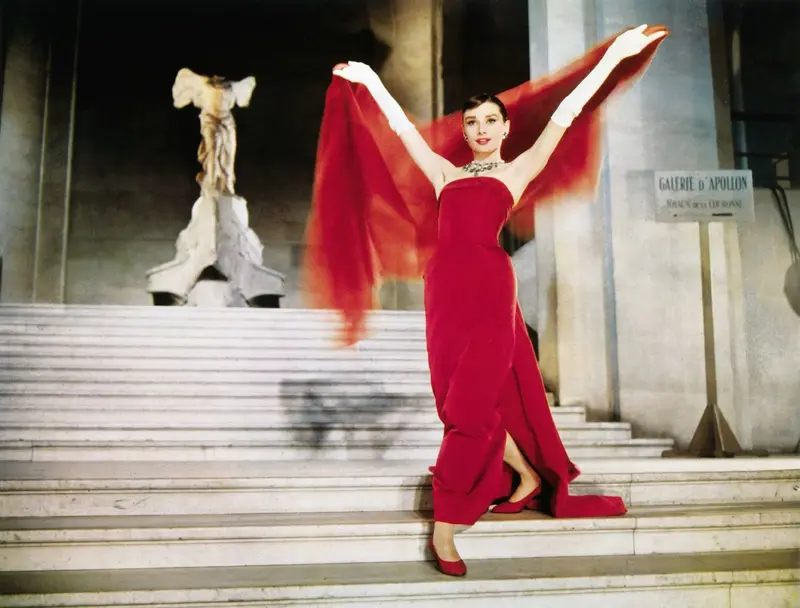
Funny Face teams him with Audrey Hepburn and Kay Thompson; it drew good reviews and did not recover its cost. Silk Stockings, directed by Rouben Mamoulian, pairs him again with Charisse. Crowther wrote that “somebody should declare a holiday,” while Harrison’s Reports and Variety’s Whitney Williams both thought it ran long, and the picture lost money at the box office. “The Ritz Roll and Rock” ends with Astaire smashing his top hat, a sign of the retirement from movie musicals he announced after the release. The film historian Tom Milne later called it “one of the great musicals.”
Pictures to hold back
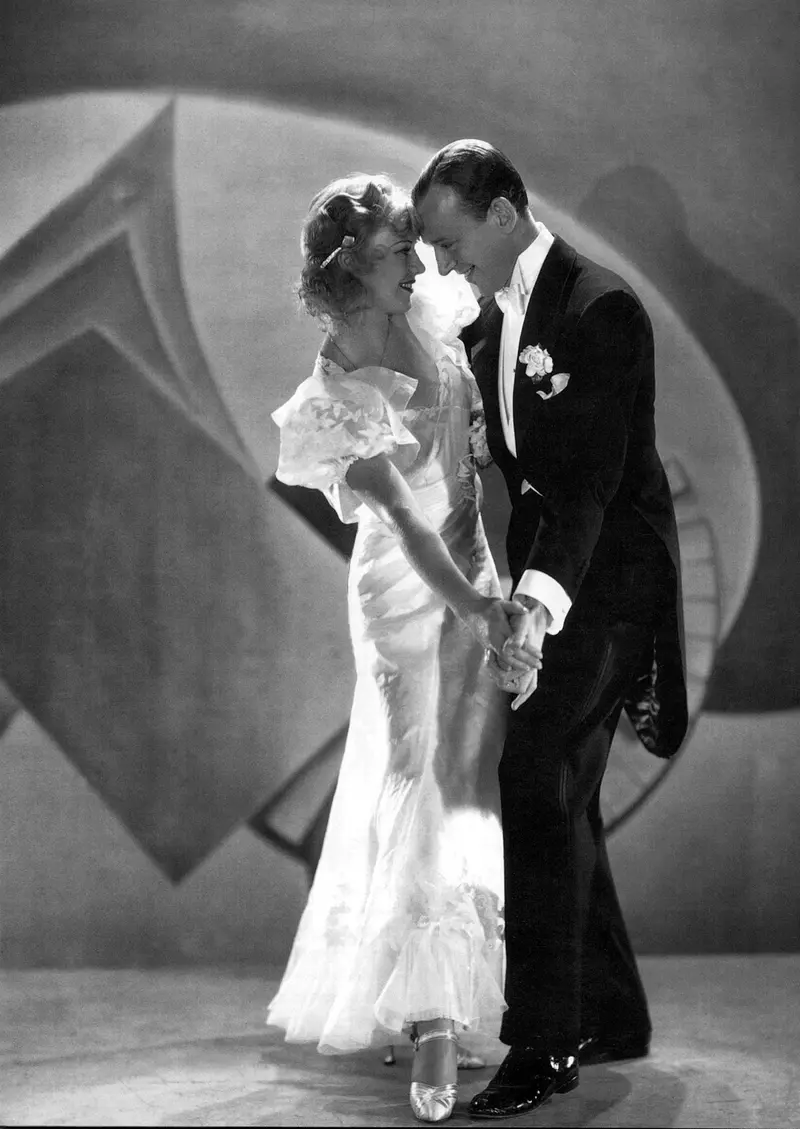
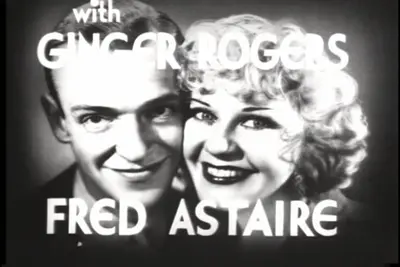
Flying Down to Rio (1933) is for the Carioca. Rogers said in Cinema Illustrazione in 1937 that they were given only a brief dance and that it had enormous success. She recalled being billed third, with Astaire fourth. Variety’s review of 26 Dec 1933 said Rogers was in the picture “on a rain check.” Shall We Dance (1937) was not a critical success and earned a profit of $413,000, less than half that of the previous Astaire-Rogers film. It does hold “They Can’t Take That Away from Me” and a tap duet on roller skates.
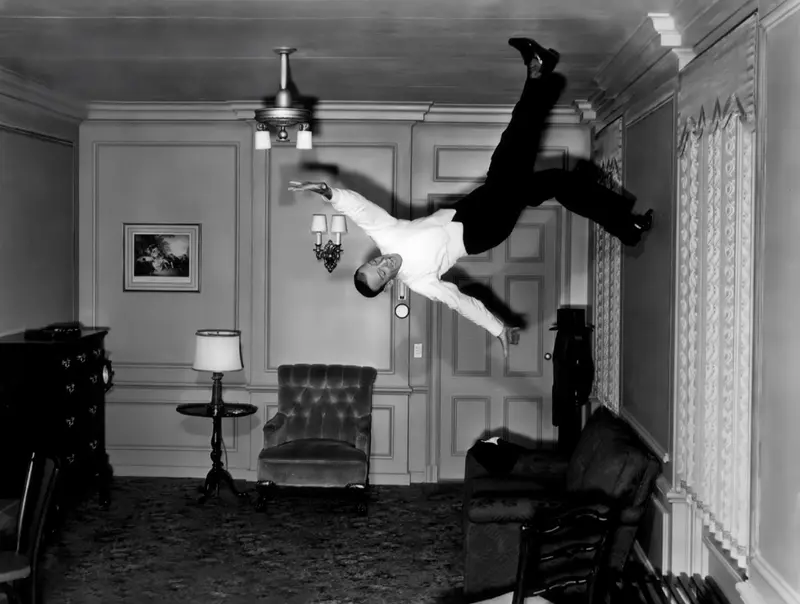
Royal Wedding (1951) has Astaire dancing on the walls and ceiling of a set built inside a revolving barrel. Crowther allowed it “one swell number,” built, in his words, on the song with the world’s longest title, “How Could You Believe Me When I Said I Love You When You Know I’ve Been a Liar All My Life.” Edwin Schallert of the Los Angeles Times found it “so-so in story.” In Daddy Long Legs (1955), Astaire dances opposite Leslie Caron, who later told The Guardian that Kelly danced close to the ground while with Astaire she felt she was floating. He also introduced Johnny Mercer’s “Something’s Gotta Give” in it, though the picture was only moderately successful at the box office.
On the Beach (1959), a nuclear war drama, shows him without dancing and brought a Golden Globe nomination. Writers have split on his acting. Luis Montero held in Cinelandia of July 1935 that of all screen dancers he alone was also a good actor, while Epstein judges him “a serviceable actor” who was not memorable as he was on the dance floor.
Pictures to skip
Epstein calls Dancing Lady (1933) “eminently forgettable,” and The Amazing Dobermans (1976) “eminently dopey.” The Belle of New York (1952) failed with critics and at the box office. Second Chorus (1940) was only mildly successful and is probably his most widely available film, so availability should not be mistaken for a recommendation. Basinger dissents on one title usually marked down: Let’s Dance (1950), with Betty Hutton, was a financial disappointment, but she calls it an “underrated entertainment,” with a dance that spoofs westerns.
Books to keep beside the films
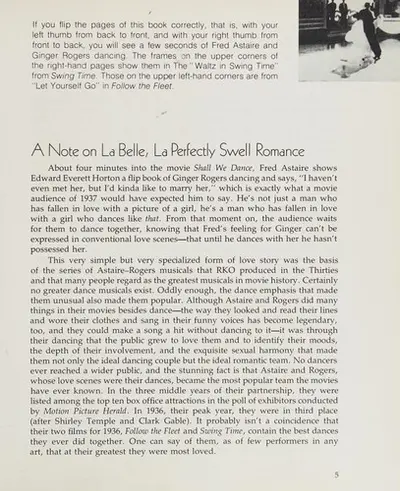
Epstein rates John Mueller’s Astaire Dancing (1985) the best book on Astaire as a dancer and calls Croce’s The Fred Astaire and Ginger Rogers Book (1972) slimmer but “no less acute.” He recommends Benny Green’s Fred Astaire (1979) for the London years. For a viewer working through the list, Larry Billman’s Fred Astaire: A Bio-Bibliography (1997), which Epstein calls “invaluable,” gives cast and credit information, plot synopses and review excerpts for each performance. Astaire’s own Steps in Time (1959) is, in Epstein’s word, “laconic,” and Jocelyn Faris, in her bio-bibliography of Ginger Rogers, notes that it has few personal remarks about Rogers. When Crowther’s review of The Sky’s the Limit said Astaire “acts foolish” and called his barroom solo “woe-begone,” Astaire answered in the book that the solo carried a serious plot point and that he cut his ankles kicking the glasses around to get it.
The gaps between these pictures have a story of their own. Our story What happened to Fred Astaire follows the retirement he announced during Blue Skies, his return in Easter Parade in 1948 and his final film in 1981.
Read next
Star profile / Fred Astaire
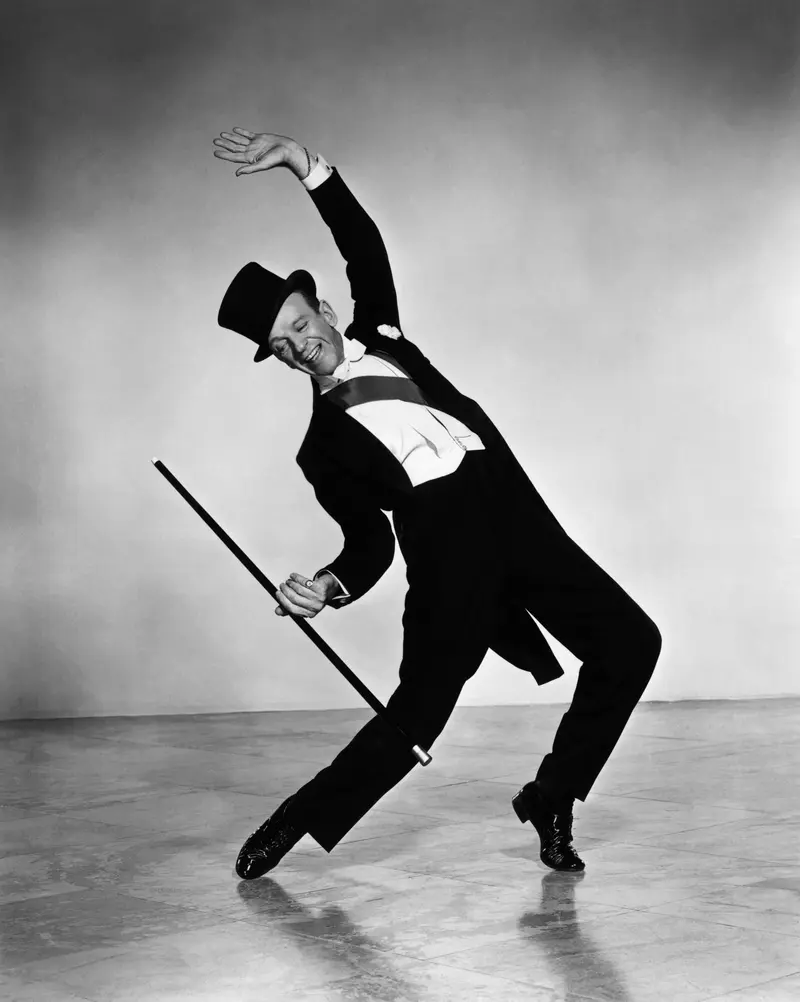
What happened to Fred Astaire after he retired twice, lost his wife in 1954 and married again at 81
Astaire quit films in 1946 and came back. He lost his wife in 1954, stopped dancing in films after 1957, married again at 81 and died in 1987, leaving a will that asked for no film of his life.
Continue readingQuick answers
Why did Fred Astaire not want a biopic?
Astaire did not want a biopic because he had no wish to see his life misinterpreted. He refused every offer, however large, and his will included a clause asking that no such portrayal take place. Tom Holland nevertheless announced on December 5, 2021, that he would play Astaire in a biopic.
How did fred get famous?
Fred Astaire got famous first on stage, dancing with his sister Adele on Broadway and in London during the 1920s. In film, Variety’s review of Flying Down to Rio (1933) credited the picture’s success to him. The partnership with Ginger Rogers then raised them both to stardom.
How did Fred Astaire die?
Fred Astaire died of pneumonia on June 22, 1987, at age 88, in Los Angeles. He was buried at Oakwood Memorial Park Cemetery in Chatsworth, California.
Why did Fred Astaire die?
Fred Astaire died because of pneumonia, on June 22, 1987, at age 88. He had stayed physically active well into his eighties, and his final film, Ghost Story, came out in 1981.
In this article
Swing Time
George Stevens 1936
Watch it
Top Hat
Mark Sandrich 1935
Watch it
Follow the Fleet
Mark Sandrich 1936
Watch it
Not listed on Amazon right now. Search Amazon for it.

Holiday Inn
Mark Sandrich 1942
Watch it
Easter Parade
Charles Walters 1948
Watch it
The Band Wagon
Vincente Minnelli 1953
Watch it
Funny Face
Stanley Donen 1957
Watch it
Not listed on Amazon right now. Search Amazon for it.
Silk Stockings
Rouben Mamoulian 1957
Watch it
The Gay Divorcee
Mark Sandrich 1934
Watch it
Flying Down to Rio
Thornton Freeland 1933
Watch it
Shall We Dance
Mark Sandrich 1937
Watch it
Royal Wedding
Stanley Donen 1951
Watch it
Not listed on Amazon right now. Search Amazon for it.

On the Beach
Stanley Kramer 1959
Watch it
Fred Astaire
Joseph Epstein · 2008
Get the book
The Fred Astaire & Ginger Rogers book
Arlene Croce · 1972
Get the book
Fred Astaire
Benny Green · 1979
Get the book
Fred Astaire
Larry Billman · 1997
Get the book
Not listed on Amazon right now. Search Amazon for it.
Steps in time
Fred Astaire · 1959
Get the book
Sources
- Fred Astaire by Joseph Epstein (2008)
- Steps in time by Fred Astaire (1959)
- Fred Astaire by Larry Billman (1997)
- Ginger Rogers: A Bio-Bibliography by Jocelyn Faris
- Ginger: My Story by Ginger Rogers (1991)
- The Star Machine by Jeanine Basinger
- Cinema Illustrazione (September 8, 1937), page 13, Internet Archive, accessed 2026-11-06
- Canadian Moving Picture Digest (Jan 9, 1937), page 10, Internet Archive, accessed 2026-11-06
- Cinelandia (July 1935), page 54, Internet Archive, accessed 2026-11-06
- 'I am very shy. It's amazing I became a movie star': Leslie Caron at 90 on love, art and addiction, The Guardian, accessed 2026-11-06
- Fred Astaire: A Bio-Bibliography (Google Books record), Google Books, accessed 2026-11-06
- Fred Astaire, Virtual History, accessed 2026-11-06
- Fred Astaire, Wikipedia, accessed 2026-11-06
- Swing Time (film), Wikipedia, accessed 2026-11-06
- Follow the Fleet, Wikipedia, accessed 2026-11-06
- Shall We Dance (1937 film), Wikipedia, accessed 2026-11-06
- Silk Stockings (1957 film), Wikipedia, accessed 2026-11-06
- Royal Wedding, Wikipedia, accessed 2026-11-06
Photo credits
- Fred Astaire in a still from Follow the Fleet (1936). Photo: DoctorMacro.com